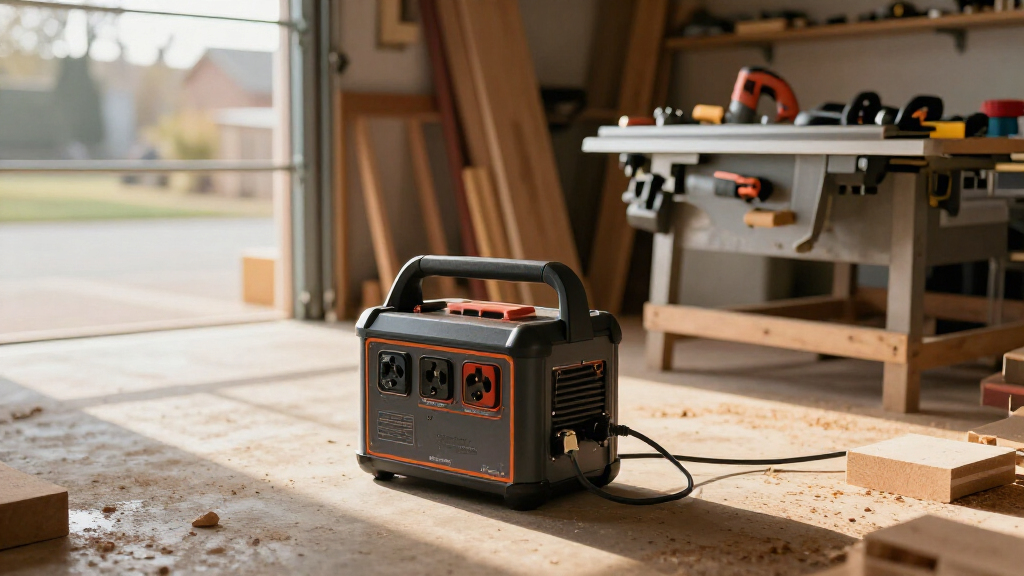

For most households seeking portable power stations for home backup, I’d start with the Anker SOLIX C1000 Gen 2 for its 1,024Wh capacity and 1,800W output in a manageable class of unit. The EcoFlow DELTA 3 Max stands out for buyers who need more stored energy, while the Anker SOLIX S5000 is the high-capacity choice for heavier loads and 120V/240V needs. The main tradeoff is between a station that is easier to move and one that can run more appliances for longer; a battery’s watt-hours and output limits both matter. Solar charging can extend an outage setup, but it does not replace the need to match panel input and charging time to your plan. Read on for how all 12 options compare and which one fits your backup priorities.

Get business pricing on tools and workshop supplies
- Business-only prices and quantity discounts
- Tax-exempt purchasing
- Multiple users, one account, clear invoices
Complete the kit


Key Takeaways
- The 1,024Wh, 1,800W class is the roundup’s practical middle ground: the BLUETTI Elite 100 V2, EF ECOFLOW DELTA 3 Classic, and EcoFlow DELTA 3 share those headline figures, so differences beyond capacity and output should guide a close comparison.
- More battery capacity changes outage duration, not just the spec sheet: the EcoFlow DELTA 3 Max has 2,048Wh, while the Jackery HomePower 3600 Plus and Anker SOLIX S5000 are aimed at substantially larger backup loads.
- High output and high capacity solve different problems: the S5000 pairs 5,024Wh with 4,500W and 120V/240V output, whereas the 2,010Wh Anker SOLIX S2000 has a lower 1,500W output.
- Compact units are for selective backup, not whole-home expectations: the 288Wh BLUETTI Elite 30 V2 and 640Wh LIBRIDS unit suit smaller loads better than long-duration appliance backup.
- A solar bundle changes the purchase decision: the Jackery Solar Generator 1000 v2 includes two 100W panels, while several other listed options are stations only or include a solar cable rather than panels.


| portable power stations for home backup | Weight | Battery capacity |
|---|---|---|
| BLUETTI Elite 100 V2 Portable | 25.3 lbs | 1,024Wh |
| EF ECOFLOW DELTA 3 Classic Por | 26.7 lbs | 1,024Wh |
| Jackery Solar Generator 1000 v | 23.37 lbs | 1,024Wh |
| Anker SOLIX C1000 Gen 2 Portab | 11.3kg | 1,024Wh |
| Jackery Explorer 1000 v2 Porta | 23.8 lbs | 1,070Wh |
| Anker SOLIX S2000 Portable Pow | 35.7 lb | — |
| EcoFlow DELTA 3 Portable Power | 12.5kg | — |
| Anker SOLIX S5000 Portable Pow | 97 lb | — |
| EF EcoFlow Delta 3 Max Portabl | — | 2,048Wh |
| BLUETTI Elite 30 V2 Portable P | 9.5 lb | — |
| Jackery HomePower 3600 Plus Po | 77.2 pounds | 3,584Wh |
| LIBRIDS 640Wh Portable Power S | — | 640Wh |
More Details on Our Top Picks
BLUETTI Elite 100 V2 Portable Power Station with Solar Cable, 1024Wh, 1800W
The BLUETTI Elite 100 V2 balances useful home-backup output with a practical range of charging options. Its 1,024Wh LiFePO4 battery and 1,800W AC output suit essential devices and many household electronics, while the ≤10ms UPS switching is designed to keep connected equipment running through a brief outage. Compared with the Jackery Explorer 1000 v2, it offers more AC output and supports charging from sources including a generator and lead-acid battery, not just AC, solar, and car power. Its quiet 30dB operation also suits a living area. The tradeoff is that it weighs 25.3 pounds, and the advertised 80% charge in about 45 minutes depends on 1,200W TurboBoost AC charging. At 1,024Wh, it is still a single-battery solution, not a substitute for a larger backup system.
Pros:- 1,800W AC output and 3,600W surge capacity cover a broad range of household electronics.
- Charging support includes AC, solar, car, lead-acid, and generator sources.
- ≤10ms UPS switching and 30dB operation suit connected electronics in quiet indoor spaces.
- LiFePO4 battery is rated for 4,000+ cycles.
Cons:- The 1,024Wh capacity may not last long when powering larger appliances.
- At 25.3 pounds, it is cumbersome for frequent carrying over longer distances.
- The 80% charge time of about 45 minutes requires TurboBoost AC charging.
Best for: Households seeking a quiet, portable station for essential electronics and small appliances, with several ways to recharge during an outage.
Not ideal for: Buyers who need to back up high-draw appliances for long periods or carry a station over long distances; its capacity is limited for extended outages and its 25.3-pound weight adds up.
- Battery capacity:1,024Wh
- Battery type:LiFePO4
- Surge power:3,600W
- Battery cycle life:4,000+ cycles
- UPS switching time:≤10ms
- Charging sources:Solar, AC, car, lead-acid, generator
- Weight:25.3 lbs
Our verdict“Choose the Elite 100 V2 for quiet, flexible backup of essential devices, but look to a higher-capacity model for longer outages or larger loads.”
EF ECOFLOW DELTA 3 Classic Portable Power Station, 1024Wh, 1800W
The EcoFlow DELTA 3 Classic makes sense for buyers who want a capable mid-size backup station with app monitoring and control. Its 1,024Wh battery, 1,800W output, and six AC outlets provide a straightforward setup for several household electronics, while under-10ms UPS switching is suited to sensitive connected devices. AC charging reaches 80% in 45 minutes, matching the fast-charge claim for the BLUETTI Elite 100 V2; the EcoFlow adds a 100W USB-C output and a stated five-year warranty. Solar charging can take about 2.5 hours with an optional 500W panel, so it is less ready for solar backup out of the box than the Jackery Solar Generator 1000 v2, which includes panels. One limitation matters for expansion plans: this model cannot use DELTA 2 or DELTA 3 Series Smart Extra Batteries.
Pros:- App-based monitoring and controls make it easier to check and manage backup power.
- Six AC outlets allow several devices to stay connected at once.
- AC charging reaches 80% in 45 minutes, with optional solar charging available.
- Under-10ms UPS switching and a stated five-year warranty support home backup use.
Cons:- It is not compatible with DELTA 2 or DELTA 3 Series Smart Extra Batteries.
- Solar panels are optional, so solar recharging requires a separate purchase.
- At 26.7 pounds, it is heavier than the Jackery Solar Generator 1000 v2 power station.
Best for: People who want to monitor charging and power use by app while backing up several electronics or small household devices.
Not ideal for: EcoFlow owners planning to add a DELTA 2 or DELTA 3 Series Smart Extra Battery, or buyers who want included solar panels.
- Battery capacity:1,024Wh
- Battery chemistry:LiFePO4
- Surge output:3,600W
- AC outlets:6
- USB-C output:100W
- UPS switching time:Under 10ms
- Weight:26.7 lbs
- Warranty:5 years
Our verdict“Pick the DELTA 3 Classic if app controls and multiple AC outlets matter more than battery expansion or included solar panels.”
Jackery Solar Generator 1000 v2 with Two 100W Solar Panels, 1024Wh LiFePO4
The Jackery Solar Generator 1000 v2 is the clearest choice here for buyers who want a station and panels in one bundle. Its two foldable 100W panels give the 1,024Wh LiFePO4 unit a way to recharge without relying solely on household power, unlike the Jackery Explorer 1000 v2, which is sold without panels. The power station weighs 23.37 pounds and provides a 10ms UPS switchover, making it a reasonably portable option for keeping electronics connected during an outage. Its 1,500W output is lower than the 1,800W offered by the BLUETTI Elite 100 V2 and EcoFlow DELTA 3 Classic, so it is a less suitable pick for higher-draw loads. The stated 50-minute full charge also requires emergency charging through the app; its default charge time is 1.25 hours.
Pros:- Includes two foldable 100W solar panels, unlike the Jackery Explorer 1000 v2.
- The 1,024Wh LiFePO4 battery pairs useful storage with a stated 4,000-cycle life to 70% capacity.
- 10ms UPS switchover supports connected electronics during a power interruption.
- Two 100W USB-C ports and three AC outlets support several devices.
Cons:- Its 1,500W AC output is lower than the 1,800W output of the BLUETTI Elite 100 V2 and EcoFlow DELTA 3 Classic.
- The 50-minute full charge requires enabling emergency charging in the app; the default is 1.25 hours.
- Two 100W panels provide a more modest solar input than a higher-wattage panel setup.
Best for: Households that want a portable backup station with included foldable panels for recharging when grid power is unavailable.
Not ideal for: Buyers who need more than 1,500W of continuous AC output or want a larger solar array than the two included 100W panels.
- Battery capacity:1,024Wh
- Battery type:LiFePO4
- AC output:1,500W
- Surge peak:3,000W
- Included solar panels:2 × 100W foldable panels
- UPS switchover:10ms
- USB-C ports:2, up to 100W
- Weight:23.37 lbs
Our verdict“Choose this bundle if included solar panels matter more than having the higher AC output offered by some competing 1,024Wh stations.”
Anker SOLIX C1000 Gen 2 Portable Power Station
The Anker SOLIX C1000 Gen 2 stands out among these 1,024Wh-class stations for its 2,000W running output. That extra output over the 1,800W BLUETTI Elite 100 V2 and EcoFlow DELTA 3 Classic can make it a better fit for higher-draw devices, though its 1,024Wh capacity still limits how long it can run them. It also supports up to 600W of solar input and a stated 1.8-hour solar recharge, giving it a stronger solar-input ceiling than the Jackery bundle’s two 100W panels. AC recharge takes 49 minutes at 1,600W, and the under-10ms UPS is suited to connected electronics. The tradeoffs are its 11.3kg weight and inconsistent outlet count: the specifications list nine outlets, while the description says up to 10 ports.
Pros:- 2,000W running output is higher than the 1,800W rating of the BLUETTI Elite 100 V2 and EcoFlow DELTA 3 Classic.
- Supports up to 600W solar input, more than the two 100W panels included with the Jackery Solar Generator 1000 v2.
- AC recharge takes 49 minutes at 1,600W, with a stated 1.8-hour solar recharge.
- Under-10ms UPS switching and a battery rated for at least 80% capacity after 4,000 cycles.
Cons:- Its 1,024Wh capacity may run down quickly when powering higher-wattage loads.
- At 11.3kg, it is not the lightest option for frequent carrying.
- Port information is inconsistent: the specifications list nine outlets, while the description says up to 10 ports.
Best for: Households that need more continuous output for higher-wattage devices but still want a portable station with fast AC and solar recharging.
Not ideal for: Buyers seeking long runtimes for high-draw appliances, a lightweight carry option, or a clearly specified outlet count.
- Battery capacity:1,024Wh
- Battery chemistry:LiFePO4
- Running output:2,000W
- Peak output:3,000W
- Maximum solar input:600W
- AC recharge time:49 minutes at 1,600W
- UPS switchover:Under 10ms
- Weight:11.3kg
Our verdict“Choose the C1000 Gen 2 when higher output and substantial solar input matter more than a lighter carry or longer high-load runtime.”
Jackery Explorer 1000 v2 Portable Power Station, 1070Wh, 1500W
The Jackery Explorer 1000 v2 is a straightforward pick for portable backup when buyers want a little more stored energy than the 1,024Wh stations in this group. Its 1,070Wh LFP battery, foldable handle, and 23.8-pound weight make it easier to move between rooms than a bulkier home-backup unit. It also has three AC outlets, two USB-C ports, and app-controlled charging modes. Compared with the Jackery Solar Generator 1000 v2, this version does not include solar panels, so recharging off-grid means buying compatible Jackery panels separately. It also shares that model’s 1,500W AC output, below the 1,800W BLUETTI Elite 100 V2 and 2,000W Anker SOLIX C1000 Gen 2. A full charge takes one hour only with emergency charging enabled in the app; the default is about 1.7 hours.
Pros:- 1,070Wh capacity is slightly higher than the 1,024Wh stations compared in this batch.
- Foldable handle and 23.8-pound weight support moving it around the home.
- Three AC outlets, two USB-C ports, one USB-A port, and a car port cover varied device needs.
- App includes emergency, quiet, and energy-efficiency charging modes.
Cons:- Its 1,500W AC output is lower than the BLUETTI Elite 100 V2, EcoFlow DELTA 3 Classic, and Anker SOLIX C1000 Gen 2.
- Solar panels are not included and compatibility is limited to Jackery panels.
- The one-hour full charge requires app-enabled emergency charging; default charging takes about 1.7 hours.
Best for: Buyers who want a portable station for essential electronics and moderate loads, and prefer a slightly larger battery over a bundled solar setup.
Not ideal for: Households that need higher AC output, included solar panels, or solar-panel flexibility beyond Jackery’s compatible panels.
- Battery capacity:1,070Wh
- Battery type:LFP (LiFePO4)
- AC output:1,500W
- Surge peak:3,000W
- AC outlets:3 pure sine wave
- USB-C ports:2, up to 100W
- Weight:23.8 lbs
- Solar compatibility:Jackery solar panels only; panels not included
Our verdict“Pick the Explorer 1000 v2 for portable, moderate-load backup and a slightly larger battery, but choose another model if you need higher output or included solar panels.”
Anker SOLIX S2000 Portable Power Station, 2,010Wh, 1,500W
The Anker SOLIX S2000 strikes a practical middle ground for households that need more reserve than a 1kWh unit but do not want a nearly 100-pound station. Its 2,010Wh capacity and 1,500W continuous output can support common essentials during an outage, while the under-10ms UPS switchover is useful for compatible equipment that needs power without a long interruption. Eight outlets and several recharge routes also make it easier to adapt as an outage stretches on. Compared with the EcoFlow DELTA 3, it offers roughly twice the stored energy but less AC output and no stated expansion option. The tradeoff is that it lacks a 12V DC port, and refrigerator runtime will vary with the appliance and conditions. Its 35.7-pound weight is manageable to move, but not featherlight.
Pros:- 2,010Wh capacity provides more reserve than the 1,024Wh EcoFlow DELTA 3.
- Eight outlets, split between front and rear placement, give flexibility when connecting multiple devices.
- Supports AC, solar, generator, alternator-charger, car-outlet, and mixed AC-and-solar charging.
- LiFePO4 battery is rated for 10,000 charge cycles.
Cons:- No 12V DC port for appliances or accessories that require that connection.
- 1,500W continuous output is lower than the EcoFlow DELTA 3’s 1,800W rating.
- Actual appliance runtime varies, so the stated refrigerator runtime is not a guarantee.
Best for: Households seeking a mid-capacity station for a refrigerator and several smaller essentials, with solar or generator recharge options.
Not ideal for: Buyers who need a 12V DC connection, higher continuous output, or a system they can expand substantially as backup needs grow.
- Capacity:2,010Wh
- Battery:LiFePO4, 314Ah
- Continuous output:1,500W
- Peak output:3,000W
- Solar input:Up to 400W
- Outlets:8
- UPS switchover:Less than 10ms
- Weight:35.7 lb
Our verdict“Choose the S2000 if you want a moveable, mid-capacity home backup station with many recharge options and do not need a 12V DC port.”
EcoFlow DELTA 3 Portable Power Station, 1024Wh, 1800W
The EcoFlow DELTA 3 suits buyers who want a manageable first step into home backup without closing off the option to add capacity later. Its 1,024Wh battery is smaller than the Anker SOLIX S2000’s 2,010Wh reserve, but its 1,800W AC output is higher, giving it room for some more demanding appliances within its limits. The standout distinction is expansion: compatible EcoFlow batteries can raise capacity to 5kWh, which makes this a more flexible starting point than a fixed-capacity station. Up to 500W solar input and fast AC charging can help replenish it between outages, though the stated 56-minute full charge depends on specified conditions. Thirteen outlets are unusually plentiful for this capacity. The tradeoff is that expansion costs extra equipment and adds complexity; without it, the smaller battery is better for shorter outages than extended household backup.
Pros:- 1,800W AC output is higher than the Anker SOLIX S2000’s 1,500W continuous rating.
- Expandable to 5kWh with compatible EcoFlow batteries.
- Supports up to 500W solar input and up to 1,500W AC charging input.
- Thirteen outlets provide connection flexibility for a station of this capacity.
Cons:- The 1,024Wh base capacity offers less stored energy than the Anker SOLIX S2000.
- Expansion requires compatible EcoFlow battery packs purchased separately.
- The stated 56-minute full charge depends on the specified charging conditions.
Best for: First-time backup buyers who want a compact 1kWh-class unit now and a compatible path to more storage later.
Not ideal for: Households that need long runtimes from the outset or do not want to buy and manage separate expansion batteries.
- Capacity:1,024Wh
- AC output:1,800W
- Surge output:3,600W
- Battery chemistry:LiFePO4
- Solar input:Up to 500W
- Expansion capacity:Up to 5kWh with compatible EcoFlow batteries
- Total outlets:13
- Weight:12.5kg
Our verdict“Pick the DELTA 3 if you want strong output and a clear expansion path, but choose a larger-capacity model for longer backup from day one.”
Anker SOLIX S5000 Portable Power Station, 5,024 Wh, 4,500 W, 120V/240V
For buyers whose backup plan includes more than a few small devices, the Anker SOLIX S5000 is the most capable option in this group. Its 5,024Wh capacity, 4,500W rated output, and 120V/240V support give it a broader role than the 120V, 1,024Wh EcoFlow DELTA 3: it is built for higher-demand backup needs, not just a handful of electronics. Capacity can expand to 30kWh with compatible batteries, making it the strongest choice here for extending outage coverage over time. Multiple charging methods and a 10ms UPS backup rating add flexibility. Those advantages come with a clear cost in portability: at 97 pounds, this is better treated as a home-based power system than a station to carry around. Expansion also requires additional compatible equipment.
Pros:- 5,024Wh capacity is far larger than the EcoFlow DELTA 3’s 1,024Wh base battery.
- 4,500W rated output and 120V/240V support broaden its potential home-backup use.
- Expandable to 30kWh with compatible batteries.
- LFP cells are rated for 10,000 charge cycles, with multiple charging methods available.
Cons:- At 97 lb, it is substantially less portable than the Anker SOLIX S2000.
- Expanding to 30kWh requires compatible additional equipment.
- Its larger footprint makes it less suited to buyers with limited storage space.
Best for: Homeowners planning backup for several essentials or higher-demand equipment who want 120V/240V output and room to expand storage.
Not ideal for: Buyers who need a station they can carry frequently, have limited space, or only need backup for phones and a few small devices.
- Capacity:5,024Wh
- Peak output:8,000W
- Voltage:120V/240V
- Battery type:LFP
- Expandable capacity:Up to 30kWh
- UPS backup:10ms
- Weight:97 lb
Our verdict“Choose the S5000 when home backup capacity and 120V/240V output matter more than easy lifting or portability.”
EF EcoFlow Delta 3 Max Portable Power Station, 2048Wh LFP Battery, 2400W Output
The EcoFlow DELTA 3 Max combines a useful home-backup reserve with higher output than the Anker SOLIX S2000. Its 2,048Wh LFP battery is close to the S2000’s capacity, while the 2,400W output gives it more headroom for compatible appliances; X-Boost is listed at 3,400W, though device compatibility matters. The 0–80% charging claim of about 1.13 hours can help shorten downtime between outages, and the 10ms transfer time supports backup use for compatible equipment. App controls add monitoring and charging-schedule options. The tradeoff is a sparse outlet count: just three total power outlets, compared with eight on the S2000 and thirteen on the DELTA 3. Solar panels are not included, and the listed runtime depends on use rather than guaranteeing a fixed period for every appliance.
Pros:- 2,400W output exceeds the Anker SOLIX S2000’s 1,500W continuous rating.
- 2,048Wh capacity provides a similar amount of stored energy to the S2000.
- Listed 0–80% charging time is about 1.13 hours, subject to operating conditions.
- 10ms transfer time and app controls support monitoring and backup use.
Cons:- Three total power outlets provide fewer connection points than the Anker SOLIX S2000 or EcoFlow DELTA 3.
- Solar panel is optional and not included.
- X-Boost output depends on compatibility with the connected device.
Best for: Households that want roughly 2kWh of storage, higher output for compatible appliances, and app-based charging and energy monitoring.
Not ideal for: Buyers who need to connect many appliances at once or want a solar panel included with the station.
- Battery capacity:2,048Wh
- Battery type:LiFePO4 (LFP)
- Output wattage:2,400W
- X-Boost output:3,400W
- Charging time:0–80% in about 1.13 hours
- Transfer time:10ms
- Total power outlets:3
- Warranty:5 years
Our verdict“Choose the DELTA 3 Max for a 2kWh-class station with higher output and app controls, provided three outlets meet your setup needs.”
BLUETTI Elite 30 V2 Portable Power Station, 288Wh, 600W
The BLUETTI Elite 30 V2 is the compact pick for keeping phones, networking gear, lights, and other modest loads running—not for powering a household through a long outage. Its 288Wh capacity is a fraction of the EcoFlow DELTA 3’s 1,024Wh, but at 9.5 pounds it is far easier to move, store, or carry between rooms. The 600W continuous output fits smaller devices, while Power Lifting Mode can support some compatible loads up to 1,500W; that mode does not make the battery larger or guarantee compatibility with every appliance. Fast wall charging and UPS switching of up to 10ms add practical emergency value. Compared with the larger stations in this roundup, the main compromise is unmistakable: limited stored energy means shorter runtimes, especially for power-hungry devices.
Pros:- At 9.5 lb, it is much easier to move and store than the EcoFlow DELTA 3.
- Supports AC, solar, car, lead-acid, and generator charging.
- Wall charging can reach 80% in 45 minutes under the stated conditions.
- UPS switch time is up to 10ms for compatible backup uses.
Cons:- 288Wh capacity is much smaller than the EcoFlow DELTA 3’s 1,024Wh and limits runtime.
- 600W continuous output rules out many higher-demand appliances.
- Power Lifting Mode depends on device compatibility and does not replace higher battery capacity.
Best for: Apartment residents or households wanting a lightweight reserve for phones, lights, routers, and other low-power essentials.
Not ideal for: Buyers who need refrigerator backup for extended periods, multiple large appliances, or substantial stored energy during a long outage.
- Capacity:288Wh
- Continuous output:600W
- Surge output:1,500W
- Weight:9.5 lb
- Dimensions:9.8 × 7 × 6.6 in
- Total outlets:9
- AC wall charging:Up to 380W
- UPS switch time:Up to 10ms
Our verdict“Pick the Elite 30 V2 for portable backup of small essentials, not as a substitute for a larger station during extended outages.”
Jackery HomePower 3600 Plus Portable Power Station, 3584Wh, 3600W
The Jackery HomePower 3600 Plus is the strongest fit here for households planning beyond a few hours of small-device backup. Its 3,584Wh capacity and 3,600W output can support a broader mix of home essentials than the 2,048Wh EcoFlow DELTA 3 Max, and its expansion options allow a larger reserve as needs grow. Connecting units in parallel enables 240V operation, a meaningful step up for compatible home backup setups, though that requires additional units rather than working from this station alone. Charging flexibility is another advantage: AC, solar, generator, and hybrid charging give owners options as outage conditions change. The tradeoff is its 77.2-pound weight; wheels and a telescopic handle help with movement but do not make it light to lift. Solar panels are optional, and the two listed AC outlets may call for careful appliance planning.
Pros:- 3,584Wh capacity and 3,600W output provide more backup headroom than the 2,048Wh EcoFlow DELTA 3 Max
- Expandable capacity supports larger reserves, with 240V operation available through parallel units
- AC, solar, gas generator, and hybrid charging offer multiple ways to replenish during an outage
- LFP battery is specified for 6,000 cycles, with wheels and a telescopic handle for easier rolling
Cons:- At 77.2 pounds, it is difficult to lift or carry up stairs
- 240V operation depends on connecting units in parallel, adding complexity and equipment
- Solar panels are optional, and the unit lists only two AC outlets
Best for: Homeowners who want a high-capacity, expandable station and may build a multi-unit 240V backup setup over time
Not ideal for: Apartment dwellers or buyers who need a light, self-contained unit for occasional outages; it is heavy, and 240V requires parallel units
- Battery capacity:3,584Wh
- Output:3,600W
- Parallel output:7,200W
- Voltage:120V; 240V in parallel
- Expandable capacity:Up to 21kWh per unit; 43kWh with multiple units
- Charging options:Hybrid AC+DC, AC, solar, and gas generator
- Battery cycle life:6,000 cycles
- Weight:77.2 pounds
- Warranty:5 years
Our verdict“Choose the HomePower 3600 Plus if you want a high-capacity foundation for expandable home backup and can accommodate its weight and multi-unit requirements.”
LIBRIDS 640Wh Portable Power Station, 600W Output
The LIBRIDS H1008 is a compact choice for keeping a modem, router, laptop, and other modest loads running through brief interruptions—not for powering a household’s larger appliances. Its 10ms UPS transfer time is the key distinction: connected electronics can switch to battery backup quickly when utility power drops. That gives it a more specific home role than the Jackery HomePower 3600 Plus, which is built around much greater capacity and expandable household backup rather than compact, always-connected device coverage. The LIBRIDS also offers eight output ports, including four AC outlets, and a pure sine wave inverter for sensitive electronics. Its limits are just as clear: 640Wh and 600W continuous output restrict runtime and appliance choice. It is labeled for indoor use, and outdoor use is limited to dry, well-ventilated conditions.
Pros:- 10ms UPS transfer time helps keep connected electronics running through brief power interruptions
- Eight output ports, including four AC outlets, support several small devices at once
- Pure sine wave output suits sensitive electronics
- LiFePO₄ battery is rated for 4,000+ cycles, and AC charging is listed at 1.5 hours
Cons:- 640Wh capacity limits how long it can sustain connected equipment
- 600W continuous output rules out many higher-powered household appliances
- Indoor-use labeling and dry-condition limits make it unsuitable for exposed outdoor placement
Best for: Remote workers and households seeking a compact UPS-style backup for networking gear, computers, and other low-draw electronics
Not ideal for: Buyers who need to run refrigerators, high-wattage appliances, or multiple household essentials for extended outages; capacity and continuous output are limited
- Battery capacity:640Wh
- Battery chemistry:LiFePO₄
- Continuous output:600W
- Surge output:1,200W
- UPS transfer time:10ms
- Output ports:8 total, including 4 AC outlets
- AC charging time:1.5 hours
- Dimensions:8.3 × 6.9 × 8.2 inches
- Use conditions:Indoor use; outdoor use only in dry, well-ventilated environments
Our verdict“Pick the LIBRIDS H1008 for compact, fast-switching backup of electronics, but choose a larger station such as the Jackery HomePower 3600 Plus for substantial household loads.”
How We Picked
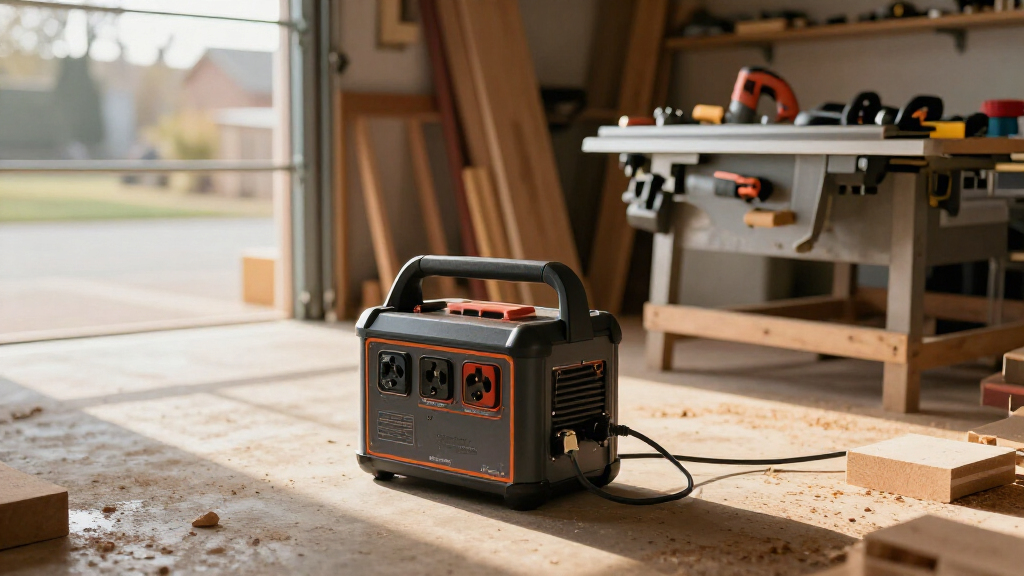
I ranked these stations around home-backup usefulness, not portability or headline output alone. I compared listed battery capacity and AC output, then considered whether the combination is suited to brief outages, longer essential-load backup, or more demanding household equipment. I also weighed whether solar panels are included, how clearly the product’s role can be understood from its listed specifications, and whether the unit’s capacity appears proportionate to the jobs a buyer may expect it to handle.
The order reflects the difference between a versatile starting point and a more specialized choice. Models around 1kWh with 1,800W output lead because they offer a useful balance for many essential loads; larger-capacity systems rank higher for longer or heavier backup, but their size and higher power ceiling may be unnecessary for some households. Compact and lower-output units sit lower because their role is narrower. Product names and listed specifications alone do not establish transfer-switch compatibility, surge performance, charging speed, battery warranty, or safe connection to household wiring, so buyers should verify those details with the manufacturer before purchase.
Factors to Consider When Choosing Portable Power Stations For Home Backup
Before choosing a station, I’d map the outages you actually want to cover: which devices matter, how long they need power, and whether you need to move the unit. A capacity figure by itself cannot answer those questions. These checks help prevent buying a small unit for a long outage—or paying for a large system when a few essential loads are the real goal.
1. List Loads and Estimate Runtime
Write down the devices you intend to power and their wattage, then separate items that run continuously from those used only briefly. Add the wattage of devices that may operate at the same time to see whether the station’s output limit is sufficient. For runtime planning, battery capacity in watt-hours is a starting point, not a promise: inverter losses and changing appliance demand reduce usable energy. A refrigerator may cycle on and off, while a heater can draw heavily for as long as it runs. I’d plan with a margin rather than treating the printed capacity as energy delivered to your devices.
2. Check Running and Startup Power
Appliances with motors or compressors can briefly demand more power when starting than they use once running. That means a station whose continuous output looks adequate may still struggle with a refrigerator, pump, or similar load if its surge capability is not a match. Check the manufacturer’s continuous and surge ratings for both the station and each appliance. Do not assume a higher watt-hour figure means the unit can start a demanding device; stored energy and instantaneous output are separate limits. If you need to run several appliances together, add their running loads and account for the largest startup draw.
3. Decide Whether You Need One Circuit or Home Wiring
Portable stations typically power devices through their own outlets, which works well for selected appliances and electronics. Feeding a home circuit through an inlet or transfer equipment is a different setup, with electrical and code requirements that a standard outlet does not solve. Confirm whether the station supports the connection method you plan to use and ask a qualified electrician about safe installation. A listed 120V/240V output, like the S5000’s, may suit certain higher-demand setups, but it does not by itself establish compatibility with every home panel or appliance. Never backfeed a household circuit through a regular wall outlet.
4. Treat Solar as a Charging Plan, Not a Guarantee
Solar can replenish a station during an outage, but the pace depends on panel wattage, sunlight, orientation, weather, and the station’s solar input limits. Compare the panel’s output with the unit’s accepted input and connector requirements before buying a bundle or adding panels. A panel’s rated wattage is a laboratory maximum, not an all-day charging rate. Buyers who need power overnight should size the battery for night use rather than relying on daytime charging to cover every load. Included panels, such as the pair in the Jackery Solar Generator 1000 v2 bundle, save a separate compatibility search but still need suitable sun and setup space.
5. Match Capacity to Portability and Storage
Larger batteries can stretch backup time, but they are usually harder to lift, store, and reposition. Think about where the station will live, who may need to move it, and whether it must be carried during an evacuation or only rolled between rooms. A compact 288Wh or 640Wh option can make sense for communications and smaller electronics, yet it is not a substitute for a multi-kilowatt-hour system if you need longer appliance runtime. Before purchase, check the unit’s actual weight, dimensions, handle or wheel design, and storage guidance. Choosing more capacity than you can comfortably move may leave the station less useful when an outage starts.
6. Check Recharge, Expansion, and Backup Readiness
Outage preparation includes how the station is charged before an event and how it can be replenished afterward. Check supported wall and solar charging methods, input limits, and any expansion-battery compatibility rather than assuming models in the same brand family share accessories. Look at operating instructions for storage charge levels, periodic maintenance, and safe temperature ranges. If the unit is meant to support critical medical equipment, verify that equipment maker’s requirements and the station’s output behavior before relying on it. A backup plan should also include charged cables, accessible ventilation, and a way to keep the station ready without leaving it connected in an unsuitable location.
Frequently Asked Questions
Can a 1,024Wh power station keep a refrigerator running through an outage?
It may run a refrigerator for a limited period, but the result depends on the refrigerator’s energy use, startup draw, and how often its compressor cycles. A 1,024Wh rating does not mean that amount reaches the appliance after conversion losses. Check the refrigerator’s label or measured daily energy use, then compare it with the station’s usable capacity and surge rating. If the outage could last overnight or longer, plan how to recharge the station or choose more capacity. I would not rely on a calculation based only on the refrigerator’s running watts.
Is 1,800W output enough for home backup?
It can cover selected essential loads, but it is not a guarantee that a station can power a whole home. Add the running wattage of devices you expect to use at once and check startup demand for compressors, pumps, and other motor-driven equipment. High-draw appliances such as electric ovens, clothes dryers, and many space heaters can exceed a portable station’s output or drain its battery quickly. A 1,800W unit is best planned around specific circuits or individual devices, not unrestricted household use. Check the station’s continuous and surge limits against your actual equipment.
Should I choose the 2,048Wh EcoFlow DELTA 3 Max or a 1,024Wh model?
The larger battery is more useful when you need longer runtime between charges or expect to power multiple essential devices over an extended outage. A 1,024Wh model can be the more sensible fit when outages are brief, loads are modest, or easier handling matters more than duration. Compare output limits as well as capacity: the DELTA 3 Max is listed at 2,400W, while several 1,024Wh options here are listed at 1,800W. Estimate your daily energy use before paying for extra storage. Also check weight, charging options, and whether the unit fits your available storage space.
Can I connect a portable power station directly to my home electrical panel?
Do not connect a station to household wiring through a regular wall outlet; that can create a dangerous backfeed. Panel connection requires compatible equipment and a safe, code-compliant setup, often involving a transfer switch or approved inlet. Verify the station’s supported connection method and have a qualified electrician confirm what your home requires. A 120V/240V output does not automatically make a unit suitable for every panel or household circuit. If you plan to power only individual devices, using the station’s own outlets avoids the panel-connection question.
Do I need to buy solar panels with my backup station?
Panels are useful if you want to recharge during an extended outage, but they are not required for every backup plan. A station charged from the wall before an expected outage may be enough for short interruptions and limited loads. For solar, check the station’s maximum input, connector type, and supported voltage range before selecting panels; incompatible equipment can limit charging or fail to work. The Jackery Solar Generator 1000 v2 bundle includes two 100W panels, while the BLUETTI Elite 100 V2 listing includes a solar cable rather than panels. Factor in weather, daylight, and setup space when deciding how much you can count on solar.
Conclusion
For a balanced starting point, I’d choose the Anker SOLIX C1000 Gen 2 as the best overall option in this lineup, based on its 1,024Wh capacity and 1,800W output. The best value-style fit is the EF ECOFLOW DELTA 3 Classic if its feature set and charging needs match your plan; compare it closely with the BLUETTI Elite 100 V2, since their listed capacity and output are the same. For buyers who need more stored energy, the EcoFlow DELTA 3 Max is a step up, while the Anker SOLIX S5000 is the premium, high-capacity pick for larger loads and 120V/240V needs. Beginners who want a ready-made solar bundle should look at the Jackery Solar Generator 1000 v2; for small electronics and compact backup, consider the BLUETTI Elite 30 V2. Before deciding, match output and runtime to your devices, and verify charging, connection, and installation details for your setup.
Evergreen bestsellers Picks

Vitamix VX1 Professional-Grade Blender, 64 oz, Black

Ninja Luxe Café Premier 3-in-1 Espresso Machine, Drip Coffee & Cold Brew

Bose QuietComfort Headphones (2nd Gen), Wireless Noise-Cancelling Over-Ear Headphones, White Smoke
As an affiliate, we earn on qualifying purchases.