
Building a solar oven is a great way to cook sustainably using renewable energy. Start by choosing a box or container, insulate the interior, and attach reflective surfaces like aluminum foil on the lid or sides to concentrate sunlight. Cover the opening with glass or clear plastic for trapping heat, and position the oven in direct sunlight, adjusting reflectors as needed. If you want to learn more about designing an efficient solar oven, keep exploring these simple yet effective techniques.
Key Takeaways
- Use insulating materials like foam or wool inside the oven to retain heat and improve cooking efficiency.
- Attach reflective surfaces such as aluminum foil or shiny metal sheets to direct sunlight toward the cooking chamber.
- Construct the main chamber from a box or cooler, sealed with transparent covers like glass or plastic for the greenhouse effect.
- Position the oven in a sunny location and adjust reflectors throughout the day to maximize solar energy capture.
- Regularly maintain and clean reflectors and insulation to sustain optimal performance and prolong the oven’s lifespan.
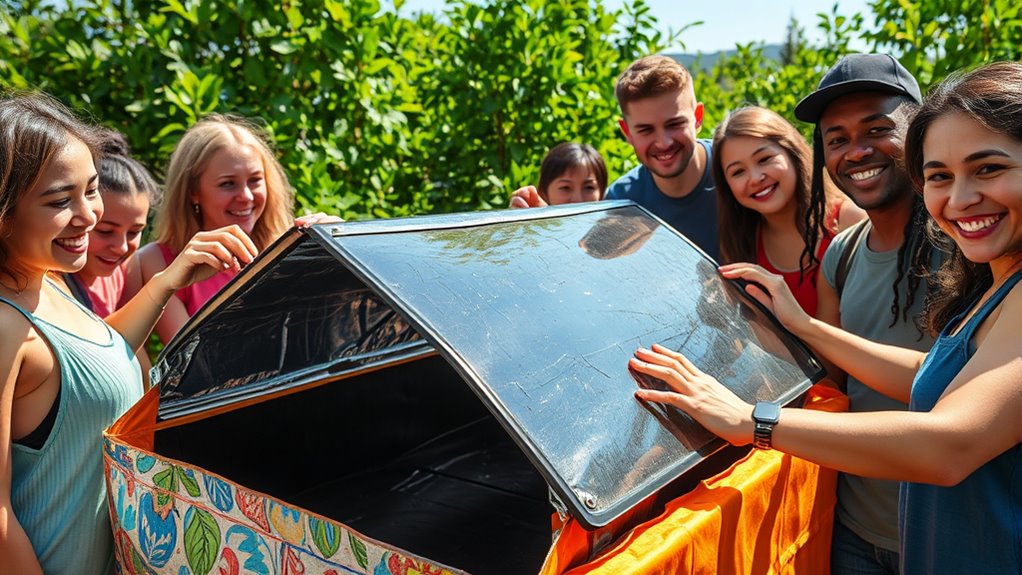
Harnessing the sun’s energy to cook food offers a simple yet powerful way to promote sustainability. Building a solar oven allows you to harness free, renewable energy while reducing reliance on traditional fuels. One of the key factors in designing an efficient solar oven is guaranteeing it retains heat effectively. This is where thermal insulation plays a vital role. By insulating the cooking chamber, you prevent heat from escaping, which means your food cooks more quickly and evenly. Materials like foam, wool, or even recycled insulating panels work well for this purpose. The goal is to create a barrier that minimizes heat loss, allowing the oven to reach higher temperatures with less sunlight. Proper insulation not only boosts cooking efficiency but also conserves energy, making your solar oven more effective even on partly cloudy days. Additionally, a well-insulated design can help prevent heat transfer to the environment, making your cooking process even more eco-friendly.
Insulate the cooking chamber to retain heat, cook faster, and improve efficiency even on cloudy days.
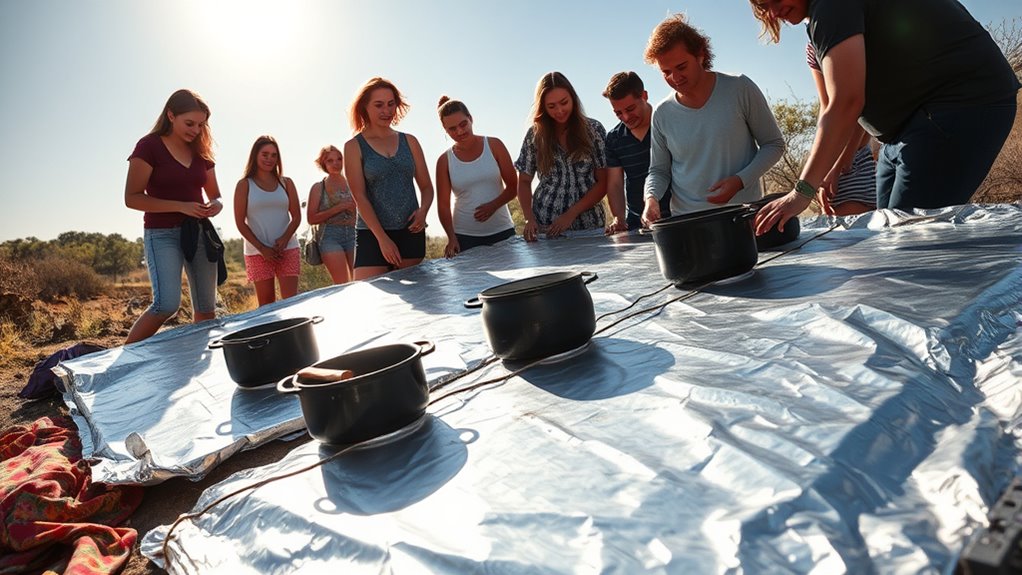
Reflective surfaces are another essential component for maximizing your solar oven’s performance. These surfaces are used to direct sunlight towards the cooking area, increasing the amount of heat captured. You can incorporate reflective materials such as aluminum foil, mirrored surfaces, or shiny metal sheets inside the oven’s lid or walls. When sunlight hits these reflective surfaces, it bounces onto the cooking chamber, intensifying the heat. Positioning these reflectors strategically ensures that more sunlight concentrates on your food, speeding up the cooking process. Remember to keep these surfaces clean and smooth, as dirt or dents can diminish their reflective power, reducing efficiency.
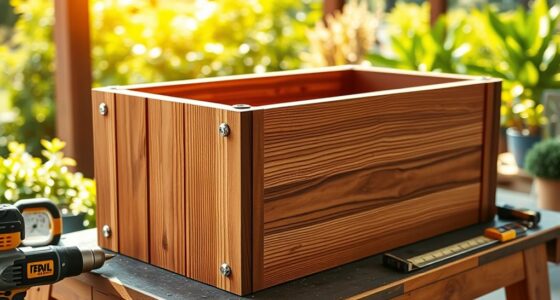
Constructing your solar oven with thermal insulation and reflective surfaces in mind is straightforward but impactful. Start with a box or container that can serve as the main chamber—wood, cardboard, or even a repurposed cooler work well. Line the interior with insulating material to prevent heat loss. Next, attach reflective surfaces to the lid or sides, aiming to direct as much sunlight as possible onto the cooking area. Cover the opening with a transparent material like glass or clear plastic to trap the heat inside, creating a greenhouse effect. Position your oven in a sunny spot, adjusting the reflectors throughout the day to follow the sun’s movement, ensuring maximum solar gain. Incorporating lateral thinking techniques can help optimize the placement and design of reflectors for even better performance.
With thoughtful integration of thermal insulation and reflective surfaces, your homemade solar oven can efficiently harness the sun’s energy for cooking. This sustainable approach not only saves energy and reduces emissions but also offers a rewarding, hands-on way to embrace eco-friendly living. Over time, you’ll enjoy delicious meals cooked with the power of the sun, all while contributing to a healthier planet.

GOSUN Portable Solar Oven Kit for 1-2 Meals | Effortless Outdoor Cooking with Solar Oven Kit | Vacuum Insulated Oven | Cook meals in 20 min, Great For Camping, Travel, Beach etc
Safety First, Always: Experience worry-free cooking with our Solar Oven Kit, designed to keep you safe while indulging…
As an affiliate, we earn on qualifying purchases.
As an affiliate, we earn on qualifying purchases.
Frequently Asked Questions
How Long Does It Take to Cook Food in a Solar Oven?
Cooking time in a solar oven varies based on weather, food type, and oven design, but generally takes 1 to 4 hours. You control the temperature by adjusting the reflectors and lid, which influences how quickly your food cooks. On sunny days with ideal temperature control, your meals will cook faster, while cloudy conditions may extend cooking time. Patience and proper setup ensure delicious results.
Can a Solar Oven Cook All Types of Food?
Can a solar oven cook all types of food? While it’s versatile, you might wonder if it can handle every dish. Solar ovens are great for baking, roasting, and steaming, but their cooking limitations mean they may struggle with foods needing precise temperature control or quick cooking times. For food safety, avoid undercooked meats or dairy. So, yes, they cook many foods, but some recipes might be better prepared with traditional methods.
What Is the Cost of Building a Solar Oven?
You can build a solar oven for around $50 to $150, depending on your material choices. The cost estimation includes material expenses like cardboard, reflective foil, black paint, and insulation. If you opt for higher-quality or durable materials, expect to spend more. Basic models using recycled or inexpensive parts can be budget-friendly, while more advanced designs might require a larger investment, making solar cooking accessible for various budgets.
How Durable Are Homemade Solar Ovens?
Homemade solar ovens can be quite durable if you choose the right materials. Using weather-resistant supplies like sturdy cardboard coated with reflective foil or insulated with thick, waterproof materials boosts their durability. Regularly check for wear and tear, especially after exposure to rain or wind. Properly constructed, your solar oven can last through multiple seasons, making it a reliable, eco-friendly cooking option that withstands various weather conditions.
Is Special Skill Required to Build a Solar Oven?
Building a solar oven is like assembling a simple puzzle—most people can do it with basic DIY assembly, no special skills needed. You don’t need technical expertise; clear instructions and patience are enough. I once helped a neighbor, and within an hour, she had her own solar oven ready to cook. As long as you follow steps carefully, you’ll find it straightforward and rewarding.

Reynolds Wrap Everyday Strength Aluminum Foil Roll, Freezer Safe and Grill Safe, Great for Foil Packets and Home Cooking, 12 Inches Wide, 200 Total Sq. Ft.
Package Includes: One (1) Reynolds Wrap Everyday Strength Aluminum Foil Roll measuring 200 feet long by 12 inches…
As an affiliate, we earn on qualifying purchases.
As an affiliate, we earn on qualifying purchases.
Conclusion
As you finish building your solar oven, it’s funny how just yesterday, you almost bought takeout, missing the chance to cook sustainably. Now, with your new oven, you’re not only saving energy but also rediscovering the joy of homemade meals. It’s a small coincidence that your kitchen’s new centerpiece came from your own hands, reminding you that sustainable living can start with simple, everyday actions. Who knew that sunshine could cook up such a difference?

Solar System Planets Two-Piece Heat-Insulating mat Set, Suitable for Microwave ovens, ovens, Outdoor barbecues, etc.
Solar System Planets Heat Insulation Mat Performance: Made of waterproof polyester fabric and heat-resistant material, this heat insulation…
As an affiliate, we earn on qualifying purchases.
As an affiliate, we earn on qualifying purchases.

SimbaLux Acrylic Sheet Clear Cast Plexiglass 12” x 12” Square Panel 1/4” Thick (6mm) Transparent Plastic Plexi Glass Board with Protective Paper for Signs, DIY Display Projects, Craft, Easy to Cut
Multipurpose Project Use – These acrylic plexiglass sheets can be used for a range of DIY and professional…
As an affiliate, we earn on qualifying purchases.
As an affiliate, we earn on qualifying purchases.