
To construct a backyard chicken coop for eggs, use durable, predator-proof materials like welded wire mesh and reinforce all openings with secure latches. Elevate the coop off the ground, add a leak-proof roof, and guarantee proper ventilation for a healthy environment. Regularly inspect and repair weak spots, keep debris away, and maintain clean nesting boxes with bedding to keep eggs safe and clean. If you want detailed step-by-step tips, there’s more to explore.

Get business pricing on tools and workshop supplies
- Business-only prices and quantity discounts
- Tax-exempt purchasing
- Multiple users, one account, clear invoices
Key Takeaways
- Use durable, predator-proof materials like hardware cloth and welded wire mesh for fencing, windows, and vents.
- Install secure latches and predator-proof fencing, and conduct regular inspections to maintain structural integrity.
- Design a clean, dry nesting area with bedding; check and clean boxes frequently; collect eggs daily.
- Ensure proper ventilation to reduce moisture and bacteria, maintaining a healthy environment for hens and eggs.
- Keep the coop elevated, free of debris, and well-maintained to prevent predator access and ensure safety.

Building a chicken coop is a rewarding project that provides a safe, comfortable home for your flock. When designing your coop, one of your top priorities should be guaranteeing egg safety and predator protection. These elements are essential because they directly impact your chickens’ wellbeing and the quality of the eggs you collect. You want to create an environment where your hens feel secure and where their eggs stay clean and uncontaminated.
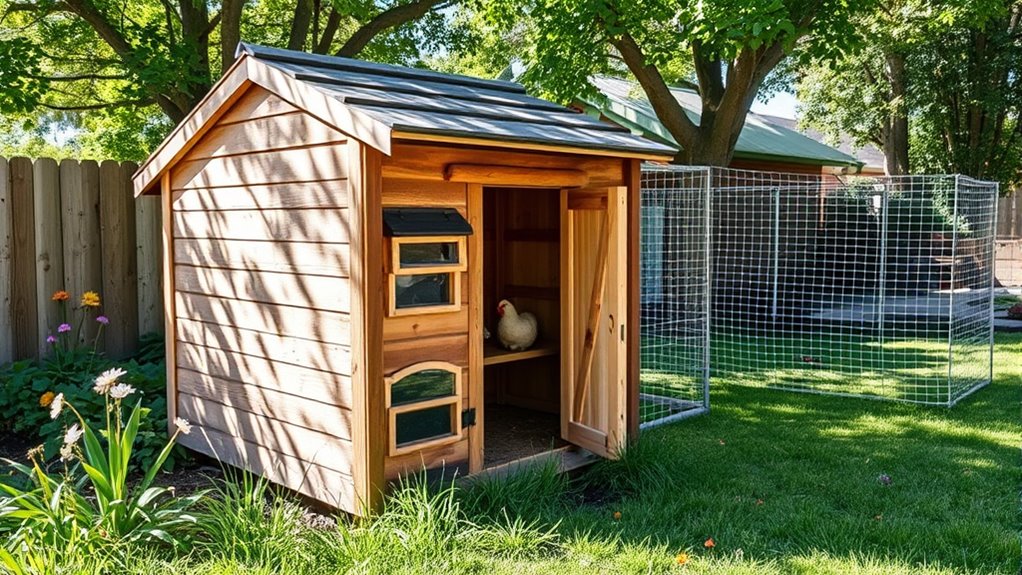
To start, focus on constructing a sturdy, predator-proof structure. Use durable materials like hardware cloth or welded wire mesh for the coop’s fencing and windows. Avoid chicken wire, as predators like raccoons, foxes, and even neighborhood cats can easily tear through it. Make sure all openings are securely covered and reinforced, especially around vents and access doors. The roof should be solid and leak-proof to prevent water from entering, which can create unsanitary conditions that threaten egg safety. Elevate the coop slightly off the ground to prevent digging predators from burrowing underneath. Installing a secure latch on all doors and windows is essential to prevent predators from sneaking in when you’re not around.
Build a sturdy, predator-proof coop with durable materials, secure openings, and a leak-proof roof for safe egg-laying.
Inside the coop, designate a clean, dry nesting area for your hens. Use bedding like straw or wood shavings to keep eggs clean and reduce the risk of contamination. Regularly check and clean these nesting boxes to maintain egg safety; dirty or damp nesting spots can lead to bacterial growth that compromises egg quality. Collect eggs frequently to prevent them from accumulating and becoming a target for predators or pests. Keeping eggs in a cool, dry place also helps preserve their freshness and quality. Additionally, ensuring proper ventilation is crucial because it helps control humidity and reduce moisture buildup, which can foster bacteria growth and threaten egg safety.
Lighting and ventilation are paramount for maintaining a healthy environment, which directly affects egg safety. Proper ventilation reduces moisture buildup, decreasing the chances of mold and bacteria forming inside the coop. Good airflow also helps keep predators at bay, as they’re less likely to approach a well-ventilated, secure structure. Consider installing locks on all access points and using predator-proof latches. It’s a simple yet effective way to keep unwanted visitors out and your eggs safe.
Finally, remember that predator protection doesn’t end with the coop’s construction. Regularly inspect the structure for any weak spots, and make repairs immediately if needed. Remove any debris or brush around the coop that could give predators hiding places. By combining solid construction, secure fencing, and diligent maintenance, you’ll create an environment where your hens can lay eggs safely and peacefully. This not only guarantees the safety of your flock but also ensures you enjoy fresh, clean backyard eggs for years to come.
predator-proof chicken coop hardware cloth
As an affiliate, we earn on qualifying purchases.
As an affiliate, we earn on qualifying purchases.
Frequently Asked Questions
How Do I Keep Predators Out of the Coop?
To keep predators out of your coop, you should install predator-proof fencing that is buried underground to prevent digging. Make certain your coop has secure locks on all doors and windows, and use heavy-duty latches that predators can’t open. Regularly inspect fencing and locks for any weaknesses or damage. Keeping your coop well-maintained and protected with these measures helps safeguard your chickens from potential threats.
What Is the Ideal Size for My Flock?
You should plan for at least 2-3 square feet per chicken inside the coop, with additional space for outdoor run area. For instance, if you have six hens, a coop with dimensions around 4×4 feet and a spacious run guarantees they’re comfortable and healthy. Adequate space requirements prevent stress and pecking, so always choose coop dimensions that accommodate your flock’s size comfortably.
How Often Should I Clean the Coop?
Think of your coop as a garden that needs regular tending. You should clean your coop at least once a week, more often if it gets messy. A consistent cleaning schedule keeps your hens healthy and happy. Regular coop maintenance prevents buildup of dirt and pests, ensuring a safe environment for your flock. Staying proactive with cleaning helps your backyard eggs stay fresh and your coop in top shape.
What Type of Nesting Boxes Are Best?
You should choose nesting box styles that are easy for your hens to access and clean, like individual boxes or tiered designs. Opt for bedding options such as straw, wood shavings, or hay to keep the coop comfortable and odor-free. These bedding options promote healthy eggs and make cleaning simpler. Make certain the nesting boxes are private and well-ventilated, which encourages hens to lay their eggs comfortably and consistently.
How Do I Handle Chicken Health Issues?
When your chickens show signs of illness, like lethargy or feather loss, act quickly. For example, a backyard flock once suffered from mites; you should implement parasite prevention and follow proper medication protocols to treat the issue effectively. Regular health checks, maintaining clean coop conditions, and consulting a vet for advice help prevent and handle health issues, ensuring your chickens stay healthy and productive.
elevated chicken coop with leak-proof roof
As an affiliate, we earn on qualifying purchases.
As an affiliate, we earn on qualifying purchases.
Conclusion
Now that you’ve built your chicken coop, you’re all set to enjoy fresh backyard eggs. Remember, a well-made coop is the foundation of happy hens and tasty eggs, so take pride in your work. With your coop in place, you’re laying the groundwork for a thriving flock. Like a well-tuned clock, everything will fall into place, giving you peace of mind and a steady supply of delicious, homegrown eggs.
nesting boxes for chickens with bedding
As an affiliate, we earn on qualifying purchases.
As an affiliate, we earn on qualifying purchases.
ventilation kit for chicken coop
As an affiliate, we earn on qualifying purchases.
As an affiliate, we earn on qualifying purchases.
Fall Picks
fall essentials
As an affiliate, we earn on qualifying purchases.