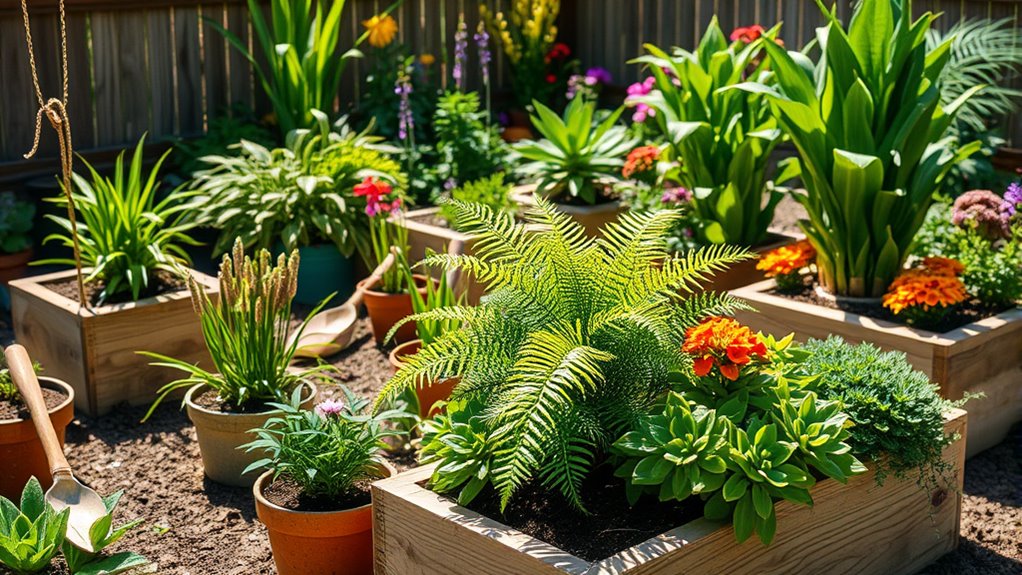

To bring nature home with eco-friendly planting strategies, focus on selecting native plants that thrive in your local environment, reducing water and maintenance needs. Practice companion planting to naturally deter pests and boost soil health while creating diverse habitats for pollinators. Layering your garden with trees, shrubs, and ground covers enhances biodiversity and ecological balance. Keep exploring these sustainable methods to transform your space into a thriving, harmonious ecosystem that supports local wildlife.

Get business pricing on tools and workshop supplies
- Business-only prices and quantity discounts
- Tax-exempt purchasing
- Multiple users, one account, clear invoices
Key Takeaways
- Incorporate native plants to support local ecosystems and reduce resource needs.
- Use companion planting to naturally deter pests and enhance soil health.
- Arrange plants in layers to promote biodiversity and habitat diversity.
- Select region-specific species that require less water and maintenance.
- Reduce chemical interventions by fostering ecological balance through natural plant relationships.

Creating a sustainable garden starts with choosing eco-friendly planting strategies that protect your environment. One of the most effective ways to do this is through companion planting, which involves growing certain plants together to benefit each other naturally. When you pair plants thoughtfully, you can reduce the need for chemical interventions, control pests, and improve soil health. For example, planting basil near tomatoes can repel pests that usually target tomatoes, while beans can fix nitrogen in the soil, supporting neighboring plants. These natural partnerships mimic the way plants coexist in the wild, creating a balanced ecosystem in your garden.
In addition to companion planting, prioritizing native species is vital for an eco-friendly garden. Native plants are adapted to your local climate and soil conditions, making them more resilient and requiring less water, fertilizer, and maintenance. When you choose native species, you support the local ecosystem by providing habitat and food for native pollinators like bees and butterflies. They also tend to grow more vigorously and resist pests better than non-native counterparts, which means fewer chemical treatments and less environmental impact. By integrating native plants into your garden, you create a sustainable landscape that harmonizes with the surrounding environment instead of disrupting it.
To implement these strategies effectively, start by researching which native species thrive in your region. Visit local nurseries or consult native plant societies to get plant recommendations suited to your soil and climate. Once you’ve selected the right plants, arrange them based on companion planting principles—pairing species that support each other’s growth and health. For example, planting fragrant herbs like oregano or thyme alongside vegetables can deter pests and attract beneficial insects. Also, consider planting in layers, with taller native trees or shrubs providing shade and habitat, while ground covers and low-growing plants fill in the understory, promoting biodiversity. Incorporating emotional intelligence into your garden planning can also help you better understand and respond to your plants’ needs, creating a more harmonious environment.
As an affiliate, we earn on qualifying purchases.
Frequently Asked Questions
How Can I Attract Native Pollinators to My Garden?
You can attract native pollinators by planting pollinator-friendly flowers that provide nectar and pollen. Incorporate native bee habitats, like bee hotels or undisturbed soil patches, to support their nesting needs. Avoid pesticides and choose diverse flowering plants to guarantee a steady food source throughout the season. By creating a welcoming environment with these strategies, you’ll naturally draw in native pollinators, boosting your garden’s health and biodiversity.
What Are the Best Native Plants for Small Urban Spaces?
Think small, think mighty—native plants like lavender, coneflowers, and bee balm thrive in tight urban spaces. These plants not only save space but also support local pollinators. When planning your urban garden design, focus on native plant selection to create a vibrant, eco-friendly oasis. Compact and resilient, they bring beauty and biodiversity to your city backyard, proving that even tiny areas can make a big environmental impact.
How Do I Reduce Water Usage in My Planting Strategies?
You can reduce water usage by installing drip irrigation, which delivers water directly to plant roots efficiently. Additionally, use mulching techniques around your plants to retain soil moisture, suppress weeds, and keep roots cool. Combining these methods ensures your plants get consistent moisture with less water, saving you money and supporting eco-friendly gardening. Regularly check your system to prevent leaks and optimize water conservation efforts.
Are Organic Fertilizers Better for Eco-Friendly Gardening?
They say “you are what you eat,” so choosing organic fertilizers is better for eco-friendly gardening. Organic fertilizers, like composted organic matter, enrich your soil naturally and promote healthy plant growth. They also support natural pest control by encouraging beneficial insects. Organic composting reduces synthetic chemical runoff, making your garden more sustainable. Overall, organic fertilizers help you maintain a healthier, more balanced ecosystem in your garden.
How Can I Prevent Invasive Species From Taking Over?
To prevent invasive species from taking over, you should focus on native plant selection and invasive species management. Regularly inspect your garden for unwanted plants, removing them promptly before they spread. Choose native plants that naturally resist invasives and support local ecosystems. Maintain healthy soil and plant diversity to reduce invasive opportunities. By staying vigilant and proactive, you can protect your garden and promote a balanced, eco-friendly environment.
As an affiliate, we earn on qualifying purchases.
Conclusion
By embracing eco-friendly planting strategies, you not only nurture your space but also protect our planet’s heartbeat. Every thoughtful choice, from native plants to sustainable practices, plants a seed of change. Imagine your garden as a symphony of life—each action a note contributing to harmony. So, take that first step today; let your garden be a living demonstration to nature’s resilience. Together, you and the earth can flourish in perfect, perpetual rhythm.
pollinator-friendly native flowers
As an affiliate, we earn on qualifying purchases.
As an affiliate, we earn on qualifying purchases.
eco-friendly garden soil amendments
As an affiliate, we earn on qualifying purchases.
As an affiliate, we earn on qualifying purchases.
Fall yard work Picks
leaf blowers
As an affiliate, we earn on qualifying purchases.