To construct raised beds for vegetables and flowers, start by choosing a location with ample sunlight and good drainage. Shape and level your beds using measuring tools, then fill them with amended soil rich in compost, manure, or peat moss for nutrients and structure. Firm the soil lightly and water to settle it. Proper placement and consistent maintenance will guarantee healthy growth. Keep exploring for more tips on creating durable, productive raised garden beds.

Get business pricing on tools and workshop supplies
- Business-only prices and quantity discounts
- Tax-exempt purchasing
- Multiple users, one account, clear invoices
Key Takeaways
- Select a level, well-drained location with adequate sunlight for optimal plant growth.
- Build the bed frame using durable materials like wood, metal, or composite, ensuring proper dimensions.
- Fill the bed with amended soil, incorporating compost, manure, and peat moss for nutrient-rich, well-draining soil.
- Shape and level the bed to match your garden design, including pathways for easy access and maintenance.
- Water the newly filled bed gently to settle the soil and promote healthy root development.
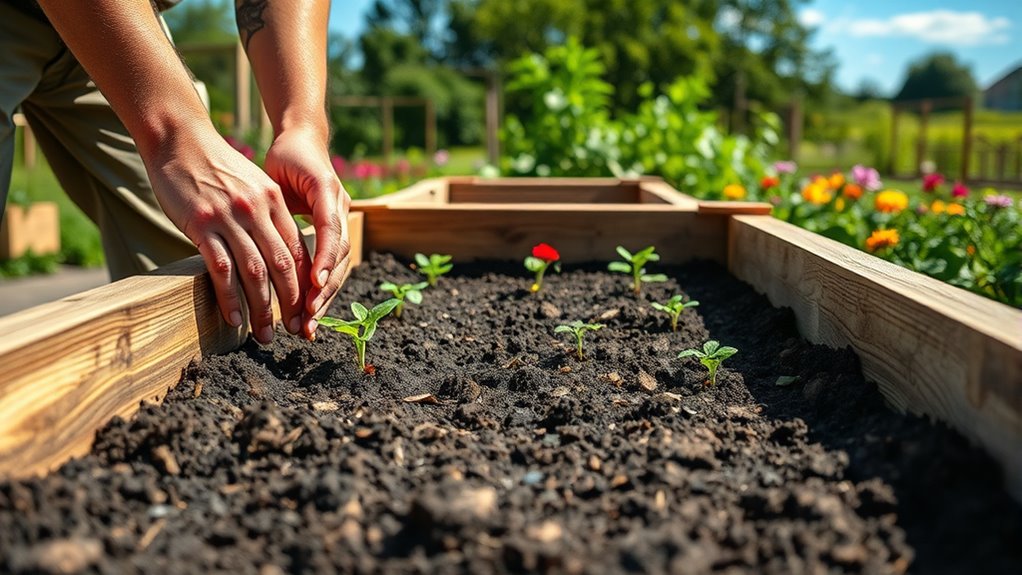
Building raised beds is a practical way to improve your garden’s productivity and accessibility. When you’re constructing these beds, one of the first steps is ensuring the soil is in top shape. This means incorporating soil amendments to boost fertility, improve drainage, and enhance soil structure. Organic compost, aged manure, and peat moss are excellent choices to enrich the soil, providing your plants with essential nutrients and a healthy environment to thrive. Before filling your raised beds, spend time on bed shaping—form the beds to your desired size and shape, making sure they’re level and well-drained. Proper bed shaping not only helps with water management but also makes planting and maintenance easier.
As you prepare to fill your beds, think about your soil amendments carefully. Different plants have various needs, so tailoring your amendments ensures each bed has the right balance of nutrients. If you’re growing vegetables, adding nitrogen-rich compost will promote leafy growth, while for flowers, a balanced mix of nutrients can encourage vibrant blooms. Mix these amendments thoroughly into your native soil or the soil you’re adding to your bed to create a uniform growing medium. This step is vital because it directly influences the health and productivity of your plants.
When shaping your beds, consider their placement in relation to sunlight, wind, and accessibility. You want to position them where they’ll receive adequate sunlight, typically six to eight hours for most vegetables and flowers. Use a level and measuring tape to ensure your beds are even and properly aligned. Rounded, rectangular, or geometric shapes all work well, as long as they fit your garden space and aesthetic preferences. Proper bed shaping also involves planning for pathways or access points, so you can tend to your plants easily without compacting the soil in the beds.
Once your beds are shaped and filled with amended soil, you’ll want to settle the soil by gently watering and possibly tamping it down. This creates a stable, well-draining environment that encourages healthy root development. Remember, the quality of your soil and the structure of your bed are foundational to your garden’s success. Additionally, regular maintenance of the soil and structure is essential to prevent issues like compaction and ensure ongoing plant health. By carefully selecting soil amendments and paying attention to bed shaping, you set yourself up for a fruitful growing season, whether you’re cultivating vegetables, flowers, or a combination of both. Taking these steps ensures your raised beds will provide a productive, accessible, and attractive garden space.
Products Worth Considering

Philips Hue Bridge Pro Starter Kit with 4 A19 E26 Color Smart Bulbs

Levoit Core 400S-P Smart Air Purifier for Large Rooms up to 1718 ft²

Dyson Cyclone V10 Origin Cordless Vacuum
As an affiliate, we earn on qualifying purchases.
Frequently Asked Questions
What Materials Are Best for Building Durable Raised Beds?
You should choose durable materials like composite lumber or recycled materials for building raised beds. Composite lumber resists rot and insects, making it long-lasting and low-maintenance. Recycled materials, such as reclaimed wood or old bricks, are eco-friendly options that add character and durability. These choices guarantee your raised beds withstand weather conditions and last for years, providing a sturdy foundation for your vegetables and flowers.
How Deep Should My Raised Beds Be for Optimal Root Growth?
You should build your raised beds at least 12-18 inches deep to promote proper soil aeration and root growth. Deeper beds allow roots to expand comfortably, improving plant health. This depth also helps maintain moisture, reducing watering frequency. Keep in mind, for larger vegetables, 18 inches is ideal, while smaller plants may thrive in 12 inches. Proper depth guarantees your plants develop strong roots and stay well-watered.
Can I Build Raised Beds on Uneven or Sloped Ground?
You can absolutely build raised beds on uneven or sloped ground—think of it as turning a mountain into a lush garden paradise! Just focus on soil leveling by adding or removing soil strategically, and implement drainage solutions like gravel layers or risers to prevent waterlogging. With careful planning, you’ll create a thriving, beautiful garden that transforms challenging terrain into a productive oasis.
What Tools Are Essential for Constructing Raised Beds?
You’ll need essential tools like a shovel, wheelbarrow, tape measure, level, and a saw to build your raised beds. These tools help you plan your garden design and guarantee proper alignment. Don’t forget soil amendments to improve soil quality inside the beds. Using a level guarantees even sides, and a saw helps cut materials to size. With these tools, you’ll create sturdy, well-designed raised beds for thriving vegetables and flowers.
How Do I Prevent Pests From Damaging My Raised Bed Plants?
You can protect your raised bed plants by implementing effective pest control strategies and natural deterrents. Start by inspecting plants regularly for signs of pests and remove them by hand. Use companion planting with herbs like basil or marigolds to repel pests naturally. Cover vulnerable plants with lightweight row covers, and encourage beneficial insects like ladybugs. Stay vigilant, and your garden will thrive, free from pest damage.
Conclusion
Now that your raised beds are built, you’re basically a horticultural hero—ready to conquer weeds and droughts with a flick of your green thumb. Imagine your veggies and flowers basking in their fancy new homes, while weeds plot their sneaky comeback. Just remember, even the best garden beds can’t shield you from pesky critters or your neighbor’s overenthusiastic pruning. Happy planting, and may your garden be forever more fabulous than your neighbor’s!