When selecting a rebar tying tool for concrete work, consider your project size, budget, and how often you’ll use it. Manual tools are affordable and great for small jobs, while automatic tools offer faster, more efficient tying for large projects, though they cost more and need power. Ergonomic features improve comfort and safety. To find the best fit and learn about the benefits of different options, continue exploring the key factors that influence your choice.

Get business pricing on tools and workshop supplies
- Business-only prices and quantity discounts
- Tax-exempt purchasing
- Multiple users, one account, clear invoices
Key Takeaways
- Assess project size to determine if manual or automatic rebar tying tools are most efficient.
- Consider your budget when choosing between cost-effective manual tools and more expensive automated options.
- Evaluate the frequency of use; frequent tasks benefit from ergonomic, automated tools to reduce fatigue.
- Prioritize ergonomic features like comfortable grips and balanced weight for safer, more comfortable operation.
- Ensure the tool offers the desired balance of control and speed to match your specific concrete work requirements.
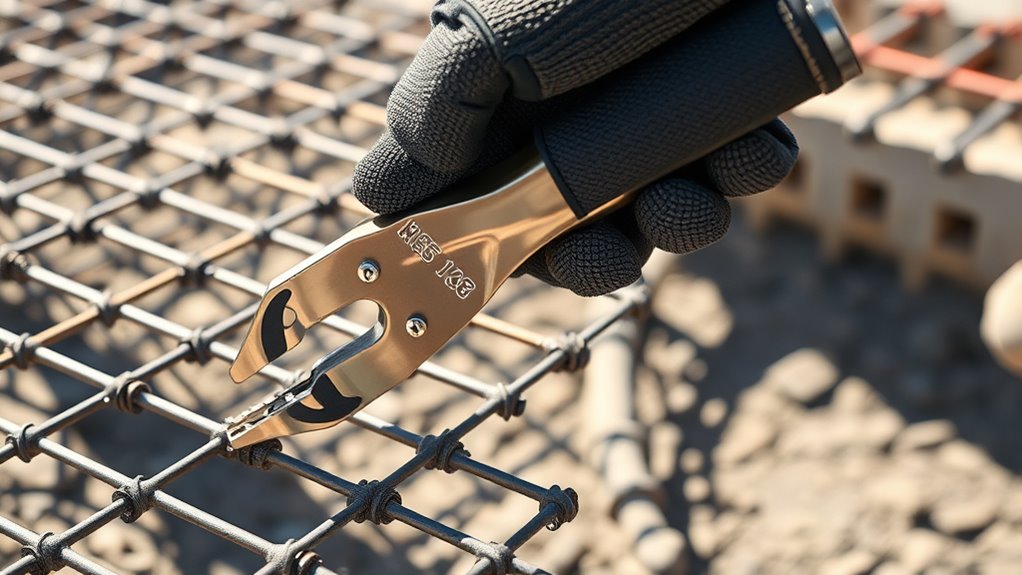
Choosing the right rebar tying tool can substantially improve your efficiency and accuracy on the job site. When deciding between manual versus automatic tools, you’ll want to consider how each type impacts your workflow, comfort, and overall productivity. Manual rebar tying tools are straightforward, lightweight, and inexpensive, making them ideal for smaller projects or when you prefer more control. They typically consist of pliers with a built-in wire loop, requiring you to manually twist the wire around the rebar and secure it. While they are easy to operate and require no power source, they can be tiring to use for extended periods and might slow down your work rate.
Manual rebar tying tools are simple, lightweight, and cost-effective for smaller projects and greater control.
On the other hand, automatic rebar tying tools are designed to greatly boost your productivity. These tools automate the tying process, allowing you to secure multiple rebar intersections quickly and with less effort. They generally feature a trigger mechanism that, when pressed, wraps and tightens the wire around the rebar automatically. This not only speeds up your work but also reduces fatigue, especially during large-scale projects. However, automatic tools tend to be heavier and more expensive than manual options, and they require a power source, whether batteries or compressed air.
Regardless of whether you opt for manual or automatic, the ergonomic design of the tool plays a vital role in your comfort and safety. An ergonomic rebar tying tool fits comfortably in your hand, with grips that minimize strain and prevent slipping. Look for features like padded handles, balanced weight distribution, and intuitive trigger placement. These design elements can drastically reduce hand fatigue and improve your precision, especially when working for long hours or in awkward positions. Additionally, choosing a tool with ergonomic features can significantly enhance your work experience and reduce the risk of repetitive strain injuries. A well-designed ergonomic tool allows you to maintain better control and reduces the risk of repetitive strain injuries.
Ultimately, your choice should be guided by the scope of your work, budget, and personal preference. If you frequently work on large projects with lots of rebar, investing in an automatic tool with ergonomic features can save time and reduce fatigue. Conversely, for smaller tasks or occasional use, a manual tool might be more practical and cost-effective. No matter what you choose, prioritizing ergonomic design ensures that your work remains comfortable, safe, and efficient. Selecting the right tool tailored to your needs will make your concrete projects smoother, faster, and more precise.
Products Worth Considering

Google Nest Doorbell (Wired, 2nd Gen) – Snow

Dyson Big Ball Multi Floor Canister Vacuum, Yellow

Dyson Cyclone V10 Origin Cordless Vacuum
As an affiliate, we earn on qualifying purchases.
Frequently Asked Questions
What Safety Precautions Should I Follow When Using a Rebar Tying Tool?
When using a rebar tying tool, always wear personal protective equipment like gloves and safety glasses to prevent injuries. Make certain proper handling by keeping your hands clear of moving parts and maintaining a firm grip. Work in well-ventilated areas and stay alert to avoid accidents. Follow manufacturer instructions carefully, and inspect the tool before use. Taking these safety precautions helps protect you and ensures efficient, safe work.
How Do Battery Types Affect the Performance of Rebar Tying Tools?
Battery types notably impact your rebar tying tool’s performance. Lithium-ion batteries, with higher capacity, offer longer run times and quicker charging times, so you can work efficiently without frequent pauses. Nickel-cadmium batteries tend to have lower capacity and longer charging times, which can slow you down. Opt for batteries with higher capacity and fast charging features to keep your workflow smooth and minimize downtime during concrete work.
Can a Rebar Tying Tool Be Used for Different Rebar Sizes?
Yes, your rebar tying tool can handle different rebar sizes if it features adjustable tension and rebar compatibility. You simply adjust the tension settings to match the rebar diameter, ensuring a secure tie. Make sure the tool is compatible with the sizes you’re working with, as some models are designed for specific ranges. This flexibility helps you work efficiently across various rebar sizes without needing multiple tools.
What Maintenance Is Required to Keep the Tool in Optimal Condition?
To keep your rebar tying tool in ideal condition, follow a regular lubrication schedule to prevent rust and ensure smooth operation. Check and recharge the battery regularly, and replace it when needed to maintain power efficiency. Keep the tool clean, especially after use, and inspect for any damage. Proper maintenance extends its lifespan and guarantees reliable performance on your projects.
Are There Eco-Friendly or Biodegradable Options for Rebar Tying Materials?
Like planting seeds for the future, you can choose biodegradable ties made from eco-friendly materials. These ties break down naturally, reducing environmental impact and supporting sustainable construction practices. Look for options crafted from biodegradable materials such as plant-based plastics or natural fibers. By opting for eco-friendly ties, you help protect the environment while maintaining strong, reliable rebar connections. It’s a smart, responsible choice for greener concrete work.
Conclusion
Choosing the right rebar tying tool boosts your efficiency and safety on-site. While some worry about the initial cost, remember that a quality tool diminishes fatigue and speeds up your work, saving you time and effort in the long run. Don’t let hesitation hold you back—investing in the right tool ensures you work smarter, not harder. With the right choice, you’ll find rebar tying easier and more productive every time.