
TL;DR
Pro Tool Reviews compared Milwaukee’s fourth-generation M18 Fuel 2904 hammer drill with Bosch’s GSB18V-1330CN using four performance tests. Milwaukee won each test and averaged 17% faster, while Bosch brought features including electronic angle detection and compatibility with the AmpShare battery platform.
Milwaukee’s fourth-generation M18 Fuel 2904 outperformed Bosch’s GSB18V-1330CN in all four tasks in a Pro Tool Reviews cordless hammer drill test, averaging 17% faster across the results. The comparison gives tradespeople a real-world performance reference for two premium 18-volt drills, though the test does not establish that one brand is the best choice for every user or job.

Get business pricing on tools and workshop supplies
- Business-only prices and quantity discounts
- Tax-exempt purchasing
- Multiple users, one account, clear invoices
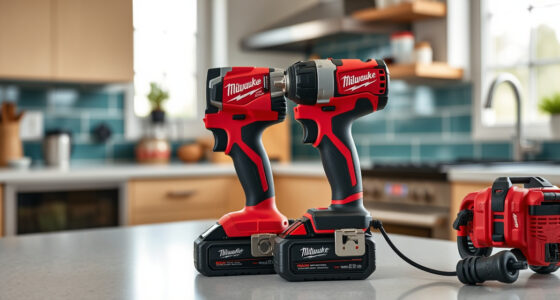
Pro Tool Reviews tested the two brands’ selected top-performing cordless hammer drills: Bosch’s GSB18V-1330CN and Milwaukee’s M18 Fuel 2904. The outlet used high-capacity 8.0Ah batteries—the Bosch Core18V High Power and Milwaukee Forge packs—rather than the batteries included in tool kits, aiming to assess each drill’s capability with advanced batteries.
The test covered driving an RSS structural screw into stacked OSB, drilling with a 1-inch spade bit through stacked OSB, boring with a 2 9/16-inch self-feed bit in a pine stud, and drilling a 3-inch-deep hole in cured 4,000-psi concrete with a 3/8-inch bit. Results were averages of three runs, with fresh batteries for each test. Milwaukee completed the tasks in 2.49, 2.62, 1.89 and 6.84 seconds, respectively; Bosch’s times were 2.88, 3.29, 2.09 and 8.94 seconds.
On the specification sheet, Bosch had higher listed maximum speeds: 550 and 2,200 RPM, compared with Milwaukee’s 500 and 2,100 RPM. Milwaukee listed more torque and a faster maximum hammer rate: 1,400 inch-pounds and 33,000 blows per minute, versus Bosch’s 1,330 inch-pounds and 30,000 blows per minute. Milwaukee was also shorter and lighter in the tested setup: 7 inches and 5.6 pounds, compared with Bosch at 8.1 inches and 6.3 pounds.
Milwaukee’s Speed Comes With Less Bulk
For readers choosing between these specific models, the results suggest Milwaukee offers a combination of faster performance in the tested tasks and a smaller, lighter package. That can matter when drilling repeatedly, working overhead or carrying a tool through a full shift. The largest gap in the test was in concrete, where Milwaukee finished in 6.84 seconds to Bosch’s 8.94; the report said the difference in hammer rate appeared to matter in that task.
The outcome is not a complete measure of ownership. The comparison used particular batteries and materials, and it does not settle differences in price, battery availability, service, durability or how a tool feels to an individual user. Bosch may also suit people already invested in its battery ecosystem or who value features not captured by drilling times. The report’s conclusion was that Bosch completed the assigned work without apparent strain, despite losing the timed tests.
Products Worth Considering

Ring Battery Doorbell Pro (2nd Gen) with Chime (3rd Gen)

Roborock F25 GT Gen 2 Cordless Wet-Dry Vacuum Mop

Shark HydroVac MessMaster Cordless Wet Dry Vacuum and Mop Combo, AW261
As an affiliate, we earn on qualifying purchases.
Specifications Did Not Predict the Test
The paper specifications suggested a close matchup, with Bosch ahead in maximum speed and Milwaukee ahead in torque, hammer rate, weight and length. Pro Tool Reviews noted that grip and balance also affect how a drill feels in use. The reviewer said Bosch’s handle fit their hand well and its balance helped reduce the sense of fatigue, while preferring Milwaukee’s lighter, more compact design.
Both drills offer kickback control intended to stop the motor quickly if the bit binds. The report said Bosch can add a Connected Module for smart functions, while Milwaukee offers One-Key on the separate 2906 model. Bosch also has electronic angle detection, which the reviewer said can help keep large structural screws straight. Bosch batteries can power other tools in the AmpShare system, a consideration for buyers building a multi-tool collection.
“The 2904 was 17% faster on average.”
— Pro Tool Reviews
Results Cover Four Specific Tasks
The report’s findings are limited to the two named drill models, the selected 8.0Ah batteries and the materials and methods described. It does not provide a broader test of runtime, battery charging, long-term reliability, purchase price or performance across every bit size and worksite condition. The article also does not quantify how much user technique or variations in applied force may affect the results, particularly in concrete drilling.
The report said a fifth-generation Milwaukee M18 Fuel hammer drill was expected by year’s end, but the supplied information does not confirm its release date, specifications or performance. A new model’s eventual results could change the comparison, but no test data for it is included here.
A New Milwaukee Model Is Pending
According to Pro Tool Reviews, Milwaukee’s fifth-generation M18 Fuel hammer drill was expected by the end of 2026. Its specifications and availability were not established in the report, so any comparison with the tested 2904 remains prospective. Buyers considering a purchase can use the published times as one reference, then check current pricing, kit contents and compatibility with batteries they already own.
For Bosch owners, the report does not make a case for switching solely on the basis of these tests: the Bosch drill completed each task, and its angle-detection feature and AmpShare compatibility may be relevant to particular users. Further testing or product announcements would be needed to show whether the next Milwaukee model changes the results or the value comparison.
Key Questions
Which drill won the Pro Tool Reviews test?
Milwaukee’s M18 Fuel 2904 won all four timed tests and averaged 17% faster than Bosch’s GSB18V-1330CN in the report.
What tasks were included?
The tests covered driving an RSS screw, drilling with a 1-inch spade bit, boring with a 2 9/16-inch self-feed bit and drilling a 3-inch-deep hole in cured concrete.
Was Bosch slower in every test?
Yes. Bosch recorded longer times in each of the four reported comparisons. The margin varied by task and was largest in the concrete test.
Does the result mean Bosch owners should switch?
Not necessarily. The reviewer said Bosch handled the tested jobs, and its electronic angle detection and AmpShare battery compatibility may matter to some buyers. The report did not compare price, durability or long-term ownership costs.
Could a new Milwaukee drill change the comparison?
Possibly. Pro Tool Reviews said a fifth-generation M18 Fuel hammer drill was expected by the end of 2026, but the report did not provide confirmed specifications or test results for that model.
Source: rss