Choosing between a dust extractor and a dust collector depends on your workspace needs. If you want portable, high-suction power for targeted dust removal, a dust extractor is ideal. For larger areas or multiple tools, a dust collector is better as it handles more dust continuously. Consider your space size, dust volume, and safety standards. To find out which system suits your situation best and how to keep your air clean, keep exploring.
Key Takeaways
- Choose a dust extractor for portable, high-suction needs at individual workstations or small projects.
- Opt for a dust collector when managing large volumes of dust across multiple tools or in industrial settings.
- Dust extractors typically feature finer filters like HEPA for microscopic particles; collectors handle larger debris with bags or cartridges.
- Consider space, airflow requirements, and maintenance when selecting between a portable extractor and a stationary collector.
- Prioritize safety, air quality standards, and long-term costs to determine the most suitable system for your environment.
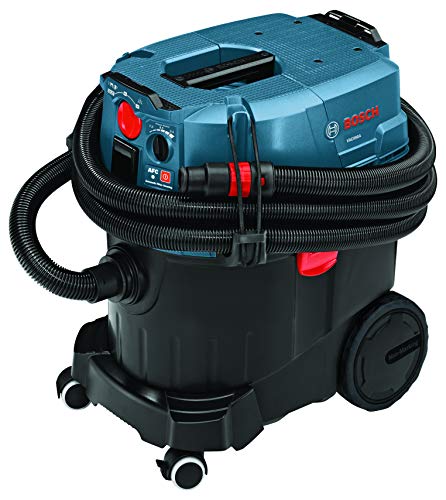
BOSCH VAC090AH Portable 9 Gallon Dust Extractor with Auto Filter Clean and HEPA Filter
AUTO CLEANING: With automatic filter cleaning, the Bosch VAC090AH dust extractor cleans the filter every 15 seconds to…
As an affiliate, we earn on qualifying purchases.
As an affiliate, we earn on qualifying purchases.
Understanding Dust Extractors and Dust Collectors: Definitions and Differences
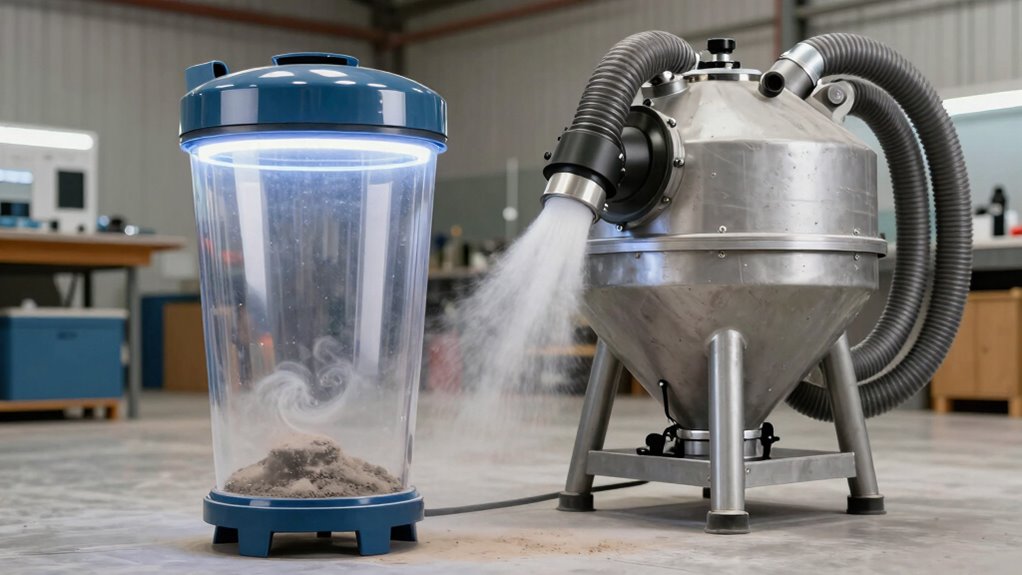
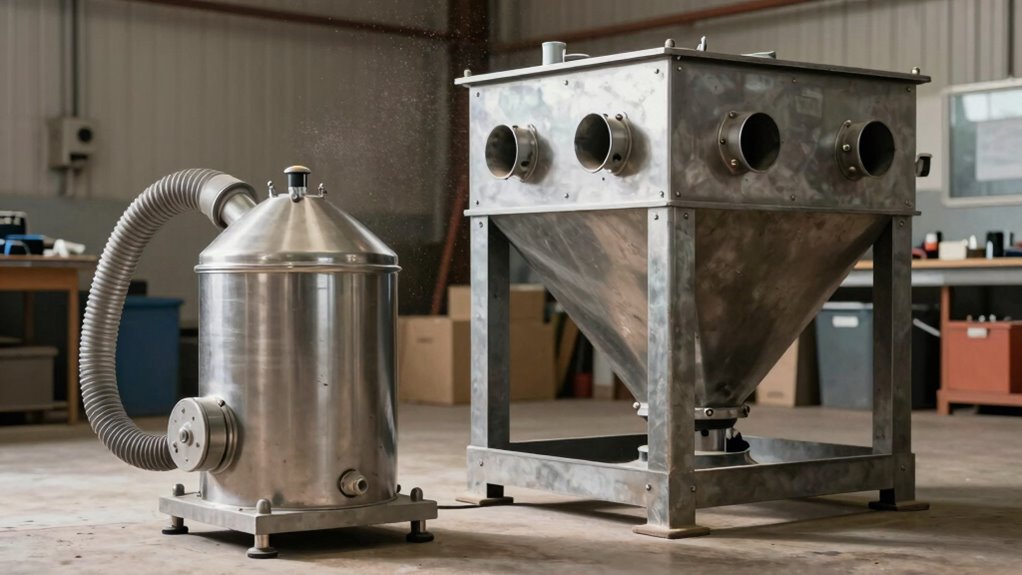
Dust extractors and dust collectors are essential tools for maintaining a clean and safe workspace, but they serve different purposes. Dust extractors are designed to remove airborne dust, improving air quality and dust regulation directly at the source. They typically feature high suction power and are portable, making them ideal for specific tasks or confined areas. Dust collectors, on the other hand, are larger units meant to handle dust from multiple machines or wider workspaces. They filter dust particles before releasing air back into the environment, ensuring better dust regulation over time. Understanding these differences helps you select the right equipment for your needs, ensuring ideal air quality and compliance with safety standards in your workspace. Additionally, choosing the appropriate system can influence overall air purification efficiency, which is crucial for maintaining a healthy environment. Proper system selection also impacts long-term maintenance requirements, reducing operational costs and downtime. Recognizing the dust management systems that suit your workspace can significantly enhance overall safety and productivity. Being aware of the air quality standards applicable to your industry can further guide your choice between these systems. Moreover, evaluating the regulatory compliance requirements specific to your sector can help ensure your dust control solutions meet all legal obligations.

1500W Vertical Industrial Dust Collector with 50-Gallon Collection Bag and Mobile Base, Heavy-Duty Workshop Cleaner for Carpentry and Woodworking
Workshop Particulate Collector with 1500W Power: This 2HP woodshop extractor is equipped with a robust 1500W motor, delivering…
As an affiliate, we earn on qualifying purchases.
As an affiliate, we earn on qualifying purchases.
How Do Dust Extractors and Dust Collectors Work?
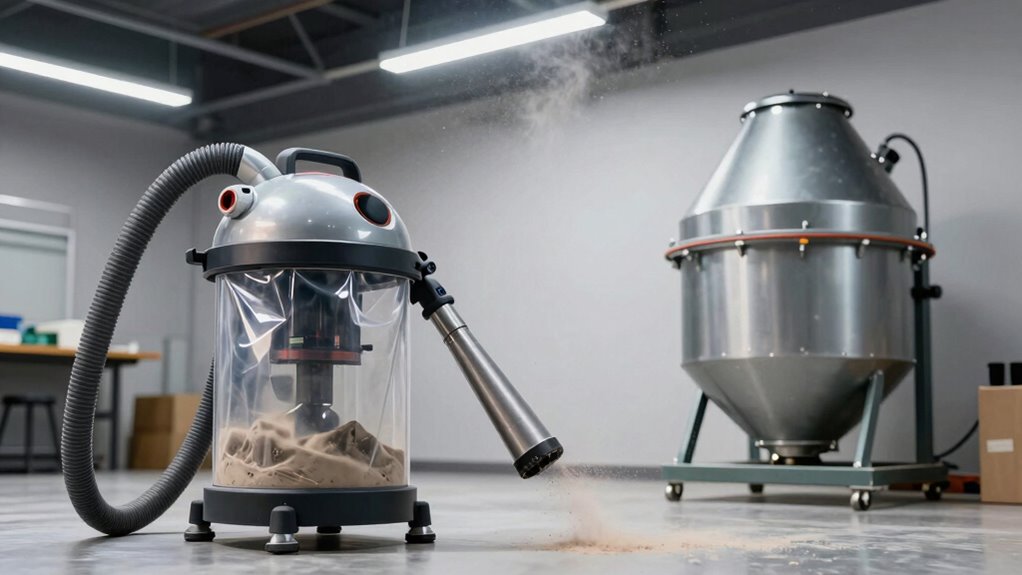
Understanding how dust extractors and dust collectors operate helps you choose the right tool for your needs. They use specific filtration mechanisms, airflow, and suction power to capture dust effectively. The collection and disposal process guarantees dust is removed safely, keeping your workspace clean and healthy. Additionally, selecting the appropriate device can contribute to a healthier work environment and prevent issues like burnout caused by poor air quality. Proper maintenance and understanding of air filtration systems ensure optimal performance and safety, especially in environments with high dust levels. Considering factors like microplastics in dust can further improve indoor air quality and protect your health. Furthermore, understanding the natural filtration processes used in eco-friendly systems can help you make more sustainable choices for your workspace. Recognizing how classic arcade games influence entertainment trends can also inspire innovative ways to incorporate fun into your environment.
Filtration Mechanisms Explained
Filtration mechanisms are at the heart of how both dust extractors and dust collectors remove airborne particles. They use different methods to trap dust, ensuring cleaner air and improved system efficiency. Dust collectors typically rely on filter bags or cartridges that capture larger particles through air filtration, allowing clean air to exit. Dust extractors, on the other hand, often incorporate HEPA filters or finer filtration media to trap microscopic particles. The effectiveness of these mechanisms depends on the filter’s quality and design, which directly impacts system efficiency. When dust particles pass through these filters, they are retained, preventing re-circulation into the environment. Understanding these filtration mechanisms helps you choose the right equipment for your needs, ensuring ideal air quality and efficient dust removal.
Airflow and Suction Power
Both dust extractors and dust collectors rely heavily on airflow and suction power to effectively capture airborne particles. High airflow ensures that dust and debris are pulled into the system quickly, improving air quality by reducing airborne contaminants. Suction power determines how effectively the units can handle different dust loads, especially in busy work environments. Stronger suction means better removal of fine particles that can linger in the air, enhancing overall air quality. Additionally, air filtration efficiency plays a crucial role in maintaining cleaner indoor environments by effectively trapping microscopic particles. This efficiency depends not only on the filter quality but also on the airflow dynamics within the system, which can influence overall performance. However, increased airflow and suction often lead to higher noise levels, which can be disruptive. Finding a balance between sufficient airflow for effective cleaning and manageable noise levels is key. Your choice depends on your workspace needs—more airflow for cleaner air or quieter operation for comfort.
Collection and Disposal Process
Dust extractors and dust collectors remove debris from the air by capturing particles and then storing or disposing of them safely. This process directly impacts your air quality, especially when handling dust particles of varying sizes. Here’s how it works:
- Filtration: They trap dust particles, including fine ones that can harm air quality. Effective filtration systems are essential for capturing microscopic dust and ensuring cleaner air. The filter media used can significantly influence the system’s overall performance. Proper maintenance of these filters is crucial to maintain their effectiveness over time.
- Collection: The debris is stored in filters, bags, or bins, preventing re-entry into the environment. The design of the collection system influences how easily you can access and manage the stored debris. Additionally, the collection capacity determines how much debris can be stored before needing to be emptied.
- Disposal: You safely dispose of accumulated dust, ensuring minimal exposure and maintaining essential air quality. Using appropriate disposal methods minimizes environmental impact and health risks.
- Efficiency depends on the quality of filtration systems, which determine how effectively fine particles are captured. Understanding these differences helps you choose the right system for your needs. Whether dealing with larger debris or microscopic dust particles, the collection and disposal process is crucial for maintaining a cleaner, healthier workspace.

Makita XCV11Z 18V LXT Lithium-Ion Brushless Cordless 2 Gallon HEPA Filter Portable Wet/Dry Dust Extractor/Vacuum, Tool Only
Powerful BL Brushless motor delivers 57 CFM and 27 inches water lift of suction using an 18V LXT…
As an affiliate, we earn on qualifying purchases.
As an affiliate, we earn on qualifying purchases.
Which System Is Best for Your Workshop or Industry?

Choosing between a dust extractor and a dust collector depends on your specific workshop needs and industry requirements. If maintaining high air quality and adhering to safety standards are priorities, select a system that effectively captures fine dust particles at their source. For small workshops or tasks involving light-duty work, a dust extractor offers portable, targeted filtration, ensuring cleaner air and compliance with safety standards. Larger industrial environments with heavy dust generation benefit from a dust collector’s capacity to handle volume and provide continuous air purification. Consider your space, dust types, and airflow needs to determine the best fit. Proper system sizing and airflow management are crucial for optimal performance. Understanding airflow capacity helps you choose the right system for your operational demands. Properly managing air filtration efficiency ensures your workspace remains safe and compliant. The right system improves air quality, safeguards worker health, and helps you meet regulatory safety standards efficiently.

10 Foot Long Dust Collection Power Tool Hose Kit with 8 Attachments for Multiple Types/Brands of Power Tools and Work Shop Vacuums Featuring Sili Flex Fit Fittings (Hose w/ 8 Fittings)
Sili FLEX FIT FITTINGS: Made from stretchable silicone on one end of the threaded fitting, the Sili Flex…
As an affiliate, we earn on qualifying purchases.
As an affiliate, we earn on qualifying purchases.
Key Factors to Consider When Choosing a Dust Management System
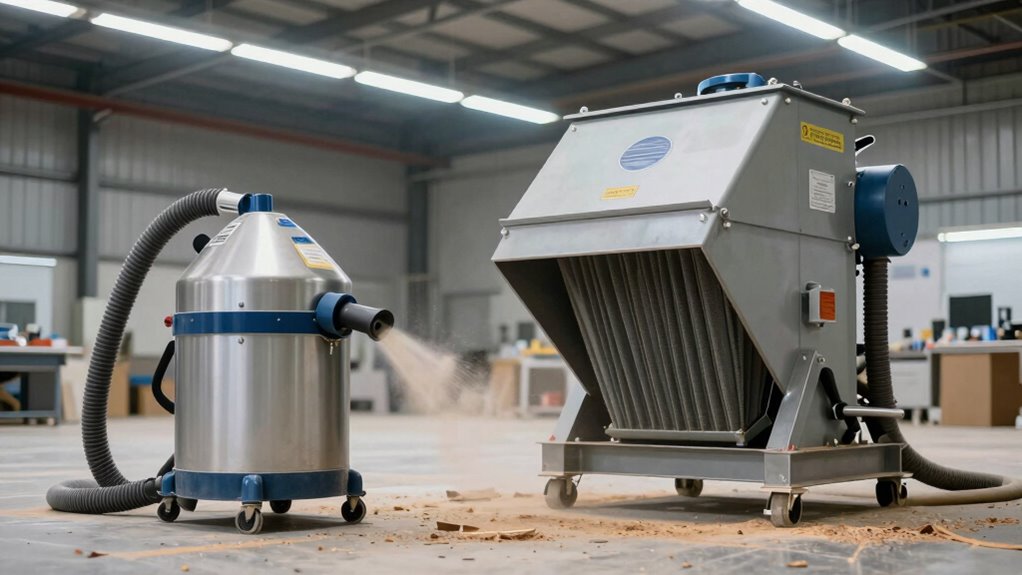
When selecting a dust management system, determining several key factors that directly impact performance and suitability is essential. First, consider air quality; guarantee the system captures fine dust particles effectively to protect your health and workspace. Second, evaluate noise levels—opt for quieter units to maintain a comfortable environment without sacrificing efficiency. Third, assess your workspace size and dust volume to choose between a compact extractor or a larger collector that can handle the workload. Additionally, understanding the safety precautions involved in operating these systems can help prevent accidents and ensure proper maintenance. Being aware of maintenance requirements ensures the system remains effective and prolongs its lifespan. Incorporating personality traits in choosing equipment can also help align the system’s features with your specific needs and preferences. Recognizing the historical development of dust management technologies can provide insight into the most reliable and innovative options available today. These factors influence not only the system’s ability to improve air quality but also your comfort during operation. Balancing performance with noise and capacity helps you select the right solution, ensuring a cleaner, safer, and more pleasant work environment.
Practical Applications: DIY, Workshops, and Industrial Settings
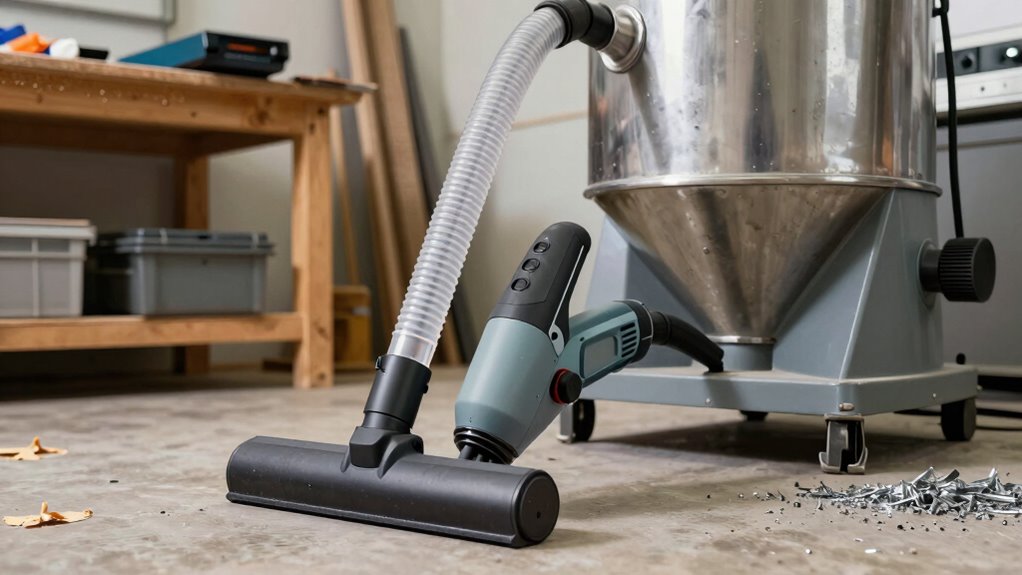
Whether you’re working on DIY projects, running a busy workshop, or managing an industrial operation, choosing the right dust management system is essential. You’ll want equipment that’s effective for smaller tasks or scalable for large-scale environments. Understanding each system’s suitability can help you improve safety and efficiency across your applications. For creative and professional environments, specialized gaming gear and audio equipment can also contribute to a safer workspace by reducing noise and improving communication.
Suitability for DIY Projects
Dust extractors and dust collectors both serve important roles in DIY projects, workshops, and industrial settings, but their suitability depends on the scope of your work. For DIY tasks, a dust extractor is often preferred because it’s portable, easy to maneuver, and effective at maintaining air quality in small spaces. When considering system compatibility, confirm the unit can connect seamlessly with your tools to maximize efficiency. Here are three key points:
- Size and Portability: A compact dust extractor suits DIY projects where mobility is essential.
- Air Quality Control: Both units improve air quality, but extractors often provide better localized filtration.
- Ease of Use: Simpler setup and maintenance make dust extractors ideal for home workshops. Additionally, selecting a vacuum with the appropriate filtration system ensures optimal removal of airborne particles and allergens. Understanding air filtration helps in choosing the right equipment to improve workspace safety, especially since performance parts like flywheels and engine upgrades can generate more debris and dust.
Choosing the right system ensures your workspace stays clean and safe without overwhelming your setup.
Efficiency in Industrial Environments
Maximizing efficiency in industrial environments requires selecting the right dust management system to handle varying workloads. Proper airflow optimization ensures dust is effectively captured without excessive noise or energy use. An efficient system maintains consistent airflow, preventing dust buildup and reducing system strain. This not only improves safety but also enhances productivity. Additionally, choosing equipment with a focus on filter lifespan means less frequent replacements, saving you time and money. Industrial settings generate large volumes of dust, so a system designed for durability and consistent performance is essential. Regular maintenance and ideal airflow management keep filters functioning longer, ensuring continuous protection and efficient operation. By prioritizing airflow optimization and filter lifespan, you create a safer, cleaner, and more productive industrial environment.
Comparing Cost, Maintenance, and Efficiency of Dust Systems
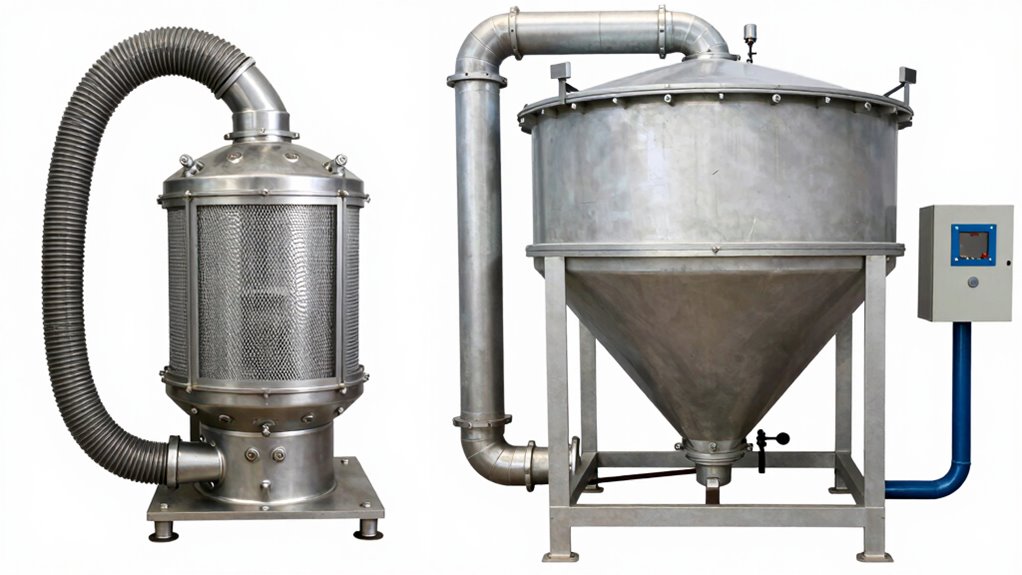
When evaluating dust extraction systems, understanding their cost, maintenance needs, and efficiency is essential for making the right choice. A clear cost comparison helps you determine initial investment versus long-term savings. Maintenance requirements influence system uptime and labor costs, affecting overall performance. Dust extractors typically have higher upfront costs but lower ongoing maintenance, while dust collectors may be more affordable initially but need frequent upkeep. Consider these factors:
- Total cost of ownership over time
- Frequency and complexity of maintenance tasks
- System efficiency in capturing dust and ensuring air quality
Tips for Selecting the Right Dust Extractor or Collector
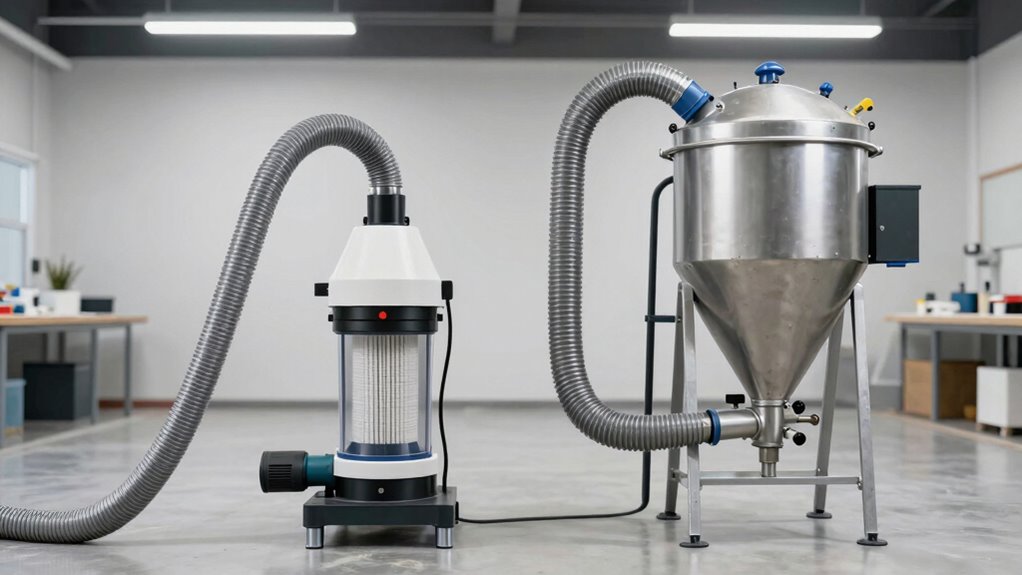
Choosing the right dust extractor or collector starts with evaluating your specific needs and work environment. Begin by appraising the types of dust generated and the volume of air filtration required. Consider the size and layout of your workspace to determine whether portability or a stationary system fits best. Focus on dust containment features—look for units with effective seals and filters that prevent dust from escaping into the air. Select a system with adequate horsepower and filtration capacity to handle your workload efficiently. Also, check for ease of maintenance and filter replacement. Properly matching your dust system to your environment ensures cleaner air, improved safety, and compliance with health standards. By prioritizing air filtration and dust containment, you’ll make a more informed and effective choice.
Final Thoughts: Ensuring Clean Air and Safety in Your Workspace
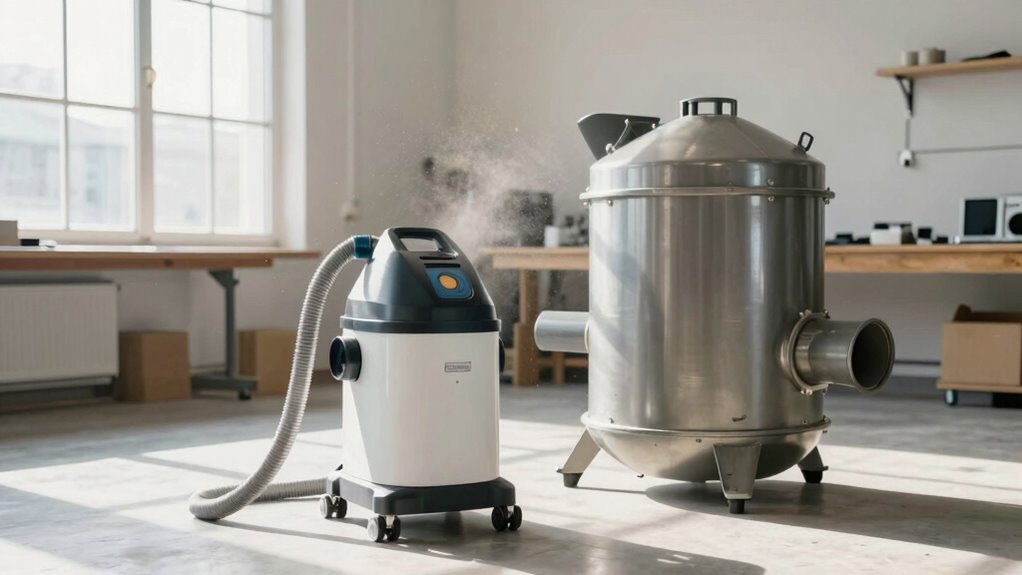
Selecting the right dust extraction system is a vital step toward maintaining a safe and healthy workspace. To guarantee ideal air quality and compliance with safety regulations, consider these key points:
- Prioritize systems that effectively capture airborne particles to protect your health.
- Regularly maintain and inspect your equipment to prevent air quality deterioration.
- Stay updated on safety regulations to confirm your workspace remains compliant and safe.
Frequently Asked Questions
Can a Dust Extractor Replace a Dust Collector in My Workshop?
A dust extractor can’t fully replace a dust collector in your workshop. Dust extractors are portable and ideal for smaller tasks, while dust collectors are stationary and suited for continuous, heavy-duty use. Consider filter lifespan; dust collectors typically have larger filters that last longer under constant use. If you need consistent, high-capacity dust removal, a dust collector is your best choice, but a dust extractor works well for quick, localized cleanup.
What Noise Levels Should I Expect From Each System?
You can expect noise levels from dust extractors to range between 70-80 decibels, similar to normal conversation, while dust collectors tend to be louder, around 80-90 decibels. These decibel ratings can vary based on the model and size. If quiet operation matters, look for units with lower noise levels, but always consider hearing protection if noise levels get too high during extended use.
Are Portable Dust Extractors Effective for Large-Scale Industrial Use?
Think of portable dust extractors as the nimble acrobats of industrial portability—they can dance through smaller jobs with agility. However, for large-scale efficiency, they often fall short, like trying to lift a mountain with a spoon. While they’re effective for localized tasks, you’ll need bigger, stationary systems for extensive industrial cleanup. So, if you’re tackling big projects, don’t rely solely on portable extractors—they’re great sidekicks, but not the heavy lifters.
How Often Should Filters Be Replaced or Cleaned?
You should clean or replace filters during regular filter maintenance, typically every 1 to 3 months, depending on usage and manufacturer recommendations. Keep an eye on the replacement schedule, and check filters regularly for signs of clogging or damage. Proper maintenance guarantees your dust extractor or collector performs efficiently, maintains air quality, and extends its lifespan. Adjust your schedule based on the dust levels and filter condition.
Do Both Systems Meet OSHA or EPA Air Quality Standards?
Like Pandora’s box, choosing the right system impacts your air quality standards and regulatory compliance. Both dust extractors and collectors can meet OSHA and EPA standards if maintained properly, but it’s essential you verify their certification. Regular filter checks and adherence to manufacturer guidelines ensure your system consistently adheres to air quality standards, helping you avoid penalties and protect your health. Don’t leave your compliance to chance—stay vigilant.
Conclusion
Choosing between a dust extractor and dust collector depends on your specific needs. Consider your workspace, the type of dust, and your budget to make the right call. Remember, a clean workspace isn’t just about appearances—it’s about safety too. Don’t put all your eggs in one basket; sometimes, combining systems is the best bet. Stay proactive and keep your air clean—after all, a healthy shop is a happy shop.