
To build sturdy sawhorses, start with high-quality lumber like hardwood or pressure-treated plywood, avoiding softwoods that warp or break. Use 2x4s or 2x6s for legs and crossbeams, ensuring everything is straight and free of knots. Secure fasteners tightly and reinforce joints with brackets or braces for extra support. Add non-slip pads for stability, check for loose parts before use, and maintain them regularly. If you keep these tips in mind, you’ll create safe, durable sawhorses that last—more tips await you.
Key Takeaways
- Select high-quality, straight, knot-free lumber like hardwood or pressure-treated plywood for stability.
- Use sturdy 2x4s or 2x6s for legs and crossbeams to support heavy loads.
- Reinforce joints with brackets or cross braces to increase strength and prevent wobbling.
- Secure fasteners properly, countersink screws, and add non-slip pads for added stability on floors.
- Regularly inspect and maintain sawhorses to address any damage, cracks, or wear for long-lasting durability.
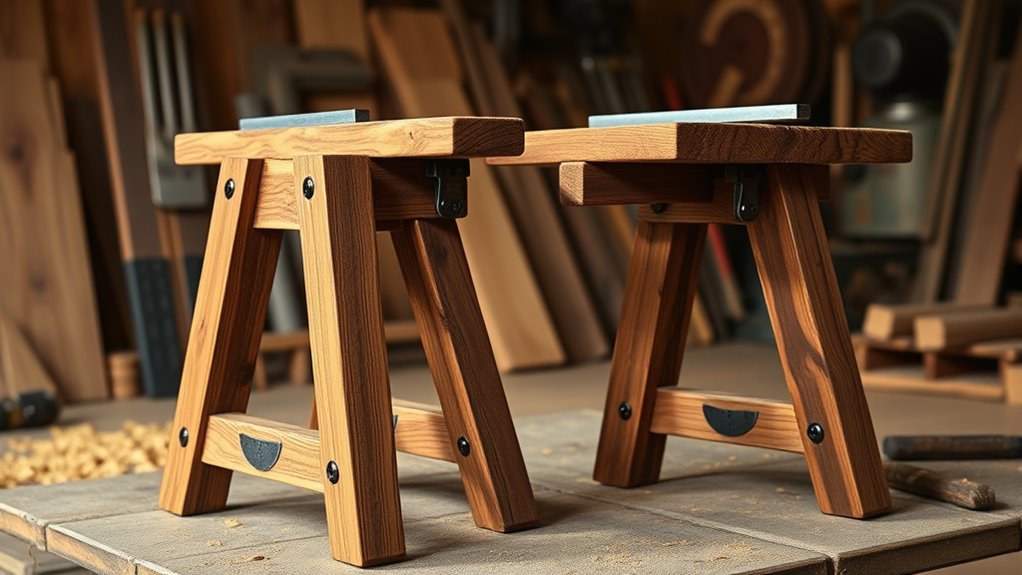
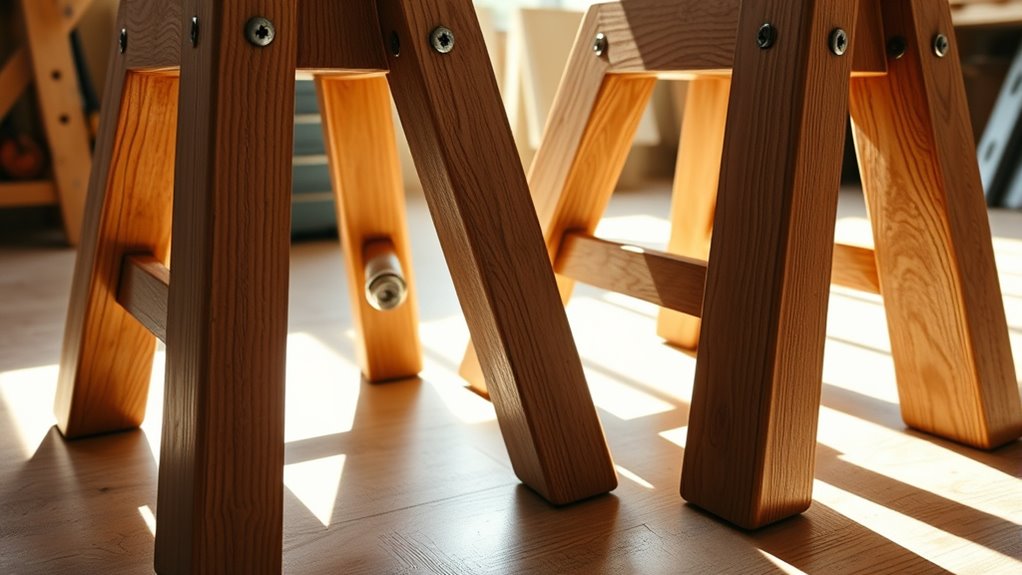
Building sturdy sawhorses is essential for any woodworking project, as they provide a reliable foundation for cutting, measuring, and supporting materials. When you start designing your sawhorses, the first step is choosing the right materials. Material selection plays a critical role in guaranteeing stability, durability, and safety. You want to pick sturdy, high-quality lumber, such as hardwood or pressure-treated plywood, that can withstand the weight and wear of your projects. Avoid softwoods like pine for the main supports, as they tend to warp or break under pressure. Instead, opt for 2x4s or 2x6s for the legs and crossbeams, ensuring they are straight and free of knots or cracks. The right material choice assures your sawhorses won’t wobble or collapse, providing a safe working surface.
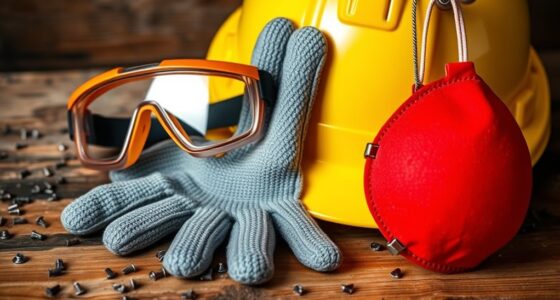
Once you’ve selected your materials, safety tips become your guiding principles. Always wear eye protection and gloves when handling power tools and cutting materials. Make sure your workspace is clean and free of clutter to prevent accidents. When cutting your lumber, secure it firmly to prevent slipping, and use the correct blade for the material—this reduces kickback and ensures cleaner cuts. Measure twice and cut once; precision reduces the need for adjustments later and prevents material waste. During assembly, double-check that all fasteners, such as screws or nails, are properly driven and countersunk to avoid protrusions that could cause injury. Stability is paramount, so reinforce joints with brackets or cross braces if necessary, especially if you plan to support heavy loads. It’s also wise to use non-slip pads or rubber feet on the legs, providing extra grip on smooth floors and preventing slipping. Additionally, selecting high-quality materials can significantly extend the lifespan of your sawhorses and ensure they remain stable over time.
Incorporating safety tips throughout your project helps protect you and prolongs the life of your sawhorses. Always inspect your completed sawhorses before use—look for loose fasteners, cracks, or warping. If anything seems unstable, take the time to reinforce or rebuild. Remember that a well-built sawhorse isn’t just about the materials but also about how you handle and assemble them. Proper material selection combined with diligent safety precautions ensures your sawhorses will serve you well for years, supporting your projects safely and effectively. When you prioritize quality and safety, you create a sturdy foundation that makes your woodworking safer, more efficient, and more enjoyable.
heavy-duty sawhorse brackets
As an affiliate, we earn on qualifying purchases.
As an affiliate, we earn on qualifying purchases.
Frequently Asked Questions
What Tools Are Essential for Building Sawhorses?
You’ll need a saw, drill, measuring tape, and clamps for building sawhorses. Always prioritize power tool safety by wearing goggles and gloves, and follow manufacturer instructions. When cutting wood, use proper wood treatment tips to prevent splinters and guarantee durability. Accurate measurements and secure clamping help you create sturdy, reliable sawhorses. With these tools and safety practices, you’ll craft strong, long-lasting supports efficiently and safely.
How Do I Choose the Right Wood for Sawhorses?
Did you know that selecting the right wood can increase your sawhorse’s durability by up to 50%? To pick the best wood, consider the grain; tight, straight grains provide strength and stability. Also, opt for wood that’s properly treated to resist moisture and pests. Hardwoods like oak or maple are excellent choices, but if using softwoods, make sure they’re treated or sealed for extra longevity and safety.
Can I Customize Sawhorses for Different Tasks?
Yes, you can definitely customize sawhorses for different tasks by adding adjustable features and exploring various customization options. For example, you can include height-adjustable legs to accommodate different projects, or attach clamps and shelves for added convenience. These modifications make your sawhorses more versatile, helping you work more efficiently and safely. Just confirm your customizations are sturdy and well-secured for reliable performance across all tasks.
What Safety Precautions Should I Follow During Construction?
You should wear personal protective equipment like safety glasses, gloves, and ear protection to stay safe during construction. Always handle tools safely by following manufacturer instructions, keeping blades sharp, and using clamps to secure materials. Check your workspace for hazards, keep a clean work area, and stay alert. These precautions help prevent injuries and ensure you work efficiently and safely on building your sturdy sawhorses.
How Do I Ensure the Sawhorses Are Level and Stable?
Imagine your sawhorse as a balanced scale, each leg supporting equal weight. You verify it’s level and stable by checking measuring accuracy with a spirit level, adjusting legs until bubble centers perfectly. Focus on even weight distribution, so no side dips or wobbles. Tighten all joints securely, then double-check with the level. A well-balanced sawhorse stands firm, providing a safe and reliable work surface every time you use it.
non-slip sawhorse pads
As an affiliate, we earn on qualifying purchases.
As an affiliate, we earn on qualifying purchases.
Conclusion
Now that you’ve built these sturdy sawhorses, you might think your projects are foolproof. But don’t be surprised if one day, they give out just when you need them most—after all, even the strongest can have their off days. Irony strikes again! Still, with your new skills, you’ll be ready to tackle anything, knowing that, at least for now, your sawhorses are as reliable as they come.
pressure-treated plywood for sawhorses
As an affiliate, we earn on qualifying purchases.
As an affiliate, we earn on qualifying purchases.
2×4 lumber for woodworking
As an affiliate, we earn on qualifying purchases.
As an affiliate, we earn on qualifying purchases.