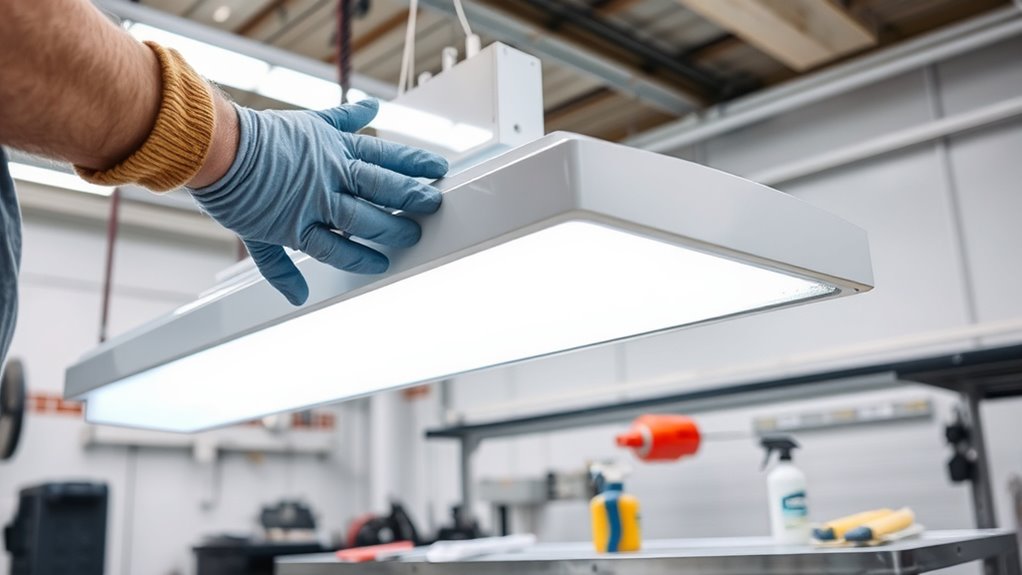
To maintain and clean your shop lights, regularly inspect fixtures for dust, dirt, or flickering, and clean them carefully with a soft, dry cloth. Make certain bulbs are securely seated and replace any dimming or flickering ones promptly. Use gloves when handling fluorescent bulbs for safe disposal. Keeping fixtures free of debris improves brightness and efficiency. Following these steps will help you keep your workspace well-lit and safe—there’s more to discover if you continue exploring.
Key Takeaways
- Regularly dust and wipe fixtures and bulbs with a soft, dry cloth to maintain optimal light output.
- Inspect fluorescent tubes for secure seating and replace flickering or dimming bulbs promptly.
- Clean LED fixtures and components to prevent dust buildup that can reduce brightness and efficiency.
- Dispose of used fluorescent bulbs at recycling centers, handling them carefully due to mercury content.
- Schedule periodic inspections to identify damage, corrosion, or wear, ensuring consistent, safe lighting in the workspace.
Keeping your shop lights in good condition is essential for a safe and productive workspace. Proper lighting ensures you can see clearly, work efficiently, and avoid accidents. When it comes to maintaining your shop lighting, understanding the differences between LED and fluorescent bulbs can help you make better choices for your environment. LED vs fluorescent lighting each has its advantages and considerations, especially when it comes to bulb replacement tips. LEDs tend to last longer, are more energy-efficient, and require less frequent replacements. Fluorescent bulbs, on the other hand, are generally cheaper upfront but may need more frequent attention due to flickering or burnout.
Choosing LED or fluorescent bulbs depends on durability, efficiency, and upfront costs for your shop lighting.
When replacing bulbs, it’s important to follow some simple tips to keep your lighting running smoothly. For LED bulbs, you should verify they are compatible with your fixtures. Many LED replacements are designed to fit standard sockets, but checking the wattage and base type prevents compatibility issues. LEDs also tend to be more resilient to frequent switching, so you can turn them on and off without worrying about shortening their lifespan. When replacing fluorescent bulbs, be cautious because these contain small amounts of mercury. Always handle with care, wear gloves, and dispose of used bulbs properly at designated recycling centers. Fluorescent tubes are more sensitive to vibration and frequent switching, which can cause flickering or early failure.
Regularly inspecting your shop lights can prevent many common issues. Dust and dirt buildup can greatly reduce light output. Make it a habit to clean the fixtures and bulbs periodically with a soft, dry cloth. For fluorescent bulbs, ensure they are securely seated in their sockets, as loose connections can lead to flickering or dimming. LEDs are generally more durable, but it’s still good practice to check for signs of damage or corrosion that could impair performance. Additionally, understanding the efficiency ratings of your lighting options can help you choose energy-saving solutions that reduce costs over time.
Another key tip is to plan for bulb replacements before they completely burn out. For fluorescent tubes, you might notice a gradual dimming or flickering before failure, giving you a chance to replace them proactively. LEDs usually provide consistent brightness until they finally fail, so replacing them early can prevent sudden dark spots in your workspace. Keep spare bulbs on hand for quick swaps, and label fixtures to track their age and performance. Proper maintenance not only extends the life of your lighting but also keeps your work environment safe and well-lit at all times.
Frequently Asked Questions
How Often Should I Replace Shop Light Bulbs?
You should replace shop light bulbs based on their bulb lifespan and replacement frequency. Typically, bulbs last around 1,000 to 2,000 hours of use, so check your manufacturer’s recommendations. If you notice dimming, flickering, or a bulb burning out, it’s time to replace it. Regularly inspecting your lights guarantees maximum brightness and safety. Don’t wait for complete failure—proactive replacement keeps your workspace well-lit and efficient.
Can I Upgrade to LED Shop Lights Easily?
Upgrading to LED shop lights is like switching from a flickering candle to a bright, steady lighthouse beam. You can do it easily because LED fixtures often fit existing shop light design and wiring. Just choose a bulb with the right shop light brightness, check compatibility, and follow simple installation steps. This upgrade enhances visibility, energy efficiency, and safety, turning your workspace into a well-lit haven of productivity.
What Safety Precautions Are Needed When Cleaning Shop Lights?
When cleaning shop lights, you should prioritize safety by wearing appropriate safety gear like gloves and safety glasses to protect against debris or accidental contact. Always turn off the power and disconnect the lights to guarantee electrical safety, preventing shocks or short circuits. Use a sturdy ladder or step stool if needed, and avoid water or harsh chemicals near electrical components. Following these precautions keeps you safe during maintenance.
Are There Eco-Friendly Cleaning Options for Shop Lights?
Think of your shop lights as the eyes of your workspace—bright, essential, and needing care. You can choose eco-friendly cleaning options that protect the environment, like natural solutions or biodegradable wipes, which keep your lights shining without harmful chemicals. By opting for sustainable lighting and eco-friendly cleaning, you guarantee a safe, healthy environment. This small act reflects your commitment to a greener future, making your workspace both bright and eco-conscious.
How Do I Troubleshoot Flickering Shop Lights?
When troubleshooting flickering shop lights, check for ballast issues first, as faulty ballasts often cause flickering or flickering lights. If your lights are connected to a dimmer switch, make sure it’s compatible with the bulbs, since incompatible switches can cause flickering. Turn off power before inspecting or replacing components. If problems persist, consider replacing the ballast or switching to LED lights, which are more reliable and energy-efficient.
Conclusion
Regularly maintaining and cleaning your shop lights keeps your workspace bright and safe. For example, a small auto repair shop noticed improved visibility and fewer accidents after implementing a weekly cleaning routine. Don’t wait for dim lights or grime to cause problems—stay proactive. By taking a few minutes now, you guarantee your lights work efficiently, saving you time and money in the long run. Proper care truly makes a brighter, safer shop for everyone.