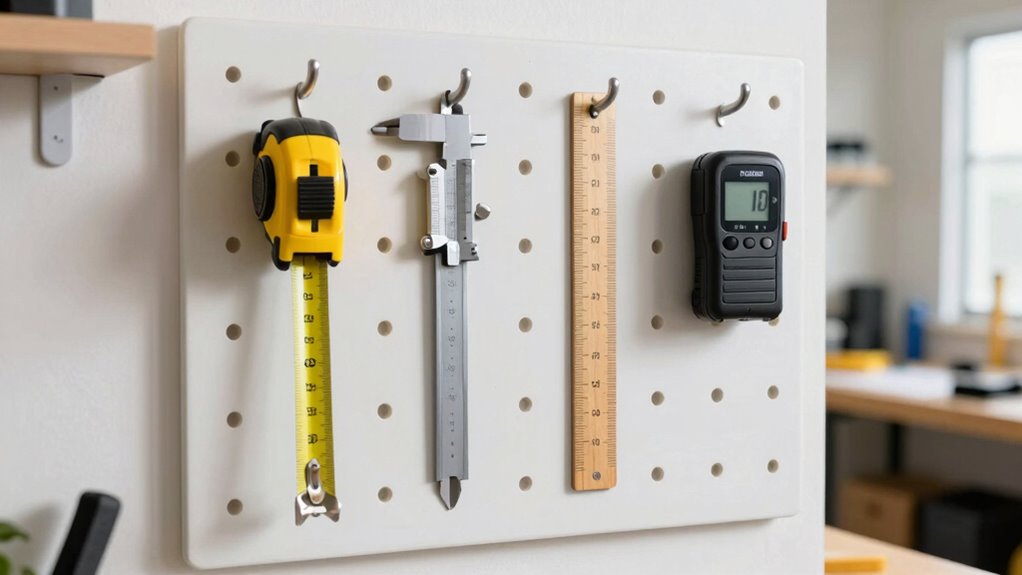

To keep your measuring tools accurate and avoid losing them, organize them in a dedicated storage system like labeled drawers, pegboards, or toolboxes. Use clear labels and color-coding to quickly identify types and frequency of use. Regularly clean and inspect your tools, and track calibration dates digitally to prevent errors. Keeping everything tidy, properly maintained, and systematically arranged not only boosts accuracy but also makes it easier to find what you need fast—learn more to master your setup.

Get business pricing on tools and workshop supplies
- Business-only prices and quantity discounts
- Tax-exempt purchasing
- Multiple users, one account, clear invoices
Key Takeaways
- Establish a dedicated, systematically organized storage space with labeled sections for each measuring tool type.
- Use durable labels and color-coding to quickly identify tools and reduce search time.
- Prioritize storing frequently used tools in accessible locations to ensure quick retrieval.
- Implement regular cleaning, inspection, and calibration to maintain tool accuracy and prolong lifespan.
- Maintain a digital inventory to track tools, monitor maintenance schedules, and prevent misplacement.
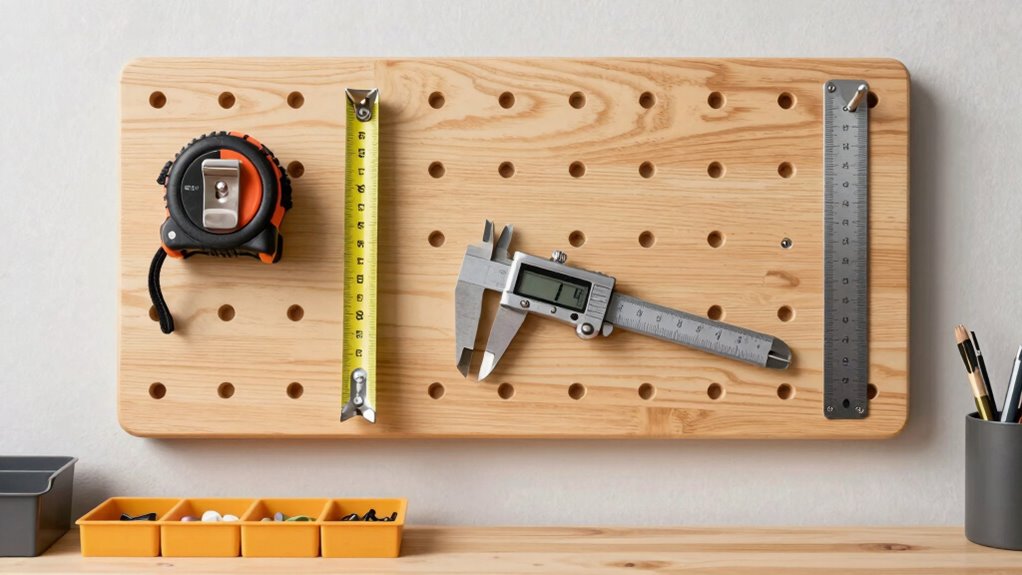
Keeping your measuring tools organized can greatly improve your efficiency and accuracy when working on projects. When tools are scattered or misplaced, you waste time hunting for the right one, and errors can occur if you use the wrong measurement. To prevent this, start by establishing a dedicated space for your measuring tools. Use a sturdy toolbox, pegboard, or drawer system designed specifically for your collection. Digital storage solutions are especially effective; you can keep an inventory of all your tools on a device or cloud service, making it easy to track what you have and identify missing items quickly. This digital catalog helps you maintain control and guarantees nothing slips through the cracks. Incorporating a systematic approach to organization ensures consistency and reduces the chance of errors. Regularly updating your digital inventory can also help you stay aware of calibration dates and maintenance needs, further enhancing accuracy. Additionally, implementing standardized procedures for storing and handling your measuring tools can help maintain their precision over time. Proper handling practices, such as avoiding rough treatment or exposure to extreme conditions, also contribute to preserving their accuracy for longer periods. Labeling systems are equally crucial. Clear, consistent labels on drawers, containers, or compartments allow you to find what you need instantly. Label each section with the specific type of measuring tool it contains—such as tape measures, calipers, or rulers—so you can grab the right tool without rummaging. Consider using durable labels that resist wear and tear, especially if your workspace gets messy or if tools are frequently moved around. Combining labels with color-coding can further streamline your process; for instance, use red labels for measuring tapes, blue for calipers, and green for rulers. This visual cue speeds up your workflow and reduces the chance of selecting the wrong tool. Another key step is to organize your measuring tools by type and frequency of use. Keep your most-used tools within easy reach, perhaps on a dedicated shelf or in a specific drawer, so you don’t waste time searching for them. Less frequently used tools can be stored in a separate, labeled area to keep your workspace uncluttered. Regularly clean and inspect your tools to ensure they stay in good condition and maintain accuracy. Proper storage prevents damage and helps keep calibration intact, especially for precision instruments like digital calipers or laser measures. Using appropriate storage solutions can also protect delicate or expensive tools from accidental damage and environmental factors. Ensuring your storage environment is clean and dry can significantly extend the lifespan and reliability of your measuring devices. Implementing organized storage methods also helps prevent misplacement and accidental damage, especially when working in busy or shared spaces. When all your measuring tools are stored systematically, labeled clearly, and tracked digitally, accuracy becomes second nature. You’ll find it easier to work efficiently and confidently, knowing everything is in its right place and ready to deliver precise results every time.
Products Worth Considering

eufy Security SoloCam E42 4-Camera Kit with HomeBase 3, 4K Solar Security Cameras

eufy Security 4G LTE Cam S330 4K Solar Outdoor Camera with Pan and Tilt, AI Tracking, SIM Card and 32GB SD Card

eufy Security SoloCam E42 4K Solar Security Camera with AI Motion Tracking
As an affiliate, we earn on qualifying purchases.
Frequently Asked Questions
What Are the Best Storage Containers for Measuring Tools?
You should choose storage containers made from durable materials like plastic or metal to guarantee longevity. Opt for containers with clear labels so you can quickly identify each measuring tool without rummaging through clutter. Look for stackable or compartmentalized options to keep different tools organized and protected. Durable containers prevent damage and help maintain accuracy, making your measuring tools easy to find and use whenever needed.
How Often Should I Calibrate My Measuring Tools?
You should calibrate your measuring tools regularly—think of it as giving them a superhero-level boost to keep their precision sharp. For most tools, calibration intervals vary from weekly to annually, depending on usage and accuracy needs. To maintain accuracy, set a schedule based on manufacturer recommendations and your specific tasks. Skipping calibration risks errors, so stay vigilant. Regular calibration is your secret weapon for unwavering measurement accuracy.
Can Organizing Tools Improve Measurement Accuracy?
Yes, organizing your measuring tools can improve measurement accuracy by promoting precision maintenance and enhancing tool ergonomics. When tools are properly stored and easy to access, you reduce the risk of damage, misplacement, or contamination that could skew results. Good organization also encourages regular calibration checks, ensuring tools stay accurate over time. By maintaining a tidy workspace, you support consistent, reliable measurements and extend the lifespan of your measuring instruments.
What’s the Ideal Frequency for Cleaning Measuring Tools?
A stitch in time saves nine, so you should clean your measuring tools regularly to keep accuracy intact. Follow your cleaning protocols after each use, especially if they’ve been exposed to dirt or moisture. Additionally, stick to a strict calibration schedule to guarantee precision. Typically, cleaning should occur weekly or after heavy use, but always adjust based on your environment and specific tools to prevent errors before they happen.
How Do I Prevent Measuring Tools From Getting Damaged?
To prevent measuring tools from getting damaged, focus on enhancing tool durability and storage safety. Always store your tools in a protective case or designated drawer, avoiding clutter that can cause dents or scratches. Handle tools with care, especially precision instruments, and clean them regularly to prevent corrosion. Using proper storage solutions guarantees your tools stay in good condition, maintaining accuracy and extending their lifespan.
Conclusion
By organizing your measuring tools, you gain precision and confidence, turning chaos into clarity. Just as a well-placed ruler ensures accuracy, a tidy toolbox guarantees efficiency. When everything is in its rightful place, you avoid errors and frustration, embracing mastery over your craft. Remember, a cluttered space breeds mistakes, but order fosters success. In this way, organizing tools isn’t just about storage — it’s about creating a foundation for quality and trust in every project you undertake.