
When choosing a toolbox for home and car use, prioritize durability, portability, and organization. Opt for high-quality materials like reinforced steel or tough plastic to protect your tools from damage and the elements. Consider storage compartments and trays for easy access and sorting of small parts, and pick a size that’s easy to carry or fits your designated space. Keep in mind security features like secure latches. If you want to find the best fit for your needs, keep exploring the options available.

Get business pricing on tools and workshop supplies
- Business-only prices and quantity discounts
- Tax-exempt purchasing
- Multiple users, one account, clear invoices
Key Takeaways
- Assess storage needs based on tool size, quantity, and whether portability or stability is a priority.
- Choose durable materials like reinforced steel or heavy-duty plastic for longevity and protection.
- Select compartments and dividers to keep tools organized and easily accessible.
- Opt for secure latches and comfortable handles for safe transport and handling.
- Match the toolbox type to its intended location, such as portable boxes for on-the-go tasks or larger chests for home use.

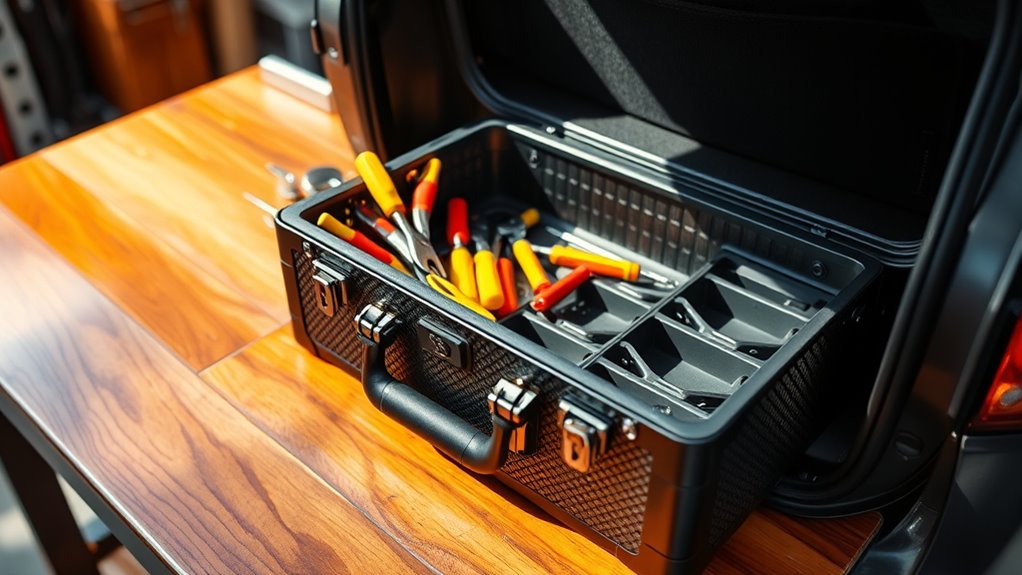
Selecting the right toolbox is essential for completing your projects efficiently and safely. When you choose a toolbox, you’re not just picking a container; you’re investing in a tool that can make your work smoother and more organized. One of the first things to consider is storage organization. You need a toolbox that offers compartments, dividers, or trays to keep your tools sorted and accessible. Proper storage organization means you won’t waste time searching for the right wrench or screw. Instead, everything stays in its designated spot, so you can focus on the task at hand. Look for a toolbox that allows you to customize storage options according to your needs. If you often work with small parts, a model with smaller compartments can prevent clutter, while larger sections are ideal for power tools or bulky items.
Material durability is equally important because your toolbox needs to withstand the rigors of regular use. If you buy a flimsy box, it might crack or break after a few drops or heavy use, costing you time and money in replacements. Opt for tools made from high-quality materials like heavy-duty plastic, reinforced steel, or aluminum, which offer greater protection for your tools and longevity for the toolbox itself. Durable materials ensure the toolbox can handle rough handling, exposure to the elements, and the weight of the tools inside without warping or deteriorating. This resilience means your tools are better protected, and you won’t need to replace your toolbox frequently. Additionally, material selection plays a crucial role in the overall lifespan and performance of your toolbox.
When selecting a toolbox, think about where you’ll store it—your home garage, car trunk, or workshop. For home use, a larger, more organized chest might be best, whereas a rugged, portable box can be ideal for car repairs on the go. If you plan to carry your tools often, choose a lightweight yet sturdy option with comfortable handles and secure latches. Remember, the right toolbox isn’t just about size or appearance; it’s about durability and smart storage solutions that keep your tools safe, organized, and ready when you need them. Investing in a quality toolbox that matches your specific needs will save you time, prevent frustration, and protect your tools for years to come.
Products Worth Considering

Google Nest Learning Thermostat (3rd Gen), Stainless Steel, with 3 Temperature Sensors and elago Wall Plate

Dyson V15 Detect Cordless Vacuum

Dyson Omni-Glide Cordless Stick Vacuum, Gold/Iron
As an affiliate, we earn on qualifying purchases.
Frequently Asked Questions
What Materials Are Best for a Durable Toolbox?
You should choose a toolbox made from durable materials like steel or high-impact plastic. Steel offers excellent material durability and enhances toolbox longevity, making it resistant to dents and corrosion. High-impact plastic is lightweight yet tough, providing good durability for everyday use. By selecting a sturdy material, you guarantee your toolbox remains reliable over time, protecting your tools and maintaining its integrity even under heavy use.
How Do I Organize Tools for Quick Access?
Ironically, the best way to find your tools quickly is to overthink storage solutions. You’ll want to use labeling techniques to categorize your tools—screwdrivers with screwdrivers, wrenches with wrenches—so you can grab what you need in a flash. Invest in a well-organized toolbox with compartments or small containers. Keep frequently used tools at the front or top, and always return them to their designated spots for effortless access.
Are There Safety Features to Consider in a Toolbox?
Yes, safety lock features are essential to prevent accidental openings and keep tools secure. Look for a toolbox with durable latches and a sturdy lock system. Corrosion resistance is also important, especially if you work outdoors or in humid environments, as it helps preserve the toolbox’s integrity over time. These features ensure your tools stay safe, organized, and protected from damage or theft.
What Is the Ideal Size for a Home Toolbox?
Did you know 60% of homeowners prefer a toolbox that’s easy to carry? The ideal size for your home toolbox is compact yet versatile, typically around 16 inches in length with multiple storage compartments. This portable design allows you to organize tools efficiently and move them easily around your space. Choose a size that fits your needs without overwhelming your storage area, ensuring quick access and convenience.
How to Maintain and Clean My Toolbox Effectively?
To keep your toolbox in top shape, start with regular toolbox cleaning by removing dust, debris, and rust. Establish a maintenance schedule, like once a month, to inspect for damage or rust spots. Use a damp cloth for wiping down tools and toolbox surfaces, and apply lubricant to moving parts. Proper maintenance helps your tools last longer and stay organized, ensuring you’re always ready for any project.
Conclusion
Just like a master painter selects the perfect brushes to bring a canvas to life, choosing the right toolbox guarantees you’re ready for any home or car repair. Think of it as equipping yourself with a trusted arsenal, ready to tackle life’s little emergencies. When you have the right tools at your fingertips, you’re like a skilled craftsman shaping your space with confidence and ease. So, invest wisely, and let your toolbox be your trusted partner in every fix.