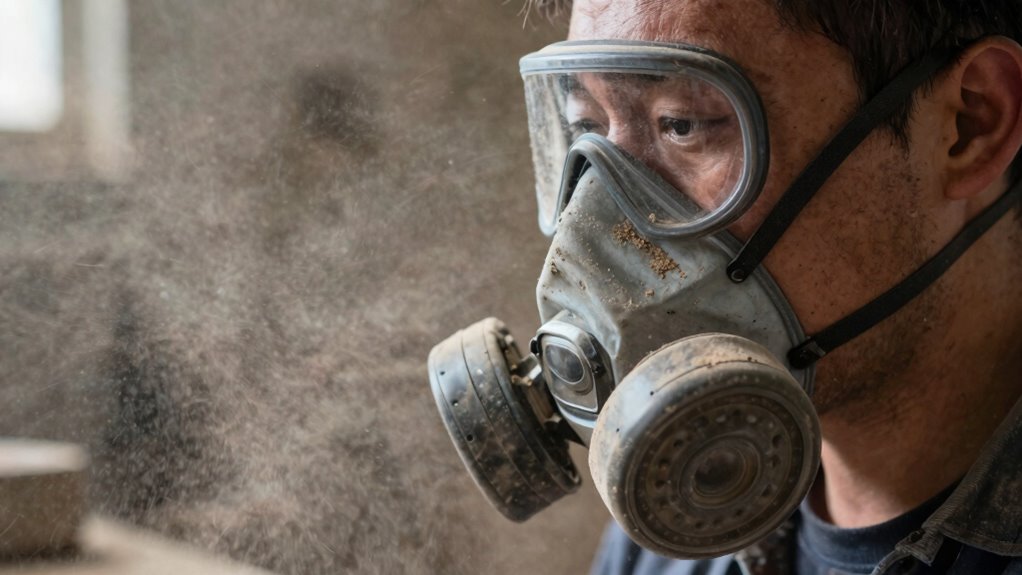

The biggest mistake that makes your workshop air feel worse is wearing a poorly fitted dust mask. Gaps around the mask allow dust, fumes, and particles to bypass the filter, making it less effective and increasing your discomfort. This can actually make you feel like the air is worse, not better, and can expose you to more hazards. Ensuring your mask fits snugly and securely is key—you’ll discover more tips to improve your mask safety as you continue.
Key Takeaways
- Wearing a mask that doesn’t fit snugly allows dust and fumes to bypass filters, worsening airflow and discomfort.
- Reusing disposable masks beyond their recommended lifespan can lead to clogging and reduced filtration, making the air feel worse.
- Failing to adjust straps properly can create gaps, decreasing mask effectiveness and increasing exposure to airborne particles.
- Neglecting mask maintenance and cleaning causes buildup of dust and bacteria, impairing airflow and safety.
- Using an inappropriate mask for the specific hazards can lead to inadequate filtration and a feeling of poor air quality.
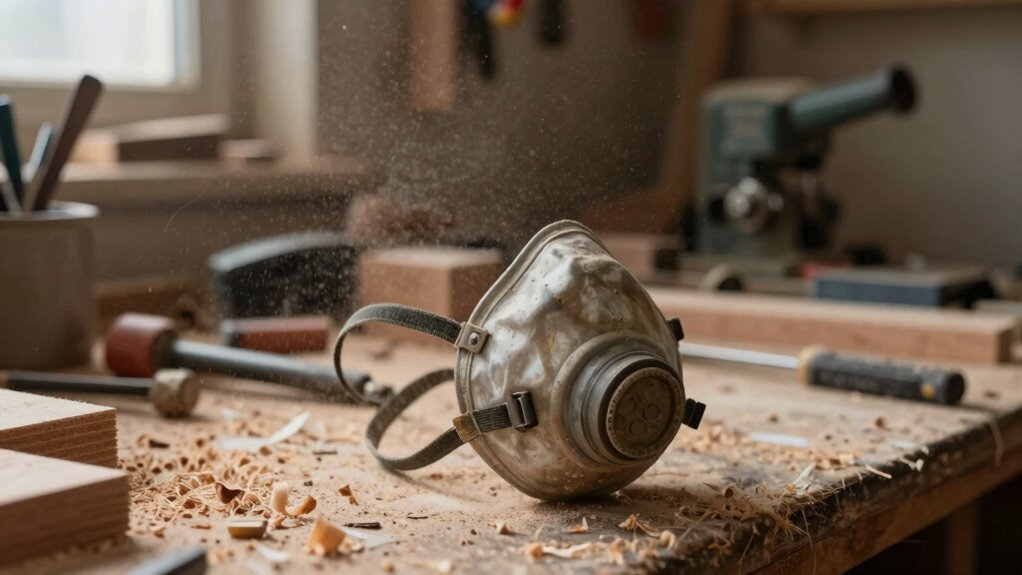
Many workshop accidents happen because workers underestimate the importance of properly wearing dust masks. It’s tempting to think that just slipping on a mask is enough, but the reality is that a poorly fitted mask can do more harm than good. When your dust mask doesn’t fit properly, it leaves gaps that allow dust, fumes, and other particles to bypass the filter. This not only diminishes the mask’s effectiveness but can also make the air feel worse, increasing your exposure to harmful substances. You need to pay attention to proper fit—adjusting straps, ensuring the mask molds snugly against your face without causing discomfort. A well-fitting mask creates a seal that keeps airborne hazards out, making your breathing safer and more comfortable during long work sessions. Regular mask maintenance is equally critical. Over time, dust, sweat, and oils can accumulate on the mask’s surface and straps, reducing its ability to seal correctly. If you neglect to clean or replace your mask regularly, it can become clogged or degraded, compromising your safety. Many workers overlook that masks need routine inspection; checking for cracks, tears, or worn-out straps can prevent unnecessary exposure. Proper upkeep also involves storing your mask in a clean, dry place when not in use, so it remains in good condition and ready to protect you whenever you need it. Additionally, understanding the filtration efficiency of your mask can help you choose the right type for your specific work environment. Knowing the mask’s lifespan and replacement schedule ensures optimal performance and safety. Reusing disposable masks beyond their intended lifespan is another common mistake. These masks are designed for single use, and wearing them repeatedly can lead to a buildup of dust and bacteria on the filter material, which can reduce filtration efficiency and cause irritation or respiratory issues. It’s essential to follow the manufacturer’s guidelines on how long a mask can be safely worn and when to replace it. Ensuring proper fit testing can help confirm that your mask provides an effective seal, especially when working in environments with high levels of airborne hazards. A properly fitted mask not only protects your health but also improves overall air quality inside your workspace, making it safer for everyone present. Doing so ensures that the mask continues to serve its purpose effectively, rather than becoming a source of contamination that worsens the air quality inside your workspace.
dust mask with adjustable straps
As an affiliate, we earn on qualifying purchases.
As an affiliate, we earn on qualifying purchases.
Frequently Asked Questions
Can Wearing a Dust Mask Cause Respiratory Issues?
Wearing a dust mask can cause respiratory issues if it doesn’t fit properly or if you have allergies to the mask material. Poor mask fit allows dust and particles to bypass the filter, increasing inhalation risks. To prevent allergy symptoms and guarantee effective protection, check your mask’s fit carefully and choose one made of hypoallergenic materials. Proper mask use is key to avoiding respiratory problems while working in dusty environments.
Are Certain Dust Masks Better for Specific Workshop Tasks?
Choosing the right dust mask is like finding the perfect glove; it needs to fit snugly and work seamlessly. For woodworking, opt for masks with high filtration ratings like N95 or P100, which are designed for specific particles. Ensuring a proper fit prevents leaks and maximizes mask filtration effectiveness. Different tasks produce different particles, so selecting a mask tailored to your activity keeps your air safer and your breathing easier.
How Often Should I Replace My Workshop Dust Mask?
You should replace your workshop dust mask regularly, especially if you notice a poor mask fitting or decreased comfort. Check the dust mask materials—over time, they can wear out or become less effective at filtering particles. If the mask no longer fits snugly or feels damaged, it’s time to replace it. Regularly inspecting and updating your mask guarantees the best protection, keeping the air quality in your workshop safe and breathable.
Do Dust Masks Protect Against All Types of Workshop Dust?
Dust masks don’t protect against all types of workshop dust due to their limitations. They mainly guard against larger particles but may not filter out tiny, hazardous dust or fumes. Always check your mask’s rating and adhere to workplace safety standards. You might need specialized respirators for certain dust types, especially if regulations specify. Relying solely on a basic dust mask could leave you exposed to harmful airborne contaminants.
Is a Dust Mask Enough, or Should I Use Additional Ventilation?
You might think a dust mask alone keeps you safe, but without proper ventilation, your workspace stays polluted. While mask comfort and fit matter, they aren’t enough on their own. Ventilation clears airborne dust particles more effectively, reducing health risks. Combining a well-fitting mask with good airflow creates a safer environment, making your breathing easier and your workspace healthier. Don’t rely solely on a mask—add ventilation for all-encompassing protection.
N95 respirator masks for workshop
As an affiliate, we earn on qualifying purchases.
As an affiliate, we earn on qualifying purchases.
Conclusion
So, next time you reach for that dust mask, remember—it’s not just about wearing it, but wearing it right. Think of your mask as a loyal shield, not a flimsy curtain that lets dust sneak through. When you seal it properly, you turn a simple accessory into a powerful barrier, transforming your workshop air from a suffocating fog into a breathable breeze. Don’t let a small mistake turn your sanctuary into a smog-filled trap—seal your safety, and breathe easier.
reusable dust masks for woodworking
As an affiliate, we earn on qualifying purchases.
As an affiliate, we earn on qualifying purchases.
As an affiliate, we earn on qualifying purchases.