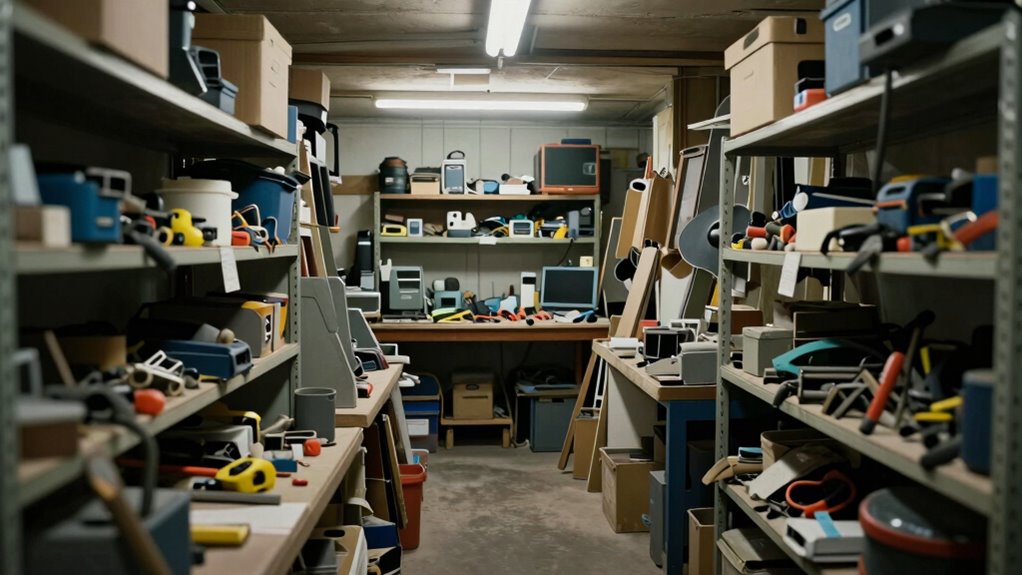
If your workshop feels slow, the problem might be right in front of you—the layout. Cluttered tool placement, scattered supplies, and poor lighting cause unnecessary movement and slow down your work. When tools are poorly organized or out of reach, you waste time searching. By improving your arrangement with designated zones, proper storage, and better lighting, you’ll gain quicker access and work more efficiently. Keep going to discover how small changes can make a big difference.
Key Takeaways
- Poor tool placement leads to excessive movement and wasted time during tasks.
- Scattered tools and cluttered storage hinder quick access and slow workflow.
- Insufficient or uneven lighting causes eye strain and reduces working precision.
- Lack of designated zones and logical layout increases search time and confusion.
- Inadequate lighting combined with poor organization amplifies inefficiency and fatigue.
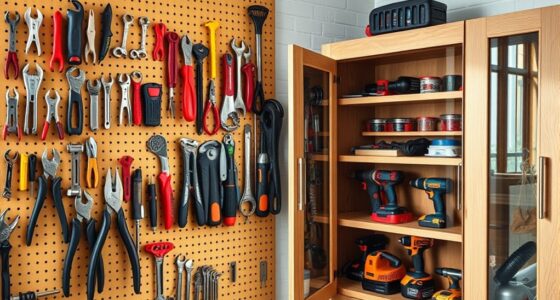
If your workshop feels slow, it’s often because of underlying issues that you can address with targeted improvements. One of the most overlooked causes is the way your space is arranged—specifically, how tool placement and lighting enhancement impact your workflow. When tools are scattered or hard to reach, you waste valuable time searching or walking across the room. Proper tool placement isn’t just about keeping things tidy; it’s about creating a logical, efficient layout that minimizes unnecessary movement. Think about grouping frequently used tools close to your workbench or in designated zones. This organization helps streamline your process and can significantly boost productivity. You should also consider how your storage solutions support accessibility—clear labels, magnetic strips, or pegboards can make a significant difference. Additionally, implementing organization systems can help keep your workspace consistently tidy and easy to navigate.
Lighting enhancement plays a vital role in keeping your workshop moving smoothly. Poor lighting causes eye strain, reduces precision, and makes it harder to spot hazards or small details. When your workspace is dim or unevenly lit, you naturally slow down to compensate. To fix this, evaluate your current lighting and identify dark spots or shadows. Incorporate targeted light sources such as adjustable task lamps or overhead LED fixtures that provide bright, even illumination. You want your work areas to be well-lit without glare or harsh shadows. This not only improves safety but also boosts your efficiency, as you can work faster and more accurately when visibility is ideal.
The combination of strategic tool placement and lighting enhancement creates a seamless environment that encourages productivity. When your tools are within arm’s reach and your workspace is brightly lit, you cut down on unnecessary movements and mental clutter. Instead of hunting for a screwdriver or adjusting your position to see better, you can focus entirely on the task at hand. These small adjustments may seem simple, but they have a cumulative effect on how quickly and comfortably you work. Remember, a well-organized, well-lit workshop isn’t just about aesthetics; it’s about removing obstacles that slow you down. By addressing these layout issues, you’ll notice your workflow becoming smoother, your tasks completing faster, and your overall experience in the workshop becoming more enjoyable. Proper workspace organization can make a remarkable difference in your efficiency and comfort.
magnetic tool strips for workshop
As an affiliate, we earn on qualifying purchases.
As an affiliate, we earn on qualifying purchases.
Frequently Asked Questions
How Can I Measure My Workshop’s Efficiency Accurately?
You can measure your workshop’s efficiency by conducting a workflow analysis, observing how tasks move through the space, and identifying bottlenecks. Track how well space utilization supports smooth operations and minimizes delays. Use time and task completion data to gauge productivity. Regularly review these metrics to spot inefficiencies and adjust your layout accordingly, ensuring your workshop runs more smoothly and efficiently over time.
What Tools Are Best for Optimizing Workshop Layouts?
You should use tools like layout software or physical templates to optimize your workshop. Focus on tool organization to keep frequently used items within easy reach, and create distinct workflow zones to streamline tasks. By arranging your space based on how you work, you reduce unnecessary movement and increase efficiency. Regularly reassess your layout to guarantee it adapts to your evolving needs, making your workshop faster and more productive.
How Often Should I Reevaluate My Workshop Setup?
Think of your workshop as a garden that needs seasonal tending. You should reevaluate your setup every 6 to 12 months, like pruning branches for better growth. During these check-ins, consider storage solutions to clear clutter and lighting improvements to brighten your space. Regular adjustments make certain your tools are within reach and your environment stays efficient, helping your workflow flourish instead of wilting under disorganization.
What Common Layout Mistakes Slow Down Productivity?
You often slow down productivity by cluttering your workspace and disrupting material flow. When tools and materials are scattered, you spend extra time searching and moving around, which hampers efficiency. Avoid this by keeping your workspace organized and ensuring a logical layout that promotes smooth material flow. Regularly reevaluate your setup to identify clutter and reorganize, so your workflow remains seamless, speeding up your overall productivity.
Can Small Layout Changes Have a Big Impact?
Absolutely, small layout changes can make a huge difference. Like a well-placed chariot, optimizing space utilization reduces workflow bottlenecks, making tasks flow smoother. You might reposition tools or create dedicated zones, and suddenly, your workspace feels more efficient. These tweaks cut down unnecessary movements, boost productivity, and even improve safety. Don’t overlook the power of minor adjustments—they can transform your workshop from sluggish to streamlined in no time.
adjustable LED work light
As an affiliate, we earn on qualifying purchases.
As an affiliate, we earn on qualifying purchases.
Conclusion
So, if your workshop still drags like a snail on a treadmill, it’s probably your layout sneaking in like a ninja. Fixing this mistake can turn your space into a lightning-fast powerhouse, making productivity feel like a breeze and workdays slash in half. Don’t let a simple layout blunder be the villain holding you back—change it today, and watch your workshop transform from sluggish to supercharged, faster than you can say “game-changer”!
pegboard tool organizer
As an affiliate, we earn on qualifying purchases.
As an affiliate, we earn on qualifying purchases.
workshop storage bins with labels
As an affiliate, we earn on qualifying purchases.
As an affiliate, we earn on qualifying purchases.