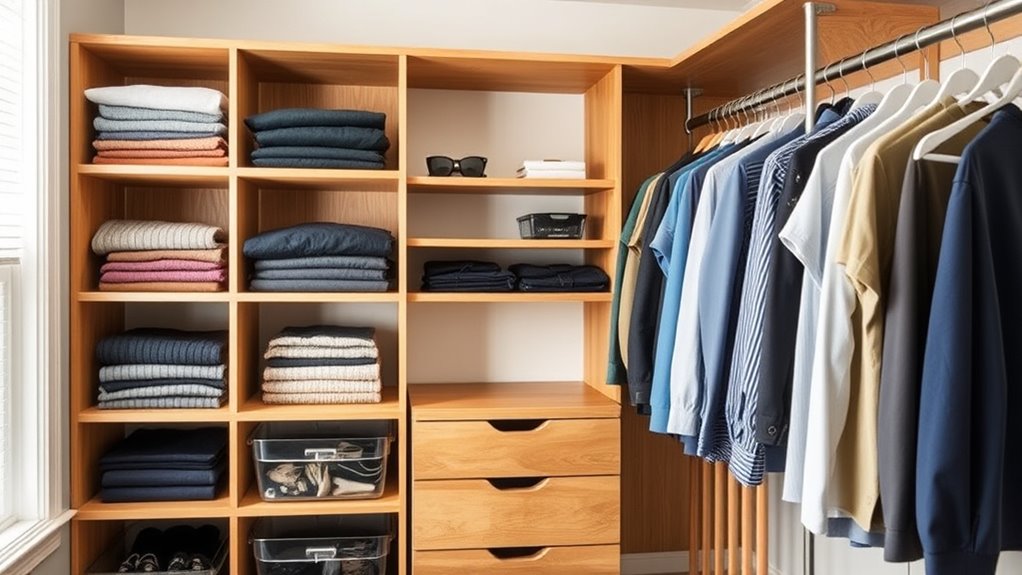

Creating a DIY closet organization system is simple and customizable. Start by maximizing space with open shelves, hanging organizers, and hooks for accessories. Use clear bins or labeled baskets to keep small items tidy, and consider repurposing household items like crates or tension rods. Adjust your setup regularly to fit your needs, ensuring easy access to daily essentials. Keep exploring clever ideas to make your closet both functional and clutter-free.
Key Takeaways
- Use adjustable rods and tension bars to maximize hanging space and create custom sections.
- Repurpose household items like bookshelves or crates for unique, cost-effective storage solutions.
- Incorporate labeled bins and clear containers for easy organization and quick item retrieval.
- Install wall-mounted racks and hooks for accessories, belts, and scarves to utilize vertical space.
- Regularly purge unused items and label storage areas to maintain an organized, efficient system.
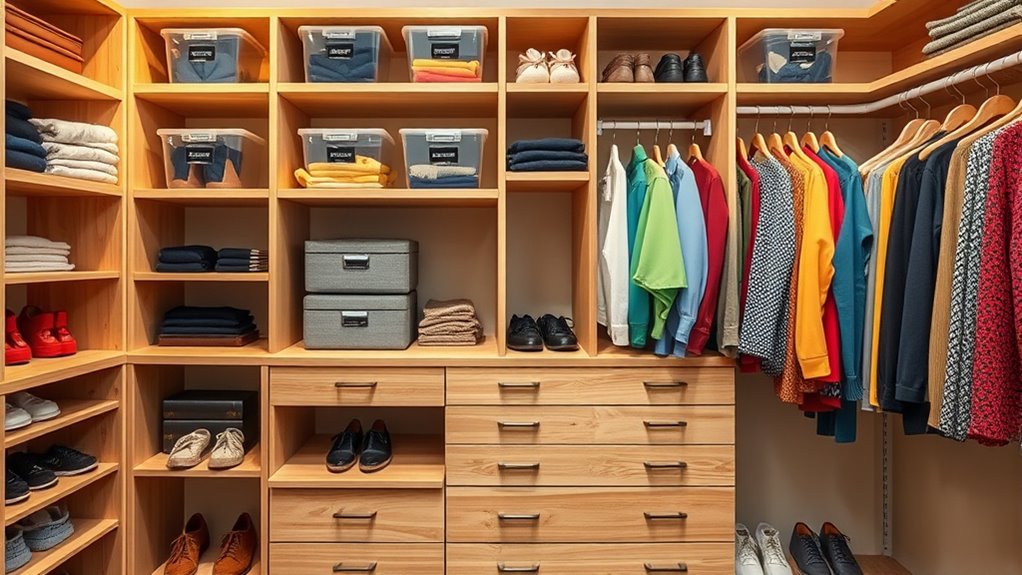
Organizing your closet doesn’t have to be complicated or expensive. With a few simple strategies and some DIY tweaks, you can transform your space into an efficient, clutter-free zone. The key is to focus on effective storage solutions that maximize your available space. Start by evaluating what you truly need to store and identify areas where clutter tends to pile up. Once you understand your habits and wardrobe, you can choose storage solutions that fit your specific needs. For example, installing open shelves or hanging organizers can create designated spots for shoes, accessories, or folded clothes, helping you keep everything visible and accessible.
Space optimization is central to a successful DIY closet system. Invest in adjustable rods or add a second hanging bar to double your hanging space, especially if you have a lot of shirts or pants. Use vertical space by adding hooks or wall-mounted racks for belts, scarves, or jewelry. Clear bins or labeled baskets can neatly contain smaller items, preventing clutter from spreading across your shelves. If you have high ceilings, consider installing a ceiling-mounted or over-the-door organizer to utilize every inch of space effectively. Remember, the goal is to make your closet work for you, so think creatively about how to use every nook and cranny without overspending.
Repurposing items you already own is another smart way to save money and improve storage. An old bookshelf can be converted into a shoe rack, or a sturdy crate can serve as a drawer for smaller accessories. Using tension rods across the closet width creates additional hanging space for lightweight items, and installing a DIY divider system inside drawers can keep smaller pieces organized and easy to find. When designing your system, keep accessibility in mind—place frequently used items at eye level and store seasonal or less-used items higher up or towards the back.
Additionally, incorporating proper tools can make a significant difference in your DIY project, ensuring your system is both sturdy and long-lasting. When designing your system, keep accessibility in mind—place frequently used items at eye level and store seasonal or less-used items higher up or towards the back.
Finally, maintaining your DIY closet organization system is essential. Regularly purge items you no longer wear or need, and adjust your storage solutions as your wardrobe changes. Labeling bins and sections can help you stay organized over time. By focusing on smart storage solutions and space optimization, you’ll create a closet that not only looks tidy but also functions efficiently, saving you time and frustration each day. With just a little effort and some creative thinking, you can craft a personalized closet system that meets your needs without breaking the bank.
Frequently Asked Questions
What Tools Are Necessary for Installing a DIY Closet System?
When selecting tools for installation, you need a drill, level, measuring tape, stud finder, screwdriver, and possibly a saw. Proper tool selection guarantees a smooth process, so follow installation tips like marking measurements accurately and securing brackets firmly. Having the right tools on hand helps you avoid mistakes, saves time, and results in a sturdy, professional-looking closet system. Always double-check measurements and use the correct hardware for your space.
How Can I Maximize Small Closet Space Effectively?
To maximize your small closet space, start by optimizing your hanging rods—double them up if possible to create more hanging areas. Use drawer dividers to keep items organized and prevent clutter. Consider adding vertical storage solutions like shelves or hanging organizers. Keep frequently used items at eye level, and store seasonal or seldom-used clothing elsewhere. These strategies help you utilize every inch efficiently and keep your closet tidy.
What Are Affordable Materials for DIY Closet Organization?
Think of your closet as a blank canvas waiting for a splash of creativity. When choosing affordable materials, explore budget options like plastic bins, fabric organizers, and wire shelving—they’re easy on your wallet. For eco-friendly choices, consider bamboo, reclaimed wood, or biodegradable fabric. These materials not only save you money but also protect the planet, turning your closet into a sustainable, organized haven without breaking the bank.
How Do I Customize Shelves for Different Clothing Items?
To customize shelves for different clothing items, start by using adjustable shelf brackets to vary the height and fit larger or smaller items. Add removable shelf liners to protect delicate fabrics and keep everything neat. You can also tailor each shelf’s depth and width by repositioning brackets, ensuring your closet adapts perfectly to your wardrobe. This flexible approach keeps your clothes organized and easily accessible, making your space more functional.
What Maintenance Is Required to Keep the System Organized?
Think of your closet as a garden that needs tending. Regular cleaning tips, like wiping down shelves and sorting out clutter, keep it fresh. Seasonal adjustments are your pruning, helping you stay organized year-round. Keep an eye on your system, making small tweaks when needed, and it’ll flourish. With consistent care, your closet will remain a tidy sanctuary, ready to showcase your style without the chaos.
Conclusion
With your new DIY closet system in place, your space transforms into a well-tuned orchestra, each item harmoniously in its place. No more cluttered chaos—just a sleek, organized haven you created with your own hands. Like a master gardener tending to a beautiful bloom, you’ve cultivated order from chaos. Now, step back and enjoy the harmony you’ve crafted—your closet’s symphony, perfectly tuned and ready to inspire every day.