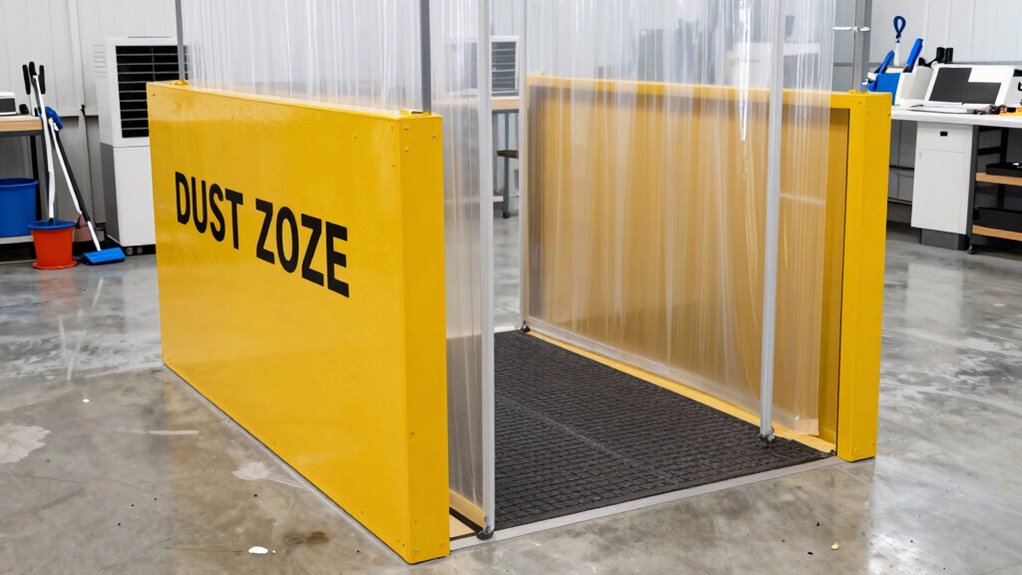

To create an effective dust-control entry zone, designate a clear entry area for workers and visitors, and use mats or rugs to trap dirt and debris. install HEPA filters and maintain air quality systems regularly to capture airborne dust. Seal gaps around doors and windows, and reinforce barriers at entry points to reduce dust spread. Keep the space organized and guarantee continual inspection and maintenance. Follow these steps to keep dirt and dust from taking over; discover more next.

Get business pricing on tools and workshop supplies
- Business-only prices and quantity discounts
- Tax-exempt purchasing
- Multiple users, one account, clear invoices
Key Takeaways
- Designate and clearly mark a dedicated entry area with mats or rugs to trap dirt and debris.
- Install and maintain HEPA filters and air filtration systems to reduce airborne dust.
- Seal gaps around doors, windows, and vents to prevent dust infiltration.
- Use physical barriers and containment strategies to limit dirt spreading inside.
- Conduct regular inspections and cleaning of entry zones to ensure ongoing dust control effectiveness.

Creating a dust-control entry zone is crucial for maintaining a clean and safe work environment, especially in areas prone to dirt and debris. This zone acts as the first line of defense, preventing dust from spreading throughout your shop and reducing cleanup time. To set this up effectively, you need to focus on two critical elements: air filtration and sealant application. These components work together to contain dust at the entry point and keep it from migrating deeper into your workspace.
Start by establishing a designated entry area where all workers and visitors pass through before entering the main work zone. This space should be clearly marked and organized to encourage everyone to use it consistently. Once the zone is defined, install air filtration systems strategically positioned to capture airborne dust particles. High-efficiency particulate air (HEPA) filters are ideal because they trap even the smallest dust particles, improving air quality and reducing contamination. Regularly maintaining and replacing these filters guarantees ideal performance, so make it part of your routine. Incorporating air quality control measures ensures your workspace remains healthier and dust-free.
Establish a marked entry area and install HEPA filters for effective dust control and improved air quality.
Sealant application plays a crucial role in creating an effective dust barrier. You’ll want to seal gaps, cracks, and openings around doors, windows, and walls leading into your work area. Use a durable sealant designed for your shop’s environment—preferably one that adheres well and withstands temperature fluctuations and wear. Proper sealing minimizes the chances of dirt and dust sneaking in through small openings, reinforcing your entry zone’s effectiveness. Also consider sealing any ventilation ducts or exhaust vents that might allow dust to escape or enter. Regular inspections of building envelope integrity will help identify potential weak points that could compromise your dust barrier. Additionally, implementing routine maintenance procedures will help sustain the effectiveness of your dust-control measures over time.
In addition to sealing, implement physical barriers like mats or rugs at the entry point. These mats trap larger debris and can be easily cleaned or replaced, preventing dirt from tracking further inside. Encourage everyone to wipe their feet thoroughly before crossing into the main work area, emphasizing the importance of maintaining the integrity of the dust-control zone. Properly designed entry zones also often include containment strategies, which further enhance dust management.
Maintaining your dust-control entry zone is an ongoing task. Regularly inspect the air filtration units, replace filters as needed, and check the seals for any signs of deterioration. Keep the entry area clean and organized, removing trapped debris from mats and ensuring that the sealant remains intact. When done correctly, this zone considerably reduces dust spread, making your shop safer, cleaner, and more efficient. By focusing on air filtration and sealant application, you create a reliable barrier that keeps dirt from taking over your workspace before it even gets a chance to spread.
As an affiliate, we earn on qualifying purchases.
Frequently Asked Questions
What Are the Best Materials for Entry Zone Flooring?
You should choose durable materials like rubber mats or textured vinyl for your entry zone flooring. These materials offer excellent entry zone durability, resisting wear from foot traffic and dirt. Plus, they balance flooring material cost effectively, making them affordable options that still provide longevity. Rubber mats are especially good for trapping dirt and moisture, helping you keep your shop cleaner and safer while staying within your budget.
How Often Should the Dust Control Mats Be Replaced?
You should replace dust control mats based on your maintenance schedules and the replacement frequency that fits your shop’s activity level. Typically, inspect mats daily for heavy soiling or damage, and replace them when they become excessively dirty or worn, usually every 1 to 3 months. Regular maintenance guarantees maximum dirt-trapping effectiveness and prolongs their lifespan, so stay attentive to signs that indicate it’s time for a fresh mat.
Can Entry Zone Design Be Customized for Different Shop Sizes?
Think of your shop like a tailor-made suit—custom fit matters. You can absolutely tailor your entry zone design based on shop size considerations. Larger shops might need wider mats and multiple entry points, while smaller shops can focus on compact, efficient zones. Entry zone customization ensures dirt stays outside, no matter your shop’s size, creating a cleaner, safer work environment that adapts perfectly to your space’s unique needs.
Are There Eco-Friendly Dust Control Options Available?
Yes, eco-friendly dust control options are available. You can choose biodegradable solutions that break down naturally, reducing environmental impact. Natural alternatives like cellulose-based absorbents or plant-based binders effectively trap dust without harmful chemicals. These options are safe for your shop and the environment, helping you maintain a clean workspace while supporting sustainability. Incorporating biodegradable solutions or natural alternatives can make your dust control measures both effective and eco-conscious.
How Do I Train Staff to Maintain the Entry Zone Properly?
Think of staff training as planting seeds for a cleaner shop. To guarantee the entry zone properly, you need clear maintenance protocols and consistent reinforcement. Show your team how to properly clean mats, sweep the area, and use dust control tools. Conduct regular training sessions, provide visual guides, and emphasize the importance of their role. By fostering accountability, you guarantee your team keeps the entry zone effective and dust-free every day.
As an affiliate, we earn on qualifying purchases.
Conclusion
By setting up a dust-control entry zone, you’re fundamentally creating a fortress against dirt invading your shop. Think of it as your first line of defense, a small step that makes a big difference. When you establish this barrier, you’re not just protecting your workspace—you’re safeguarding your tools and your peace of mind. So, take action today; after all, a clean shop isn’t just tidy, it’s a symbol of your craftsmanship and pride.
shop sealant for gaps and cracks
As an affiliate, we earn on qualifying purchases.
As an affiliate, we earn on qualifying purchases.
industrial dust barrier curtains
As an affiliate, we earn on qualifying purchases.
As an affiliate, we earn on qualifying purchases.
Fall Picks
fall essentials
As an affiliate, we earn on qualifying purchases.