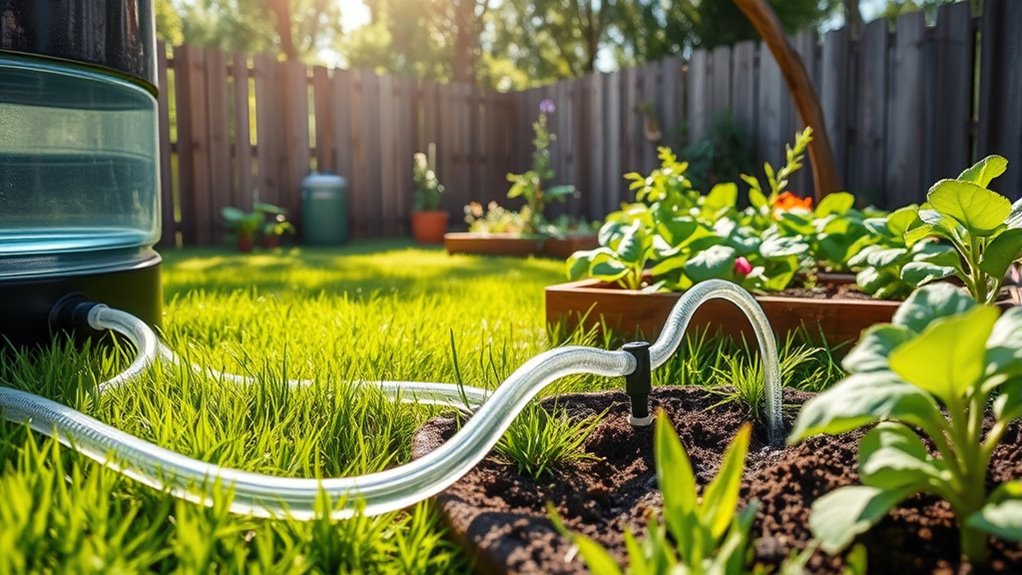

To set up a simple greywater irrigation system, start by directing greywater from sinks or washing machines through filters or perforated pipes to prevent clogging. Use soil or mulch layers as natural filters and install a control valve to manage flow. Combine this with rainwater harvesting for a sustainable cycle. Be sure to avoid chemicals and raw edible crops. If you keep exploring, you’ll discover more ways to optimize your system for environmental health and efficiency.
Key Takeaways
- Collect greywater from household sources, ensuring it is free from harmful chemicals and biodegradable cleaners.
- Install soil-based filtration and simple filters at greywater entry points to prevent clogging and protect plants.
- Use underground perforated pipes or drip irrigation systems for even, safe distribution of greywater to plants.
- Combine greywater with rainwater harvesting from roof downspouts to create a sustainable, chemical-free water supply.
- Regularly inspect and clean filters, monitor soil health, and control flow with simple valves to prevent overwatering and salinity issues.
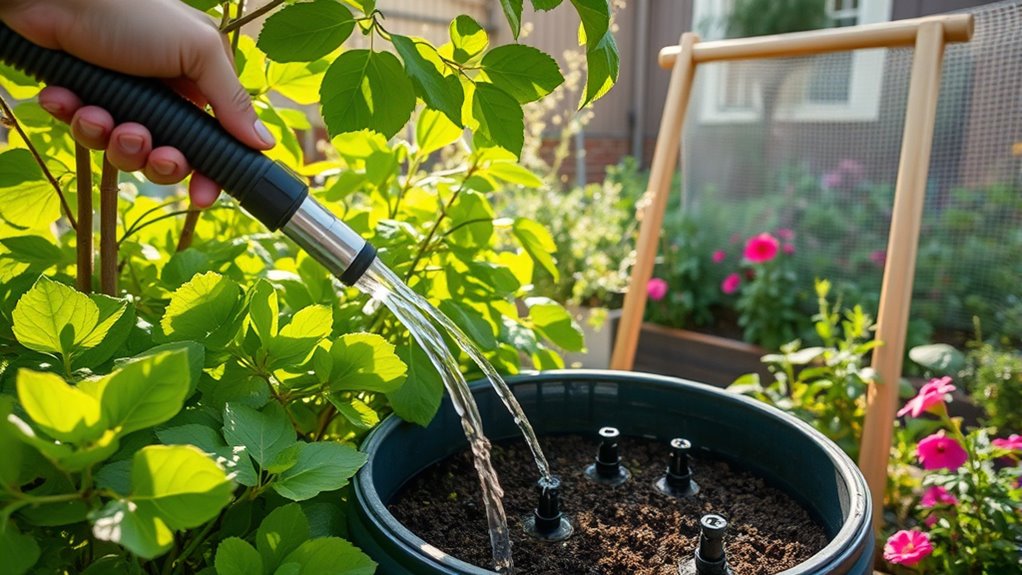
A simple greywater irrigation system offers an eco-friendly way to reuse household water for your garden. By recycling water from sinks, showers, or laundry, you reduce your overall water consumption and lessen the load on local sewage systems. To get started, you’ll need to contemplate how to incorporate rainwater harvesting as a complementary method. Collecting rainwater from your roof through a downspout into a storage barrel not only provides additional water for your garden but also helps reduce runoff and erosion. This water can be used alongside greywater, ensuring a steady supply that’s free from chemicals and safe for plants. When setting up your system, prioritize soil filtration to prevent clogging and protect plant health. Installing a simple filter or a perforated pipe at the entry point of your greywater system traps hair, lint, and debris, keeping the water clean as it infiltrates the soil. The soil itself acts as a natural filter, removing contaminants before the water reaches the roots of your plants. You can enhance this process by creating a designated greywater zone with layered soil and mulch, which further aids in filtering and nutrient absorption. As you design your system, make sure to avoid using greywater on edible crops that are consumed raw, and steer clear of soaps and detergents with harmful chemicals, as these can harm plants and soil life. Instead, opt for biodegradable, plant-safe cleaning agents. To distribute greywater effectively, you might use a drip irrigation setup or perforated pipes laid out underground, ensuring water seeps slowly into the soil and prevents pooling or runoff. Incorporate a simple valve or switch to control when greywater flows, giving you flexibility to adjust based on weather conditions or garden needs. Regular maintenance is essential—inspect filters, clean out any blockages, and monitor soil health to prevent waterlogging or salinity buildup. Additionally, understanding greywater safety practices ensures your system remains environmentally friendly and healthy for your garden. Combining rainwater harvesting with greywater reuse maximizes your water efficiency, creating a sustainable cycle that benefits your garden and the environment. With a bit of planning, you’ll have a reliable, eco-friendly irrigation system that conserves water, reduces your utility bills, and nurtures your plants naturally. This simple setup not only supports a healthier garden but also contributes to a greener lifestyle by making the most of what you already have.
greywater filtration system for garden
As an affiliate, we earn on qualifying purchases.
As an affiliate, we earn on qualifying purchases.
Frequently Asked Questions
What Legal Restrictions Exist for Greywater Systems in My Area?
You need to check your local regulations and permit requirements before installing a greywater system. Many areas have restrictions on how and where you can use greywater to prevent health risks and environmental damage. Contact your local health department or building authority to understand specific rules. Failing to follow these regulations could lead to fines or system removal, so always verify you’re compliant before setting up your greywater irrigation system.
How Often Should I Clean or Maintain the Irrigation Components?
You should clean and maintain your greywater irrigation system regularly, ideally every few months, to make sure it functions properly. During system inspections, check for clogs, leaks, or buildup that could affect flow. If you notice worn or damaged components, replace them promptly to prevent future issues. Consistent maintenance keeps your system efficient, prolongs its lifespan, and helps avoid costly repairs down the line.
Can Greywater Systems Be Used for Edible Vegetable Gardens?
Yes, you can use greywater systems for edible vegetable gardens, but you must prioritize greywater safety and guarantee it’s suitable for vegetable compatibility. Avoid water containing harsh chemicals or pathogens, and always filter greywater before use. Properly managing greywater safety helps prevent contamination and keeps your vegetables safe to eat. Regularly check and maintain your system to ensure it remains effective and safe for your garden.
What Are the Signs of System Failure or Leaks?
Think of your greywater system as a vigilant guard, watching for signs of trouble. If you notice lush, overly saturated spots or foul odors, it’s time for leak detection and a thorough system inspection. Cracks or drips along pipes signal leaks, while reduced water flow hints at blockages. Regularly checking these signs helps prevent failure, keeping your system healthy and your garden thriving.
How Does Greywater Impact Soil Health Over Time?
Greywater can benefit soil health by boosting soil nutrient levels and supporting microbial activity, but over time, it might cause imbalances if not managed properly. You may notice changes in soil structure or reduced microbial diversity, which can hinder plant growth. To maintain healthy soil, monitor greywater quality and avoid harsh chemicals, ensuring it enhances, rather than harms, your soil’s natural ecosystem over time.
drip irrigation kit for greywater reuse
As an affiliate, we earn on qualifying purchases.
As an affiliate, we earn on qualifying purchases.
Conclusion
By setting up this simple greywater irrigation system, you’re not just conserving water—you’re nurturing your garden’s future. Think of it as giving your plants a gentle, lasting embrace, weaving sustainability into every drop. As you step back and watch your garden thrive, remember: small actions ripple outward, shaping a greener world. With each mindful choice, you become part of a greater cycle—where every drop counts and hope blooms anew.
rainwater harvesting barrel with spigot
As an affiliate, we earn on qualifying purchases.
As an affiliate, we earn on qualifying purchases.
soil-based greywater filter
As an affiliate, we earn on qualifying purchases.
As an affiliate, we earn on qualifying purchases.