To replace a light switch, start by turning off the circuit breaker and testing the wires to make certain power is off. Remove the wall plate and switch, then note how the wires are connected. Disconnect the old switch and connect the new one following color-coded instructions. Secure everything tightly, restore power, and test the switch. If you follow these steps carefully, you can successfully upgrade your switch and learn more about safe wiring practices.
Key Takeaways
- Turn off the circuit breaker and verify power is off with a voltage tester before removing the existing switch.
- Remove the switch’s wall plate and mounting screws, then carefully disconnect the wires.
- Match the existing wiring to the new switch’s terminals, ensuring correct connections based on color codes.
- Securely attach the wires to the new switch, making sure connections are tight and grounded properly.
- Restore power, then test the switch operation to confirm proper functionality and safety.
As an affiliate, we earn on qualifying purchases.
Gathering Necessary Tools and Materials

Before you start replacing the light switch, it’s important to gather all the tools and materials you’ll need. First, identify the wire gauge used in your wiring, as this influences the switch type you select—most residential wiring uses 14 or 12-gauge wire. You’ll need a screwdriver, wire strippers, a voltage tester, and possibly a new switch compatible with your wiring and switch types, like single-pole or three-way switches. Having a voltage tester guarantees safety before touching wires. Make sure you have the right switch type for your setup; some switches are designed for specific wiring configurations. Preparing these tools and materials beforehand helps you work efficiently and safely, ensuring a smooth replacement process. Additionally, understanding indoor air quality can help you maintain a healthier living environment during your project.
As an affiliate, we earn on qualifying purchases.
Turning Off Power and Ensuring Safety
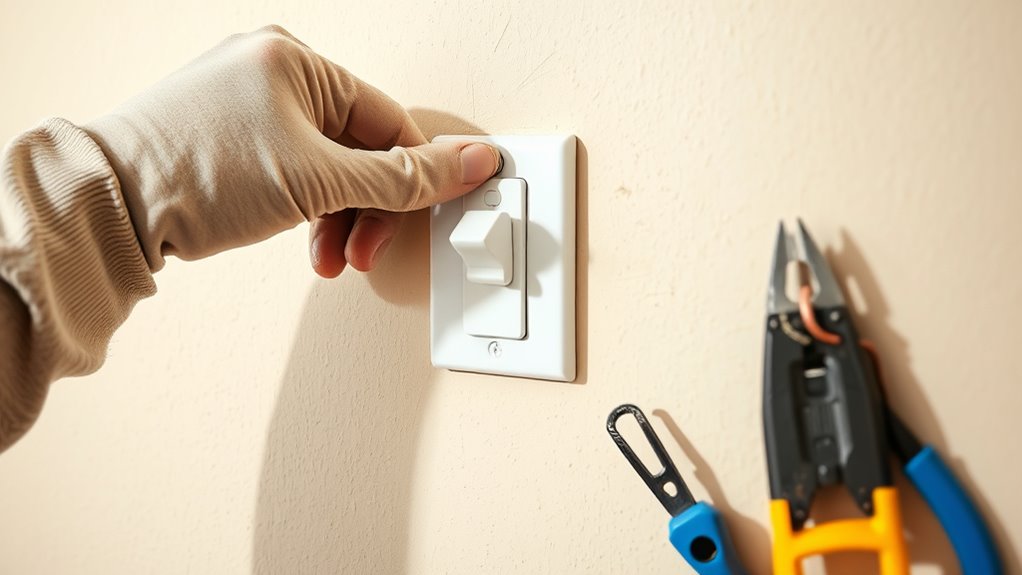
Before you start working on the switch, turn off the circuit breaker to cut off power. Use a tester to verify that no electricity is flowing to the switch. Ensuring the power is off keeps you safe during the replacement process. Additionally, double-checking electrical safety procedures can prevent accidents and ensure a smooth replacement.
Turn Off Circuit Breaker
Have you turned off the power supply to the light switch yet? Ensuring circuit safety starts with accurately breaker identification. Locate your home’s main electrical panel and find the breaker controlling the circuit for the light switch. Look for labels or test by turning off breakers one at a time if labels are unclear. Turning off the correct breaker prevents accidental shocks or short circuits. Remember, a misidentified breaker can lead to dangerous situations. Once you’ve turned off the right breaker, confirm that the power is off before proceeding. Taking this step is vital for your safety and helps avoid damage to your electrical system. Always double-check breaker identification to guarantee you’ve cut power to the correct circuit before moving forward. Additionally, understanding the importance of proper safety procedures can further minimize risks during electrical work.
Verify Power Is Off
To guarantee your safety, you need to verify that the power is truly off before working on the light switch. This involves performing circuit testing with a reliable voltage tester or multimeter. Carefully touch the tester probes to the switch terminals and nearby wires; if the device doesn’t indicate voltage, you can safely proceed. Always follow safety precautions, such as wearing insulated gloves and ensuring your hands are dry. Double-check that the circuit breaker is off, but don’t rely solely on the breaker’s position—testing confirms there’s no live current. Verifying power is off is a vital step to prevent electric shock and ensure a safe working environment. Taking these safety precautions minimizes risks and guarantees your project proceeds smoothly. Additionally, understanding the specific Glycolic Acid benefits can help you better appreciate skincare safety and efficacy.
voltage tester for electrical wiring
As an affiliate, we earn on qualifying purchases.
As an affiliate, we earn on qualifying purchases.
Removing the Existing Switch
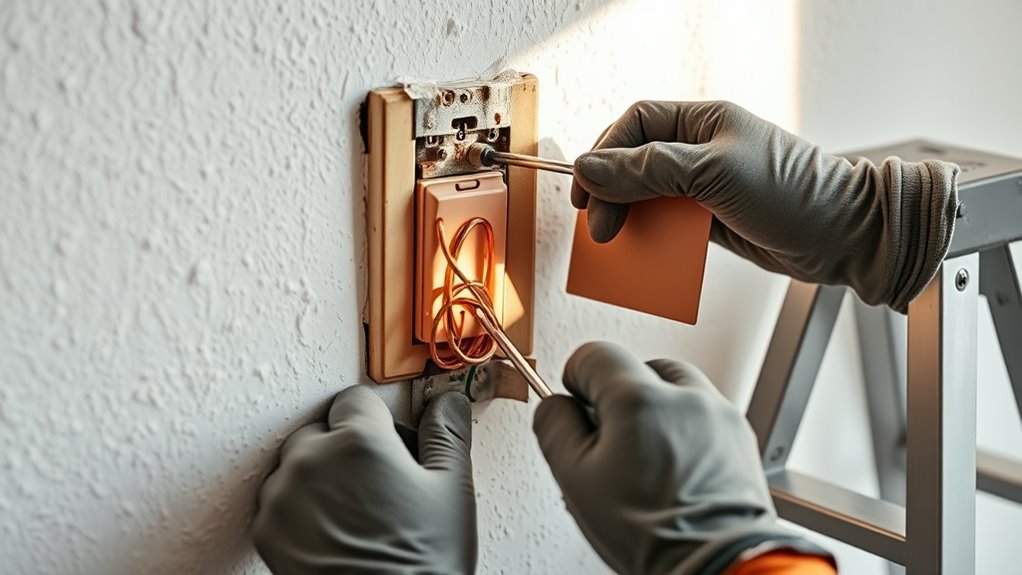
Start by turning off the power at the circuit breaker to guarantee safety. Next, remove the wall plate covering the switch using a screwdriver. Carefully unscrew the mounting screws securing the switch to the electrical box. Gently pull the switch out, exposing the wiring. Take note of how the wires are connected, but don’t disconnect anything yet. If your switch is connected to lighting fixtures, be cautious, as wires may be tight. Once the switch is free, carefully disconnect the wires from the terminals. Keep the screws and hardware in a safe place for reinstallation. Removing the existing switch is straightforward once you’ve taken off the wall plate and loosened the mounting screws. Remember to double-check that the power remains off before proceeding further.
wire strippers for electrical work
As an affiliate, we earn on qualifying purchases.
As an affiliate, we earn on qualifying purchases.
Identifying and Connecting Wires Correctly
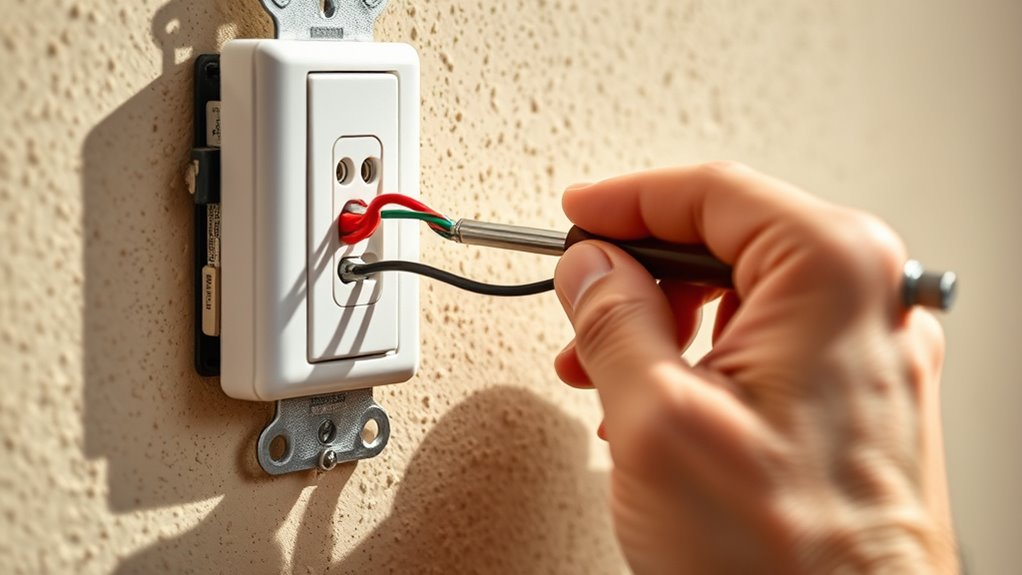
Once the old switch is removed and the wiring is exposed, your next step is to identify which wires connect to each terminal. Pay attention to wire color codes: black or red typically indicate hot wires, white is neutral, and green or bare copper is ground. Switch types vary—single-pole switches connect one hot wire, while three-way switches control lights from multiple locations, requiring different wiring. Carefully note which wires are connected to the old switch, especially the hot and load wires. Use a voltage tester to confirm live wires before handling. Properly recognizing the wires ensures safe and correct connections when installing the new switch, preventing electrical issues and ensuring the switch functions reliably. Understanding wiring types is crucial for a safe and effective replacement. Accuracy at this stage is key to a successful replacement.
Installing the New Switch
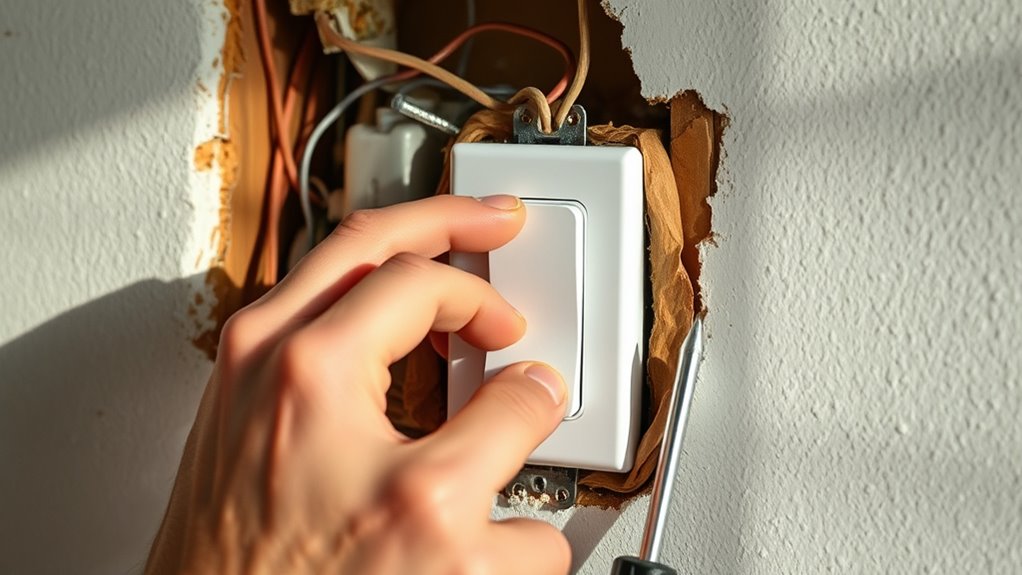
Before installing the new switch, make sure the power is completely turned off to avoid shocks. Next, connect the wires carefully, ensuring each is attached to the correct terminal. Once everything is secure, you’re ready to proceed with the installation. If you need to troubleshoot any issues afterward, consider checking your wire connections to ensure proper contact.
Turn Off Power
Why is turning off the power vital before replacing a light switch? It guarantees electrical safety by preventing shocks or short circuits. Before working, always identify the correct circuit to avoid accidental contact with live wires. Here’s what you should do:
- Locate your circuit breaker panel.
- Turn off the breaker controlling the light switch circuit.
- Use a voltage tester to confirm power is off.
- Double-check circuit identification to guarantee safety. Ensuring proper electrical safety procedures minimizes the risk of injury during the process.
Turning off the power is a vital step to protect yourself from electrical hazards. Always verify that no current flows before handling wires. Proper circuit identification helps prevent mistakes, making your switch replacement safer and easier. Never skip this step—your safety depends on it.
Connect Wires Properly
To connect the wires properly, start by identifying the terminals on your new switch. Use switch wiring diagrams to guide your connections, making sure you match the correct terminals. Pay attention to wire color coding: black or red wires are typically hot, white wires are neutral, and green or bare wires are ground. Connect the hot wire to the switch’s common terminal, following the diagram’s guidance. Securely attach the load wire to the switch’s terminal that controls the light. If your switch has a ground terminal, connect it to the grounding wire. Double-check all connections, ensuring they’re tight and correctly placed. Proper wiring prevents short circuits and ensures your switch functions safely and reliably. Understanding electrical safety principles can help prevent hazards during installation.
Restoring Power and Testing the Switch
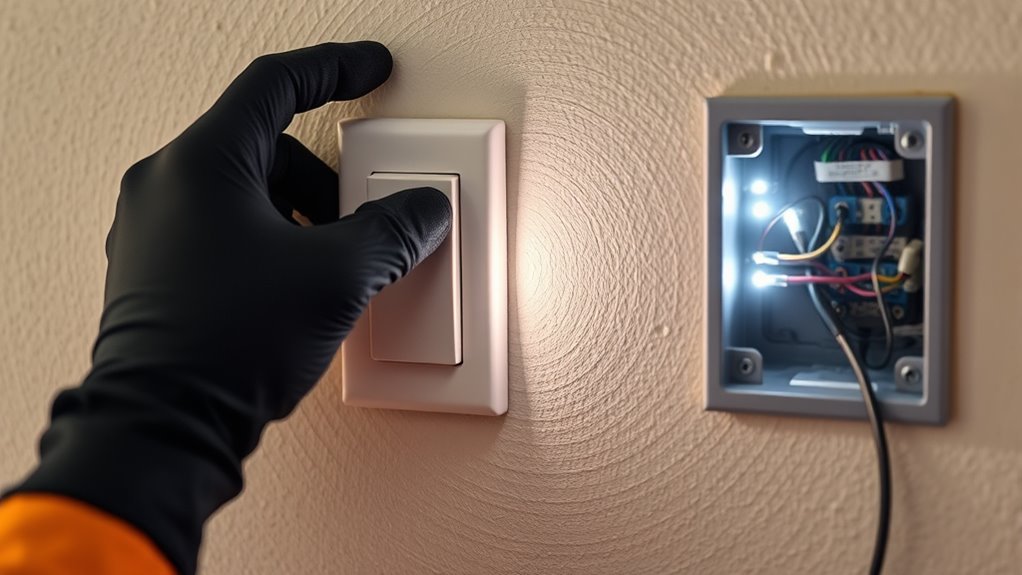
Once you’ve completed wiring the new switch, the next step is to restore power and make certain everything is functioning correctly. First, turn the circuit breaker back on to restore electrical flow. Then, follow these steps:
After wiring the switch, restore power and test its functionality carefully.
- Test switch functionality by flipping the switch on and off.
- Observe the light to ensure it responds correctly.
- Check for any sparks or flickering, which could indicate wiring issues.
- Confirm no tripped breakers or blown fuses occur during testing.
If the light operates smoothly and the switch responds as expected, you’ve successfully restored power and tested the switch. Always ensure safety precautions are followed when working with electrical components. If problems arise, recheck your wiring connections before troubleshooting further.
Troubleshooting Common Issues
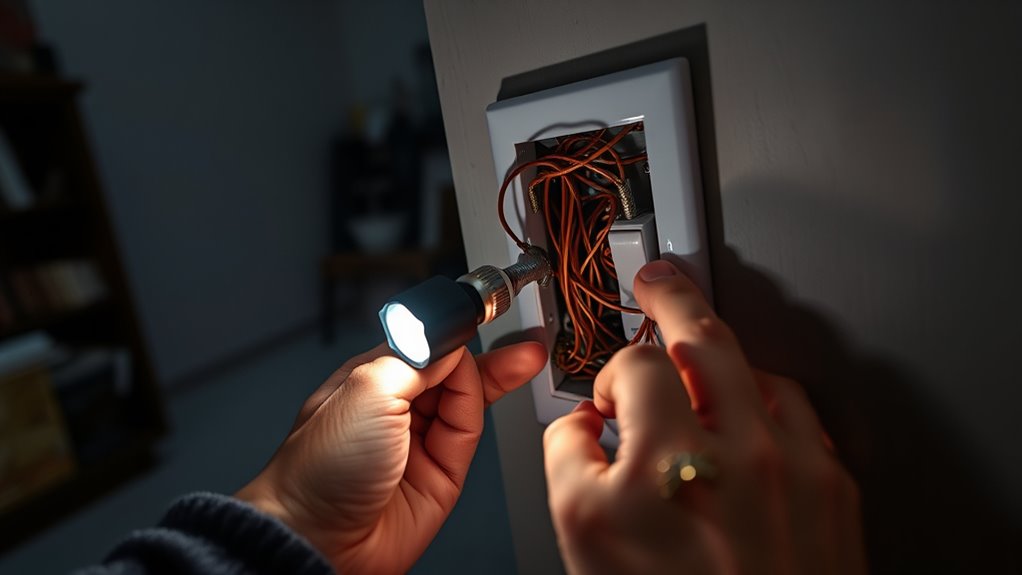
Even when you’ve followed all wiring steps carefully, issues can still arise after installing a new light switch. Grounding issues are common and can cause flickering or electrical shocks, so double-check that the switch is properly grounded and connected to the grounding wire. Compatibility problems might also occur if you’re replacing a switch with one that doesn’t match your wiring or electrical system, leading to malfunction or no operation at all. Make sure the switch matches your wiring type (single-pole, three-way, etc.) and voltage requirements. If the switch still doesn’t work, verify all connections are tight and secure, and look for any loose wires or damaged components. Addressing grounding issues and confirming compatibility often resolve most common problems quickly. Additionally, practicing creative problem-solving can help you troubleshoot unexpected issues more effectively.
Frequently Asked Questions
Can I Replace a Light Switch Myself Without Electrical Experience?
You might wonder if you can handle DIY projects like replacing a light switch without electrical knowledge. While it seems simple, electrical work can be risky if you’re inexperienced. If you choose to do it yourself, turn off the power, use proper tools, and carefully follow instructions. However, for safety and peace of mind, it’s best to consult a professional electrician, especially if you’re unsure or unfamiliar with electrical systems.
What Safety Precautions Should I Take When Working With Electricity?
Think of electricity as a river—powerful but dangerous if not handled carefully. You must respect grounding importance to prevent shocks and always turn off the circuit breaker to cut power before working. Use insulated tools, avoid water, and double-check that the power’s off. Safety comes first; treat electricity with reverence, not assumption. Following these precautions keeps you safe while working with electrical components.
How Do I Identify Which Wires Are Hot or Neutral?
To identify hot or neutral wires, start by turning off the power and using a circuit tester. Hot wires are usually black or red, while neutral wires are white, according to wire color codes. Carefully test each wire with your tester before handling them. This guarantees you correctly identify the wires, preventing shocks or damage. Always double-check your results before proceeding with any electrical work.
What Should I Do if the Switch Still Doesn’T Work After Installation?
Imagine your switch as a gateway to light, but if it’s silent, something’s blocking the flow. First, troubleshoot flickering by checking your connections—loose wires cause issues. Test circuit connections with a voltage tester to guarantee everything’s correctly wired. If the switch still doesn’t work, turn off power, recheck your wiring, or replace the switch. Sometimes, the path needs a clear, direct route for the light to shine again.
Are There Different Types of Light Switches for Specific Fixtures?
You might wonder if there are different types of light switches for specific fixtures. Yes, there are various options like dimming switches, which let you adjust brightness, and smart switches that connect to your home Wi-Fi for remote control. make certain to choose the right switch for your fixture type and wiring setup. Always check compatibility, especially with dimming or smart features, to ensure safe and proper operation.
Conclusion
With the flick of a switch, you’ve transformed your space, turning a simple task into a symphony of safety and skill. Like a conductor guiding an orchestra, you’ve harmonized wires and connections, restoring light and life to your home. Each step you’ve taken is a brushstroke on the canvas of your DIY mastery. Now, with a confident click, you illuminate your world—proof that even the smallest changes can brighten your day and empower your hands.