To build a lumber cut station that reduces waste from day one, organize your workspace with a large, well-lit surface and clear markings for measurements and cut lines. Keep tools within easy reach and arrange them logically to streamline your workflow. Use safety features like push sticks and guards to prevent accidents. Plan your cuts carefully to maximize material use and store scraps properly for reuse. Focusing on these details from the start will set you on the right path to efficient, waste-reducing projects—more tips await as you continue.

Get business pricing on tools and workshop supplies
- Business-only prices and quantity discounts
- Tax-exempt purchasing
- Multiple users, one account, clear invoices
Key Takeaways
- Design a layout that minimizes handling by logically positioning storage, cutting, and assembly areas for efficient workflow.
- Incorporate clear measurement markings and visual guides to ensure precise cuts and reduce errors.
- Allocate dedicated space for scraps and offcuts to encourage reuse and proper waste sorting.
- Use adjustable stops and jigs to improve cut accuracy and maximize material yield.
- Keep tools organized and within reach to streamline process flow and prevent unnecessary material handling.
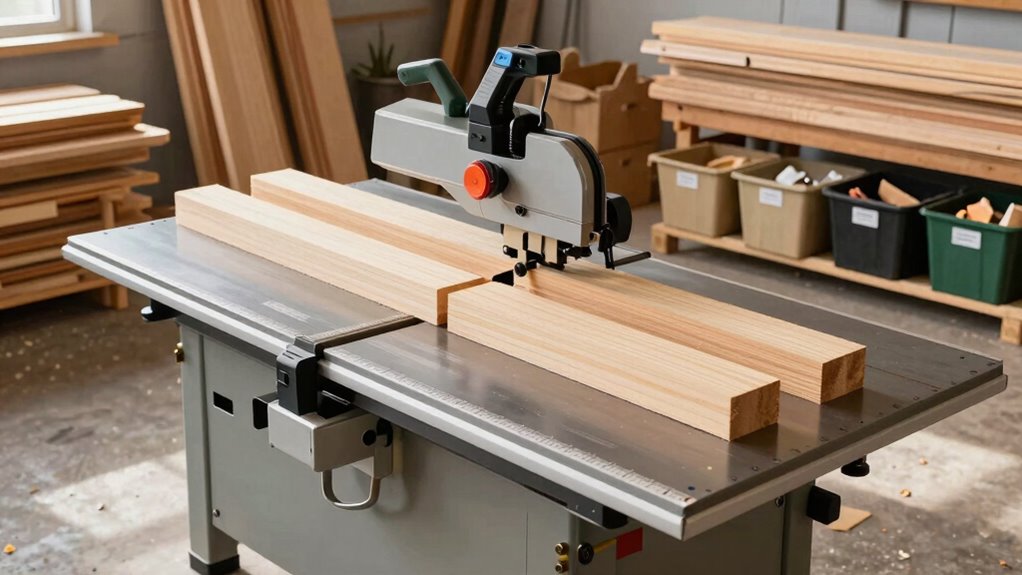
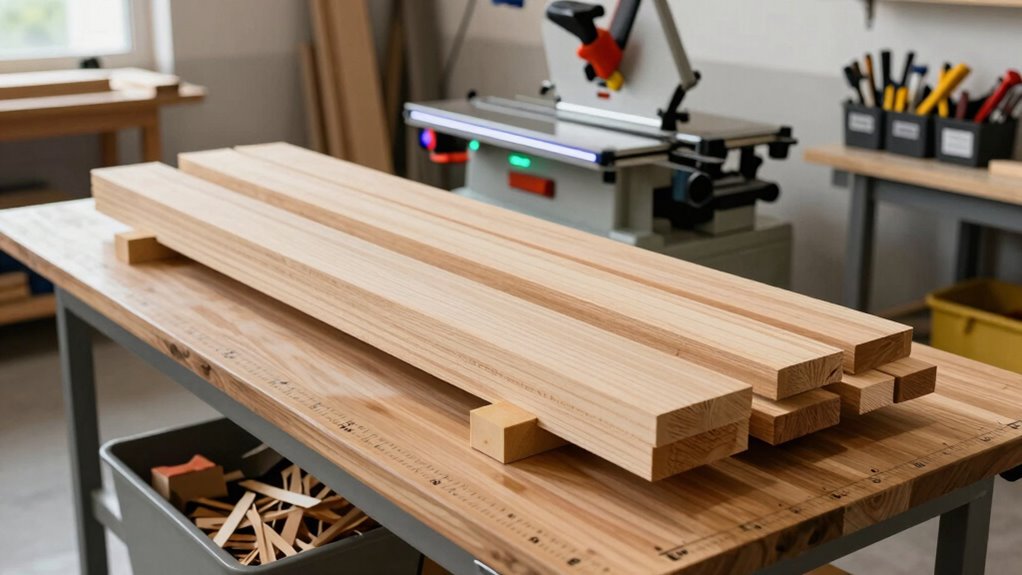
Are you ready to streamline your woodworking projects? Building a lumber cut station that minimizes waste from day one starts with careful planning and smart organization. When you prioritize woodworking safety, you create a workspace where accidents are less likely, and efficiency is maximized. Begin by choosing a sturdy, flat surface for your station, ideally a large worktable with enough room to handle full-length lumber and offcuts. A clear, designated space helps you keep tools organized, making it easier to access what you need without clutter or distraction.
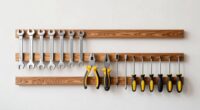
Effective tool organization is key to reducing waste. Keep your saws, clamps, measuring tools, and safety gear within arm’s reach but neatly stored when not in use. Use wall-mounted racks or pegboards for frequently used tools, so they’re accessible but off your work surface. This setup not only speeds up your workflow but also prevents unnecessary movements that could lead to mistakes or accidents. When your tools are well-organized, you’re less likely to mismeasure, cut incorrectly, or mishandle your lumber. Incorporating efficient workspace layout strategies can further enhance your workflow and minimize handling errors. Additionally, tool accessibility plays a crucial role in maintaining a smooth and safe operation. Ensuring that your workspace is designed with ergonomic principles can also help reduce fatigue and improve precision over extended periods.
Organize tools on wall-mounted racks or pegboards for quick access and safer, more efficient woodworking.
Next, focus on layout and workflow. Position your saw, work table, and storage areas in a logical sequence. Your lumber should move seamlessly from the storage rack to the cutting station, then to assembly or finishing areas. This minimizes handling and reduces the chance of damaging material or creating scraps. Use markings or tape on your work surface to indicate cutting lines and measurement points, ensuring precise cuts every time. Precision reduces waste by preventing miscuts that result in unusable pieces.
Incorporate safety features like push sticks, saw guards, and anti-kickback pawls to protect yourself during cutting. Always double-check your measurements before making a cut to avoid costly mistakes. Remember, a little extra time spent measuring and securing your lumber upfront can save hours of fixing errors later. Keep your workspace well-lit and free of debris to prevent accidents and make accurate cuts. Planning for material management ensures you can easily sort and reuse scraps, which is essential for reducing waste from day one.
Products Worth Considering

Philips Hue Large Smart Light Tube, Black – White and Color Ambiance LED Color-Changing Light – 1 Pack

Levoit Core 600S-P Smart Air Purifier for Large Rooms

Samsung 48-Inch S90H OLED 4K Smart TV (2026)
As an affiliate, we earn on qualifying purchases.
Frequently Asked Questions
What Safety Gear Is Recommended for Operating the Station?
You should wear protective gloves to shield your hands from splinters and sharp edges, and ear protection to guard against loud noise from saws and cutting tools. Always make certain your safety gear fits properly and is in good condition before operating the station. Using these safety essentials helps prevent injuries, allowing you to work more confidently and efficiently while minimizing risks during your woodworking projects.
How Do I Calibrate the Cutting Measurements Accurately?
To calibrate your cutting measurements accurately, start with precise measurement techniques like using a reliable tape measure or calipers. Use calibration tools such as a square or a dial indicator to check your saw’s alignment and blade height. Regularly verify your measurements before each cut, adjusting your equipment as needed. Consistent calibration guarantees your cuts are precise, minimizing waste and increasing efficiency from the very first cut.
Can This Station Handle Large or Thick Lumber?
Your station can definitely handle heavy lumber and thick cuts, like a sturdy ship built for rough seas. It’s designed with reinforced surfaces and a robust frame, ready to tackle large or thick pieces without wobbling or bending under pressure. Just make sure your saw and supports are calibrated for heavy duty, and you’ll be slicing through thick cuts with ease, turning challenging lumber into precise, waste-free pieces every time.
What Maintenance Is Required to Keep the Station Efficient?
To keep your station efficient, regularly check and apply blade lubrication to prevent overheating and guarantee smooth cuts. Keep the dust collection system clean and functioning properly to avoid buildup that can hinder performance. Replace or sharpen blades as needed, and inspect moving parts for wear. By maintaining these components, you’ll ensure precise cuts, reduce waste, and prolong the lifespan of your equipment.
How Do I Customize the Station for Different Wood Types?
To customize your station for different wood species, start by adjusting the cutting height and blade depth for each type, ensuring clean cuts and less waste. Use adjustable guides to accommodate varying thicknesses, and modify your cutting angles if needed for specific grains. Keep a log of these adjustments, so you can quickly switch between wood species while maintaining precision, reducing waste, and optimizing your workflow.
Conclusion
By building a lumber cut station that minimizes waste from the start, you can save both time and money—cutting waste by up to 20% on average. Not only does this boost your efficiency, but it also reduces environmental impact. Remember, a well-designed station isn’t just about convenience; it’s about smarter, more sustainable craftsmanship. Start implementing these tips today, and watch your waste decrease while your projects improve in quality and sustainability.