To add outfeed support to a crowded workspace easily, build a portable stand with a sturdy frame using lumber or metal tubing. Attach an adjustable roller or flat surface on top to support long or heavy workpieces. Secure it to your floor or workbench for stability, and consider integrating a dust collection port for cleaner operation. This setup boosts safety and efficiency while remaining flexible. Keep exploring for more tips to optimize your workspace further.

Get business pricing on tools and workshop supplies
- Business-only prices and quantity discounts
- Tax-exempt purchasing
- Multiple users, one account, clear invoices
Key Takeaways
- Use portable, adjustable support stands that can be easily moved and stored when not in use.
- Attach lightweight, modular supports that can be clamped or hooked onto existing workbenches or saws.
- Incorporate a simple roller or flat surface on top for quick setup without permanent fixtures.
- Integrate dust collection options into the support to maintain a clean, unobstructed workspace.
- Opt for versatile, foldable supports that can be repositioned or removed to maximize space efficiency.

Ever wondered how to quickly and easily add outfeed support to your saw or workbench? If your workspace is crowded, setting up extra support can seem intimidating, but the solution is simpler than you think. Outfeed support is essential for guiding long or heavy pieces safely through your saw, preventing accidents and improving accuracy. The key is to find a solution that doesn’t clutter your workspace or require complicated modifications.
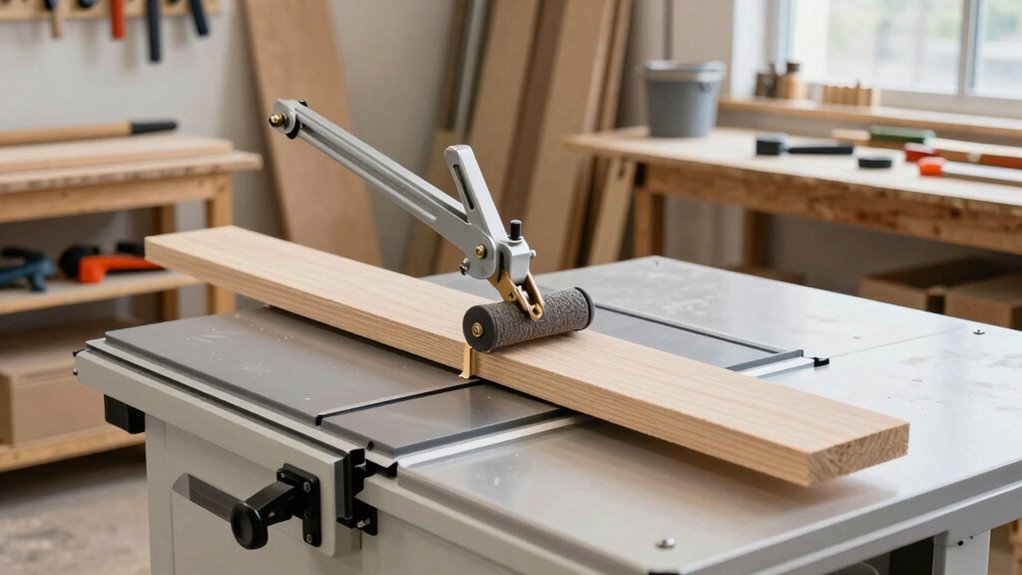
One of the easiest ways to add outfeed support in a tight space is to build a simple, adjustable support stand. Use sturdy lumber or metal tubing to create a frame that can sit alongside your saw. Attach an adjustable roller or a flat surface on top, allowing you to support longer workpieces as they pass through the cut. This setup is portable, so you can move it out of the way when not in use, keeping your workspace open and accessible. It also minimizes the need for permanent fixtures, which is perfect for crowded areas. Incorporating portable support solutions can further enhance flexibility and ease of use in limited spaces.
When installing your outfeed support, safety precautions should be your top priority. Make sure the support is stable and doesn’t tip or shift during use. Secure it firmly to the floor or workbench if necessary. Also, think about the height of your support relative to your saw’s outfeed table; it should be level to prevent workpieces from falling or binding. Proper alignment reduces the risk of kickback or other accidents, especially when handling large or heavy materials. Always wear safety gear, including eye protection and hearing protection, when working near power tools. Using safety guidelines and best practices ensures a safer working environment.
Dust collection is another critical factor to ponder when adding outfeed support. As you cut, sawdust and debris will be generated, and without proper dust collection, your workspace can quickly become cluttered and hazardous. Integrate a dust port or hose attachment into your support setup if possible. This will help keep your area clean and improve visibility, making your work safer and more efficient. Even a simple shop vacuum connected to your saw’s dust port can considerably reduce airborne dust, minimizing health risks and keeping your workspace tidy. Incorporating dust collection solutions into your setup ensures a cleaner, safer environment for all your projects.
As an affiliate, we earn on qualifying purchases.
Frequently Asked Questions
Can Outfeed Support Be Added to Any Size Workspace?
Yes, you can add outfeed support to almost any size workspace. You just need to take into account tool compatibility and portability options. For smaller spaces, look for compact, adjustable supports that attach easily without cluttering your area. If you have a larger workspace, you can opt for more robust, stationary supports. Always ensure the support system you choose is compatible with your tools and can be moved or adjusted as needed for convenience.
What Materials Are Best for Building Outfeed Support?
When it comes to building outfeed support, you want materials that are tough as nails and won’t break the bank. Plywood and MDF are cost-effective options with good durability, perfect for supporting your workpieces without sagging. Alternatively, sturdy hardwoods like oak or maple offer increased strength if your budget allows. These materials guarantee your support stays reliable through heavy-duty tasks, giving you peace of mind while you work.
How Do I Ensure Stability With Limited Space?
To guarantee stability with limited space, focus on space optimization by choosing compact, sturdy supports that fit your workspace. Secure the outfeed support firmly to your workbench or walls to prevent movement. Always follow safety precautions, like wearing protective gear and double-checking fastenings, to avoid accidents. Use adjustable or foldable supports to save space when not in use, maintaining a safe, efficient workspace.
Is It Necessary to Secure the Support to the Workbench?
Yes, securing the support to your workbench is vital for support safety and workspace flexibility. Without proper attachment, your support could wobble or tip, risking accidents or damage. By firmly securing it, you guarantee stability that feels like you’ve got a fortress backing you up. This keeps your workspace organized, safe, and adaptable, allowing you to work confidently without worrying about sudden shifts or collapses.
Can I Customize Outfeed Support for Different Tools?
Yes, you can customize outfeed support for different tools by using adjustable height and portable design features. With an adjustable height, you can easily set the support to match various tool heights, ensuring ideal support. The portable design allows you to move and adapt the support depending on the workspace or tool you’re using. This flexibility makes it simple to create a tailored setup for different projects without permanent modifications.
adjustable roller support for saw
As an affiliate, we earn on qualifying purchases.
As an affiliate, we earn on qualifying purchases.
Conclusion
Adding outfeed support doesn’t have to be complicated, especially when you use simple, effective solutions. By doing so, you’ll improve safety and precision in your workspace, making your projects smoother and more enjoyable. Did you know that proper outfeed support can reduce workpiece kickback by up to 30%? That’s a huge difference in both safety and quality. So, take a few minutes to set up your support—it’s a small change with big benefits.
dust collection port for woodworking support
As an affiliate, we earn on qualifying purchases.
As an affiliate, we earn on qualifying purchases.
foldable workbench support stand
As an affiliate, we earn on qualifying purchases.
As an affiliate, we earn on qualifying purchases.
Fall yard work Picks
leaf blowers
As an affiliate, we earn on qualifying purchases.