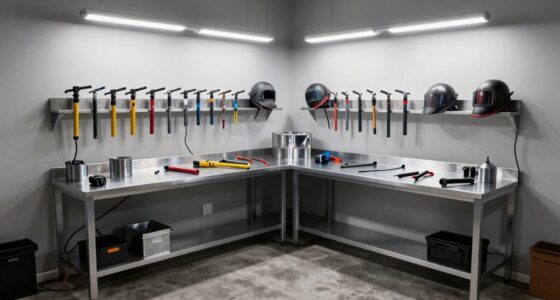
To build a cord management station that ends tangled workshop chaos, start by choosing a sturdy, flat surface near power outlets. Gather and sort cables by type and length, then bundle similar cords with ties or Velcro straps, labeling each for easy identification. Install cable clips, hooks, or trays to keep cords off the floor and secure them in place. Keep excess cables stored in labeled bins. If you’d like to learn how to optimize safety and efficiency, keep exploring these tips.

Get business pricing on tools and workshop supplies
- Business-only prices and quantity discounts
- Tax-exempt purchasing
- Multiple users, one account, clear invoices
Key Takeaways
- Select a sturdy, flat surface near power sources for installing cable management accessories like clips and trays.
- Gather, sort, and bundle cables by type and purpose using ties or sleeves, then label each bundle.
- Secure cables to fixtures, ensuring they are off the floor and organized to prevent tangles and hazards.
- Incorporate storage solutions for excess cords and unused cables to maintain a clutter-free workspace.
- Regularly review and adjust your setup for safety, efficiency, and to accommodate changing workspace needs.
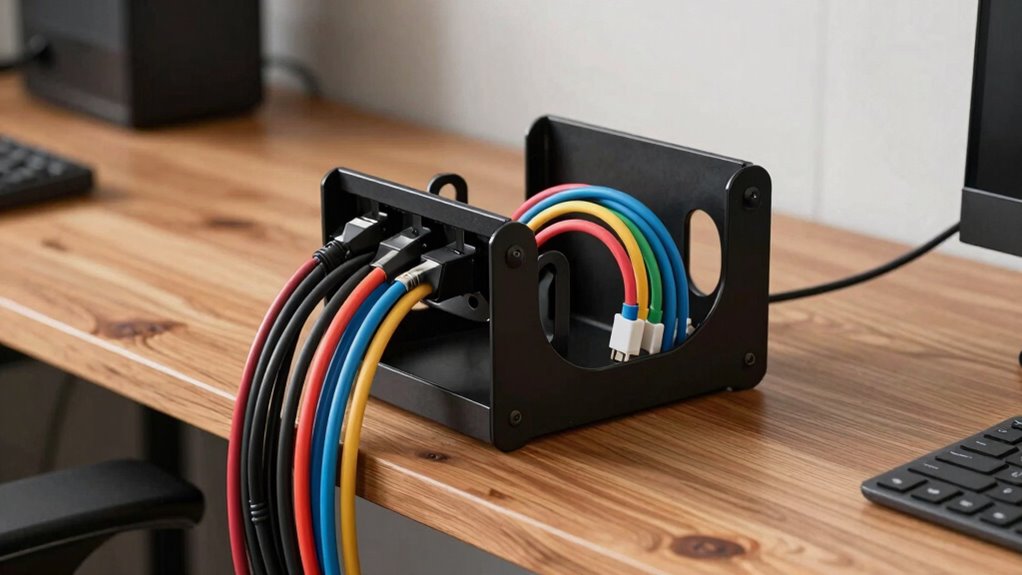
Ever find yourself frustrated by tangled cables and cluttered desks? It’s a common challenge in many workshops and workspaces. Building a cord management station can transform your chaos into order, saving you time and reducing hazards. The first step is focusing on wire organization. Gather all your cables—power cords, extension cords, USB cables—and sort them by type and length. Use cable ties, Velcro straps, or cable sleeves to bundle similar cords together. This simple step prevents tangles before they start and makes it easier to identify the right cable when you need it. Once organized, consider labeling each bundle with tags indicating its purpose or device. This way, you won’t waste time searching through a jumble of cables every time you need one.
Next, you need an effective plan for your station’s physical setup. Choose a sturdy, flat surface—like a shelf or workbench—that’s easily accessible and close to power outlets. Install cable management accessories such as cable clips, hooks, or cable trays underneath or along the edges of your work surface. Secure your cables to these fixtures to keep them off the floor and out of the way. This prevents accidental pulls, trips, or damage to the cords. When attaching cable clips or hooks, make sure you follow safety precautions by using appropriate tools and avoiding over-tightening, which can damage the cables or the mounting surface. Always check that power strips and outlets are grounded and in good condition. Never overload a single outlet or power strip, as this can lead to overheating and fire hazards. Keep your cords away from water, heat sources, and sharp edges to minimize wear and potential safety risks. Incorporating smart home technology insights can help you monitor and control your cords more efficiently. Additionally, understanding electrical safety principles can further enhance the safety of your workspace. Being aware of proper grounding techniques is essential for preventing electrical shocks and ensuring safe operation. Incorporating grounding techniques into your setup can significantly reduce the risk of electrical hazards.
To further refine your cord management station, incorporate a dedicated storage bin or box for excess cable lengths and unused cords. This prevents clutter from building up and makes cleanup easier. When you’re finished, double-check that all cords are secured and that there’s no strain on the connections. A well-designed cord management station not only keeps your workspace tidy but also promotes safety by reducing tripping hazards and electrical risks. Regularly review and adjust your setup as your equipment or needs change. Building this station takes a bit of effort upfront, but the long-term benefits of a clutter-free, safe workspace are well worth it. With proper wire organization and adherence to safety precautions, you’ll create a functional environment that boosts productivity and keeps hazards at bay.
cable management clips for workshop
As an affiliate, we earn on qualifying purchases.
As an affiliate, we earn on qualifying purchases.
Frequently Asked Questions
What Materials Are Best for a DIY Cord Management Station?
You should choose durable materials like plastic or wood for your DIY cord management station. Incorporate cable accessories such as clips, sleeves, or ties to organize cords neatly. Using cord labels helps identify each cable quickly, saving time and reducing frustration. Opt for flexible, lightweight materials that are easy to assemble and modify as your setup evolves. This way, your station stays organized, and tangled cords become a thing of the past.
How Much Space Is Needed for Effective Cord Organization?
You’ll need about 3 to 4 feet of space per cord for effective organization. Imagine managing 10 cords, which could total up to 100 feet of wiring—space matters! Adequate room guarantees you can store cords without tangling. Prioritize a dedicated area with enough storage capacity to hold different cord lengths, keeping your workspace tidy and accessible, reducing clutter, and preventing damage to your valuable tools and wires.
Can This Station Be Customized for Different Workshop Sizes?
Absolutely, you can customize this station for different workshop sizes. You can choose aesthetic options that match your workspace, like different materials or colors. Plus, you can adapt storage solutions to fit your needs, whether that’s adding more hooks, shelves, or compartments. This flexibility helps guarantee your cord management system is both functional and visually appealing, no matter how big or small your workshop is.
How Do I Prevent Cords From Slipping or Falling Off?
To prevent cords from slipping or falling off, focus on cord safety and slip prevention by using secure hooks or clips designed for your station. Avoid loose cords that can easily slide off. Wrap cords neatly and use cable ties or Velcro straps to keep them in place. Regularly check connections, ensuring they’re tight. This way, you enhance safety and minimize accidents caused by slipping cords.
Is This System Suitable for Heavy-Duty Power Cords?
Yes, this system can be suitable for heavy-duty power cords if you choose durable materials that support their weight. Prioritize cord safety by ensuring cords are securely held and not pinched or bent sharply, reducing fire risks. Regularly inspect cords for wear or damage, and avoid overloading the system. Properly managing heavy-duty cords prevents accidents and maintains a safe, organized workspace.
Velcro cable straps bundle cords
As an affiliate, we earn on qualifying purchases.
As an affiliate, we earn on qualifying purchases.
Conclusion
Now, as you stand back and admire your neatly organized station, you realize how a simple idea can turn chaos into calm. It’s funny how the very cords that once tangled your space now bring a sense of order, almost like they were waiting for you to create this station. With a little effort, you’ve turned frustration into satisfaction. Sometimes, the smallest projects make the biggest difference—proving that organization isn’t just about tidiness, but about reclaiming your workspace and peace of mind.
As an affiliate, we earn on qualifying purchases.
As an affiliate, we earn on qualifying purchases.
Fall yard work Picks
leaf blowers
As an affiliate, we earn on qualifying purchases.