To plan and plant a native pollinator garden, choose local plants that bloom at different times to provide continuous nectar and support for bees, butterflies, and hummingbirds. Cluster similar species for easier care and visual appeal, using various heights and layers for habitat complexity. Incorporate shelter, water sources, and ground-nesting sites nearby. Focus on native plants that require less water and fertilizer, creating a sustainable, thriving environment. Exploring more will help you design a vibrant pollinator-friendly garden that benefits local ecosystems.
Key Takeaways
- Select native plants suited to local conditions, blooming at different times to provide continuous nectar.
- Cluster similar plants together to attract pollinators efficiently and ease maintenance.
- Incorporate layered plantings and varied heights to mimic natural habitats and increase biodiversity.
- Include shelter, nesting sites, and water sources to support pollinator nesting and hydration needs.
- Plan for year-round blooms and diverse flower shapes to attract a variety of pollinators sustainably.
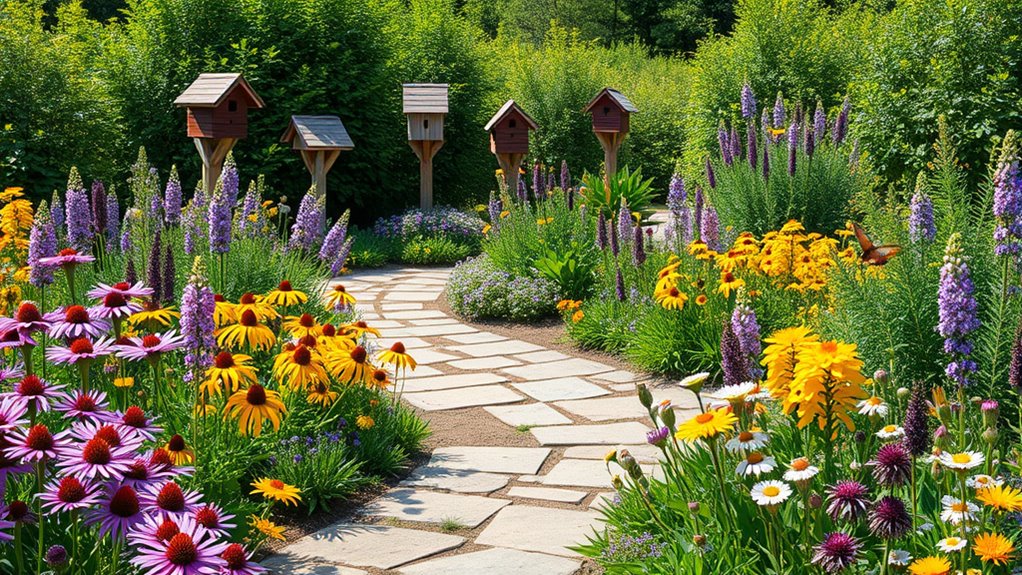
Creating a native pollinator garden is a rewarding way to support local ecosystems while beautifying your landscape. The first step is planning your garden layout thoughtfully. You want to create a space that’s inviting for pollinators like bees, butterflies, and hummingbirds, so consider how different plants will fit into your available space. A well-designed garden layout ensures that nectar-rich flowers are easily accessible, and planting in clusters rather than scattered individual plants helps attract more pollinators. Grouping similar species together not only makes maintenance easier but also provides visual cohesion and maximizes the appeal for pollinators. Make sure your garden has a variety of heights and layers—ground covers, mid-height plants, and taller blooms—to cater to different species and create a dynamic environment that mimics natural ecosystems. Incorporating native plants is essential because they are better suited to your local environment and support the native pollinator populations more effectively.
Create a pollinator-friendly garden with layered plants, clustered blooms, and thoughtful layout to attract and support local pollinators.
When it comes to plant selection, choose native species that are adapted to your local climate and soil conditions. Native plants are more likely to thrive with less water and fertilizer, and they provide the best nourishment for local pollinators. Focus on flowers that bloom at different times of the year to maintain a continuous food source. Early bloomers will support emerging pollinators in spring, while late-season plants can sustain them through fall. Incorporate a mix of flowering herbs, wildflowers, and shrubs to diversify the nectar sources. Be mindful of avoiding invasive species and non-native plants that could outcompete native flora or disrupt the local ecosystem.
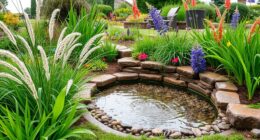
As you select plants, consider their bloom colors and shapes—different pollinators are attracted to specific colors and flower structures. For example, bees prefer blue and yellow flowers with flat landing pads, while hummingbirds are drawn to red tubular blooms. Incorporating a variety of plant types not only attracts a broader range of pollinators but also increases the garden’s resilience. Additionally, think about providing shelter and water sources nearby to create a complete habitat. Leaving some bare soil or incorporating mulch can give ground-nesting bees a safe place to burrow, while shallow water features can serve as hydration stations.
Ultimately, effective garden layout and careful plant selection are key to establishing a thriving native pollinator garden. By thoughtfully arranging your plants and choosing the right species, you’ll create a vibrant, sustainable habitat that supports local pollinators and enhances your landscape’s beauty. This approach ensures your garden isn’t just visually appealing but also ecologically beneficial, helping to preserve the health of your local environment for years to come.
Frequently Asked Questions
How Do I Attract Specific Native Pollinators to My Garden?
To attract specific native pollinators, choose native plant combinations that provide nectar and pollen during their active seasons, matching their seasonal pollinator needs. Research which plants your target pollinators prefer and include a variety of flowering species that bloom throughout the year. Avoid pesticides, and provide habitat features like bee hotels or native shrubs. This approach makes sure your garden meets the needs of your desired pollinators, encouraging their presence year-round.
What Are Common Mistakes to Avoid When Planning a Pollinator Garden?
Like Icarus flying too close to the sun, avoid overestimating your garden’s capacity by neglecting proper garden layout and plant selection. Don’t overcrowd plants; it hampers pollinator access and health. Skip monocultures that limit diversity, and ignore bloom timing—ensure continuous nectar sources. Also, avoid using pesticides, which can harm pollinators. Thoughtful planning with a balanced layout and diverse plants creates a thriving sanctuary for native pollinators.
How Can I Maintain My Native Pollinator Garden Year-Round?
To maintain your native pollinator garden year-round, you should incorporate seasonal pruning to keep plants healthy and encourage new growth. Mulching techniques help retain moisture, suppress weeds, and regulate soil temperature. Regularly check for pests and remove dead or diseased foliage. In winter, protect plants with a layer of mulch or cover, and in spring, refresh mulch to support vibrant blooms and pollinator activity throughout the year.
Are There Legal Considerations for Planting Native Species?
Imagine a garden as a canvas where legal restrictions paint the boundaries of your creativity. You should check local native plant regulations and restrictions before planting, as some areas have rules to safeguard native ecosystems. Familiarize yourself with laws on invasive species, protected land, and permits. By doing so, you guarantee your garden thrives legally, supporting local pollinators while respecting environmental guidelines.
How Do I Incorporate Native Plants Into an Existing Landscape?
You can incorporate native plants into your existing landscape by adjusting your garden layout to highlight these species. Start with soil preparation by testing and amending the soil to match native plant needs, ensuring healthy growth. Mix native plants among your current selections or replace less suitable ones gradually. This approach enhances biodiversity, supports pollinators, and creates a harmonious garden that blends seamlessly with your landscape.
Conclusion
By planning thoughtfully and choosing native plants, you’re creating a thriving habitat for pollinators. Remember, a garden is a journey, not a destination—patience and care will reward you with vibrant blooms and buzzing visitors. Keep learning and adjusting your garden as you go, and soon you’ll see the pollinators flourish. As the saying goes, “The best time to plant a tree was 20 years ago; the second best is now.” Start today!