To quickly sharpen your chisel for clean cuts, use a honing guide set at 25-30° to maintain a consistent bevel. Move steadily across a fine-grit stone or diamond plate with even pressure, and regularly check the bevel angle. Finish by stropping the blade to realign microscopic teeth, improving your cut quality. This simple routine saves time but still delivers precise results—keep going, and you’ll discover even more tips to sharpen efficiently.
Key Takeaways
- Use a honing guide to maintain a consistent bevel angle during quick sharpening.
- Regularly strop the chisel after honing to realign microscopic teeth for cleaner cuts.
- Start with a coarse grit to reshape quickly, then move to fine grit for a sharp edge.
- Invest in an advanced sharpening system for efficient transitioning between grit levels.
- Proper technique and consistent maintenance ensure sharpness and clean cuts with minimal effort.
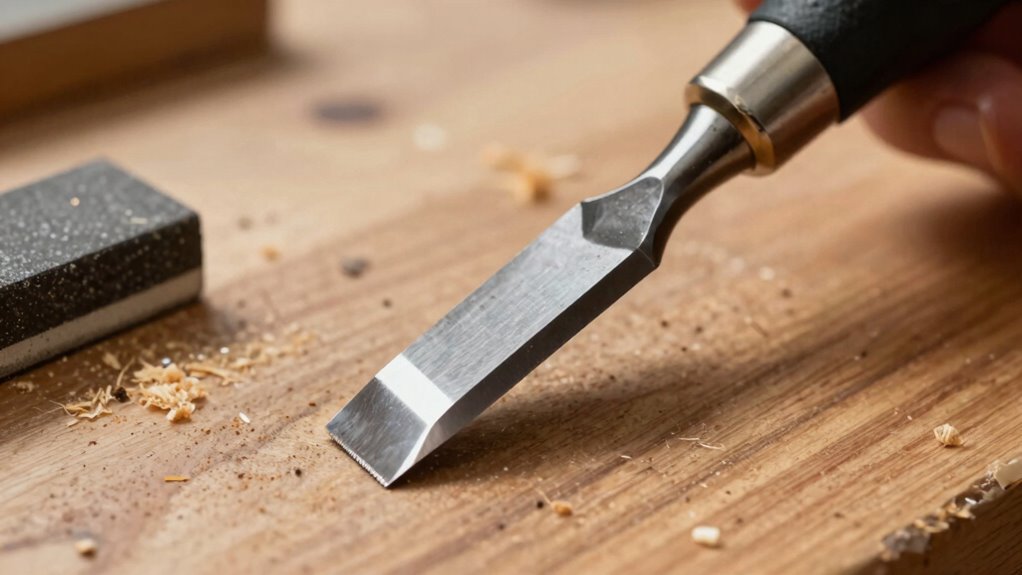
Sharpening a chisel can feel like a tedious task, but there’s a quick way to get it done efficiently. When you’re working on a project, dull chisels not only slow you down but also increase the risk of accidents. Maintaining a sharp edge is essential for woodworking safety, as a sharp tool responds predictably and requires less force, reducing slips and mishaps. Plus, keeping your chisels sharp extends their sharpening tools longevity, meaning you won’t need to replace them as often. The good news is, you don’t have to spend hours on complex sharpening setups to keep your tools in top shape.
A straightforward approach involves using a honing guide combined with a fine-grit sharpening stone or diamond plate. First, secure the guide on your chisel to maintain a consistent bevel angle—usually around 25 to 30 degrees, depending on the type of chisel. This setup ensures you don’t accidentally change the bevel, which can compromise cutting quality and safety. With your chisel in place, move it steadily across the stone, applying even pressure. Don’t push too hard; let the abrasive do the work. This method not only sharpens the edge quickly but also promotes uniformity, which is key for clean cuts. Regularly checking the bevel angle with a guide helps maintain proper alignment and prolongs the effectiveness of your sharpening process. An additional benefit is that proper technique minimizes material loss and maintains the chisel’s original shape. Incorporating correct sharpening angles into your routine can further improve results and ensure longevity.
Once you’ve established a sharp primary edge, finishing with a strop or honing compound can produce a razor-sharp edge in seconds. Stropping realigns the microscopic teeth of the blade, enhancing cutting precision and reducing the need for frequent resharpening. It’s a quick step that significantly improves cut quality, especially when you’re working on fine details. Regular maintenance using proper sharpening techniques can help ensure your tools stay in optimal condition for longer periods.
Another shortcut is to invest in a sharpening system that combines multiple grit levels in a single, portable setup. These are designed for speed and ease, allowing you to move from coarse to fine sharpening with minimal fuss. Regularly maintaining your chisels this way prevents the buildup of dullness, which can lead to uneven cuts and increased force during use. Remember, a sharp chisel isn’t just safer—it also preserves the integrity of the wood, producing cleaner, more precise cuts that elevate your craftsmanship. Incorporating proper tool maintenance into your routine ensures your tools remain effective and safe over time. Proper storage and handling also play a role in keeping your tools in prime condition.
wood chisel sharpening guide
As an affiliate, we earn on qualifying purchases.
As an affiliate, we earn on qualifying purchases.
Frequently Asked Questions
Can I Sharpen Chisels Without Specialized Tools?
Yes, you can sharpen chisels without specialized tools using alternative sharpening methods. DIY sharpening techniques, like using a honing stone, a fine-grit sandpaper, or even a ceramic mug edge, work well in a pinch. These methods require patience and proper technique, but they can effectively restore your chisel’s sharpness. Just make certain you maintain the correct angle and apply consistent pressure for a clean, precise edge.
How Often Should I Sharpen My Chisel?
You should sharpen your chisel roughly every 10 to 15 hours of use to maximize its longevity and maintain clean cuts. Remarkably, well-maintained chisels can last up to 50% longer, saving you money and effort in the long run. Regular sharpening ensures your tool stays sharp and effective, reducing strain and improving precision. Adjust your sharpening frequency based on how often you use it to keep your chisel in top condition.
What Are Common Mistakes to Avoid During Sharpening?
You should avoid common mistakes like using improper sharpening techniques, which can damage the chisel’s edge or create uneven bevels. Don’t rush the process or apply excessive pressure, as it hampers tool maintenance and dulls the edge faster. Always maintain a consistent angle and use the correct sharpening stones. These practices guarantee your chisels stay sharp, last longer, and deliver clean cuts every time.
Is It Necessary to Hone After Sharpening?
Yes, honing after sharpening is necessary to maintain a clean, precise edge. Honing techniques help realign the blade’s microscopic teeth, ensuring it slices smoothly. Regular honing, based on your sharpening frequency, keeps your chisel performing well between sharpenings. Even if your chisel is sharp, honing removes any burrs or minor imperfections, prolonging the sharpness and improving cut quality. So, don’t skip honing; it’s essential for best results.
How Do I Identify When My Chisel Needs Sharpening?
Your chisel’s edge will tell you when it needs sharpening, like a signal light blinking on your dashboard. Check the sharpening angle—if the edge looks dull, rounded, or there’s a noticeable loss of sharpness during use, it’s time to sharpen. A dull chisel struggles to cut cleanly, and you may notice more effort or rougher surfaces. Regular inspection guarantees your chisel maintains the perfect sharpening angle and sharpness.
diamond plate sharpening stone
As an affiliate, we earn on qualifying purchases.
As an affiliate, we earn on qualifying purchases.
Conclusion
By mastering this simple sharpening shortcut, you’ll find that your chisels cut cleaner and with less effort. It’s a small step that makes a huge difference—like a secret weapon in your woodworking arsenal. Remember, precision isn’t just about effort; it’s about smart techniques. So, embrace this shortcut and watch your craftsmanship soar. After all, isn’t it better to wield a sharp edge than a dull blade? Your perfect cuts are just a quick sharpen away.
honing guide for chisels
As an affiliate, we earn on qualifying purchases.
As an affiliate, we earn on qualifying purchases.
woodworking chisel strop
As an affiliate, we earn on qualifying purchases.
As an affiliate, we earn on qualifying purchases.