
To improve layouts and minimize re-cuts, start by calibrating your combination square to guarantee accurate measurements. Firmly position it against your workpiece and lock the blade securely before marking or measuring. Use a sharp pencil for clean lines and double-check angles, especially for complex cuts. Regularly maintain the tool by cleaning and tightening parts. Mastering these techniques will help you achieve precise results every time and make sure you’re using your square effectively—keep going to discover more tips.

Get business pricing on tools and workshop supplies
- Business-only prices and quantity discounts
- Tax-exempt purchasing
- Multiple users, one account, clear invoices
Key Takeaways
- Ensure the combination square is properly calibrated before starting to guarantee accurate measurements.
- Use a sharp pencil or marking knife for precise, clean lines aligned with the square’s blade.
- Firmly position the square against the workpiece edge, locking it securely to prevent movement during marking.
- Verify and adjust the square’s angle regularly, especially when marking complex or angled cuts.
- Keep the tool clean and well-maintained to maintain measurement accuracy and reduce re-cutting needs.

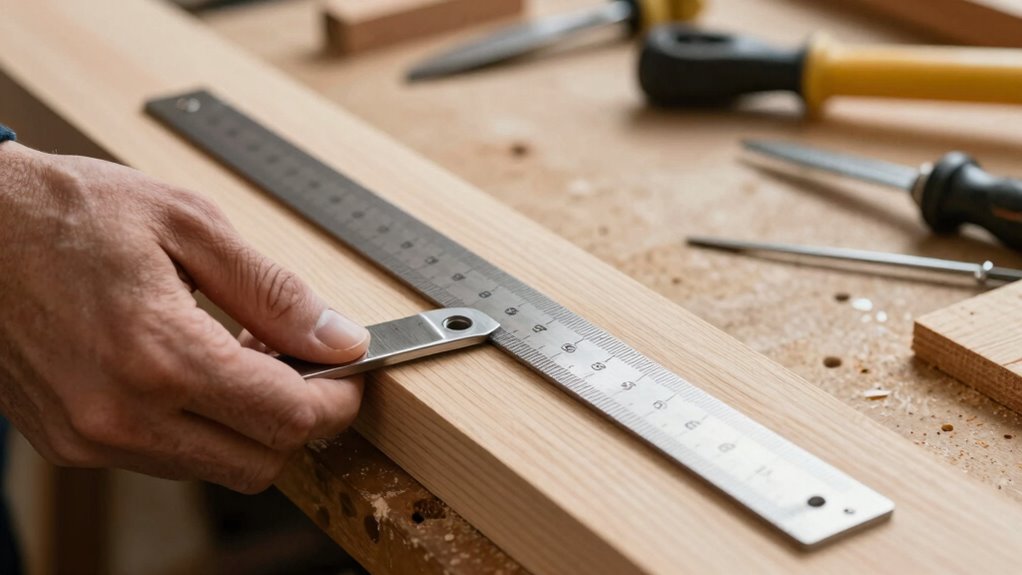
A combination square is a versatile tool that can help you measure, mark, and check angles with precision. When you’re working on a project, accuracy is key, and this tool guarantees your measurements and markings are spot-on. To get the most out of your combination square, you need to understand how to use it effectively for better layouts and fewer re-cuts. First, focus on measuring accuracy. Before starting, make sure your square is properly calibrated. Check the blade against the ruler to confirm it’s aligned correctly and hasn’t shifted with use. If it’s off, adjust the locking mechanism or replace the square if necessary. Proper calibration guarantees that every measurement you take is reliable, reducing errors that could lead to wasted material or imperfect cuts. Regularly inspecting and maintaining your tools ensures their measurement accuracy remains consistent over time. When marking your measurements, use a sharp pencil or marking knife for clean, precise lines. Position the square firmly against the edge of your workpiece, and make sure the handle is snug against the surface. For accurate measurements, take your time to align the scribed line with the measurement mark on the ruler. Use the locking screw to hold the blade in place once you’ve set your measurement, preventing any movement that could compromise your accuracy. Consistent checking and adjusting throughout your work will help maintain reliable measurements, especially when working on multiple pieces or complex layouts. Additionally, familiarizing yourself with angle checking techniques can expand your precision in projects. Proper tool maintenance plays an essential role in guaranteeing your combination square remains accurate over time. After each use, wipe the tool clean to remove dust, debris, or any material that could affect its alignment. Keep the blade free of rust and corrosion by occasionally applying a light coat of oil, especially if you store it in a humid environment. Checking the locking mechanisms regularly ensures they are tight and functioning properly. If the square’s head or blade becomes loose or damaged, replace or repair it promptly; a loose or misaligned square can lead to measurement errors. Additionally, understanding correct storage practices can help prolong the life of your tool and maintain its accuracy. Proper storage is also vital—store your square in a dry place, ideally in a protective case or drawer, to prevent accidental damage.
combination square with locking mechanism
As an affiliate, we earn on qualifying purchases.
As an affiliate, we earn on qualifying purchases.
Frequently Asked Questions
Can a Combination Square Be Used for Metalworking?
Yes, a combination square can be used for metalworking. It helps you achieve precise measurements and accurate angles, essential for good metalworking techniques. You can use it to mark lines, check angles, and guarantee your cuts are exact, reducing errors and re-cuts. Its versatility makes it a valuable tool for maintaining precision measurement methods, whether for framing, welding, or machining metal components.
What Materials Are Best Suited for Combination Square Use?
Think of your combination square as a trusted compass guiding precision through your projects. It’s best suited for materials like wood, metal, and plastic, where measuring accuracy is vital. These materials are compatible because they resist wear and can handle the tool’s pressure without deformation. Using it on these surfaces guarantees you achieve clean, accurate markings, reducing re-cuts and boosting your craftsmanship.
How Do I Calibrate My Combination Square?
To calibrate your combination square, start by checking its accuracy with a reliable, known measurement, like a precision steel or engineer’s block. Use calibration techniques such as aligning the square’s blade against the block and verifying the reading with a caliper. Adjust the square if it has a movable head or replace worn parts. This guarantees measurement accuracy, giving you precise, reliable markings and reducing errors during your projects.
Is a Combination Square Suitable for Woodworking Beginners?
Yes, a combination square is suitable for woodworking beginners because it offers excellent measuring accuracy and tool versatility. It helps you make precise measurements, markings, and right angles, which are essential when you’re learning the craft. Its multi-purpose design makes it a valuable starter tool, allowing you to handle various tasks like checking angles, straight edges, and depths, helping you improve your skills with confidence and fewer mistakes.
What Are Common Mistakes When Using a Combination Square?
Even if you’re new, avoid common pitfalls by double-checking your measurements and locking the square securely. A frequent mistake is misreading the scale, so always verify your markings with accuracy tips. Don’t rush; guarantee the blade is snug and perpendicular before marking. Overlooking these details can lead to inaccurate cuts and rework. Stay attentive, and you’ll improve your layout precision, reducing errors and saving time.
calibrated combination square for woodworking
As an affiliate, we earn on qualifying purchases.
As an affiliate, we earn on qualifying purchases.
Conclusion
Mastering your combination square transforms your woodworking projects. Imagine building a custom shelf and realizing your measurements are perfect the first time—no re-cuts, no frustration. Like Sarah, who saved hours on her DIY table, you’ll gain confidence and precision with every cut. Embrace this tool, and watch your craftsmanship improve, making every project more satisfying and professional-looking. With a combination square, you’ll turn your woodworking dreams into reality, one accurate measurement at a time.
precision marking tools for carpentry
As an affiliate, we earn on qualifying purchases.
As an affiliate, we earn on qualifying purchases.
angle measuring square for woodworking
As an affiliate, we earn on qualifying purchases.
As an affiliate, we earn on qualifying purchases.
Halloween Picks
halloween
As an affiliate, we earn on qualifying purchases.