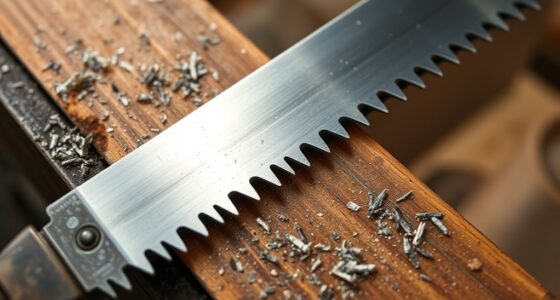
When working with cutting tools, always wear proper protective gear like safety glasses, gloves, and ear protection. Regularly inspect and maintain your tools to confirm blades are sharp, handles are secure, and parts aren’t damaged. Keep your workspace clean and well-lit, and secure your materials with clamps or vises to prevent slips. Proper handling and routine maintenance help prevent accidents and extend your tools’ lifespan. Keep these safety tips in mind to stay safe and efficient—more details await you.
Key Takeaways
- Always wear appropriate protective gear, including safety glasses, gloves, and ear protection, before handling cutting tools.
- Regularly inspect and maintain tools, keeping blades sharp and handles secure to prevent accidents.
- Check tools for damage or wear, replacing or repairing damaged parts before use.
- Keep the workspace tidy, well-lit, and free of clutter to ensure safe handling and control.
- Use clamps or vises to secure materials, and focus on the task to avoid distractions and mistakes.

Using cutting tools safely is crucial to prevent accidents and injuries. When you work with blades, saws, or any sharp implements, wearing the right protective gear becomes your first line of defense. Safety glasses or goggles protect your eyes from flying debris, while gloves can shield your hands from cuts and abrasions. However, choose gloves carefully; they should fit well and not interfere with your grip or control of the tool. Ear protection might also be necessary when working with loud equipment, and sturdy, non-slip footwear keeps you stable on different surfaces. Never underestimate the importance of protective gear—it’s your personal barrier against potential hazards and can make a significant difference in preventing serious injuries.
Equally critical is maintaining your tools properly. Regular tool maintenance ensures that blades are sharp, handles are secure, and moving parts operate smoothly. Dull blades require more force to cut and are more likely to slip, increasing the risk of accidents. Keep blades sharpened and replace them when they become worn or damaged. Inspect handles and other components for cracks or looseness before each use, tightening or repairing as needed. Proper storage also plays a role; storing tools in designated areas keeps them organized and reduces the chances of grabbing a damaged or unsafe tool. When you invest time in maintaining your tools, you’re not only extending their lifespan but also enhancing your safety during every project.
Before starting any cutting task, always check the condition of your tools. A quick inspection can reveal issues like rust, corrosion, or bent blades that could compromise safety. Additionally, ensure your workspace is tidy and well-lit. Cluttered areas increase the likelihood of accidental slips or misjudged cuts. Use clamps or vises to secure materials whenever possible, freeing both hands for better control. Keep your focus on the task at hand, avoiding distractions that could lead to mishaps. Never rush through a project—taking your time allows you to handle tools more carefully and reduces the chance of mistakes. For added safety, familiarize yourself with the essential maintenance practices for your specific tools, ensuring optimal performance and safety.
Frequently Asked Questions
What Should I Do if I Accidentally Cut Myself?
If you accidentally cut yourself, first, stay calm and apply pressure to stop the bleeding. Use a clean cloth or bandage for bleeding control. Once the bleeding slows, clean the wound with water and mild soap if possible. Then, apply an antiseptic and cover it with a sterile bandage. Seek medical help if the cut is deep, won’t stop bleeding, or shows signs of infection.
Are There Specific Gloves Recommended for Handling Cutting Tools?
Imagine you’re slicing through a tough piece of material, and a sudden slip happens. To stay safe, you should wear cut resistant gloves that provide ideal protection. Make sure they have a proper fit—too loose or tight can compromise safety. For instance, using gloves with high cut resistance and a snug fit can prevent serious injuries, giving you confidence and control during your work.
How Often Should I Replace Dull Blades?
You should replace dull blades as soon as you notice decreased cutting efficiency or increased effort, typically after several uses or when they become visibly dull. Regular blade maintenance guarantees safety precautions are met, reducing the risk of accidents. Using sharp blades helps you work more safely and efficiently. Always inspect your blades regularly, and don’t hesitate to replace them promptly to maintain maximum safety and cutting performance.
Can Children Use Cutting Tools Safely?
Children can use cutting tools safely if you provide close supervision and follow age restrictions. Always supervise your child closely, ensuring they understand proper handling and safety rules. Use age-appropriate tools designed for beginners, and keep sharp blades out of reach when not in use. Teaching your child safe cutting habits and setting clear boundaries helps prevent accidents, making their experience both educational and secure.
What Is the Best Way to Store Cutting Tools Safely?
You should store cutting tools safely by choosing proper storage solutions that keep blades protected and secure. While sharp blades demand careful blade maintenance, storing them in a designated, dry place minimizes accidents and rust. Use blade guards or toolboxes with compartments to prevent injuries and damage. Keep tools out of children’s reach, and always guarantee blades are clean and dry before storage, maintaining safety and extending their lifespan.
Conclusion
Remember, safety with cutting tools is like holding a delicate glass—attention and care keep you safe. While the sharp blade promises precision, it also demands respect. Picture yourself as both artist and guardian, balancing skill with caution. When you stay alert and follow safety tips, you turn potential hazards into a controlled craft. Embrace your tools wisely, and you’ll cut through tasks smoothly—danger always lurking just beneath the surface of sharpness.