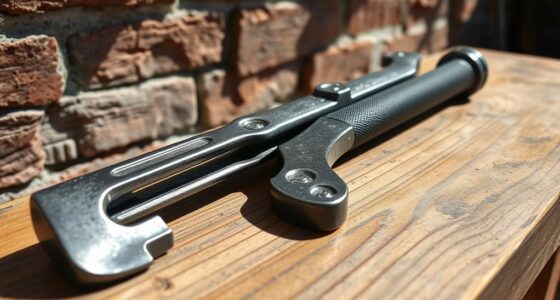
To use a drawknife safely, hold the handles firmly but relaxed, keeping your thumbs along the top for stability. Face the work directly and use your whole body to guide the tool with steady pressure, not just your arms. Keep the handles dry and sharp, inspecting and maintaining the blade regularly. Oil the blade to prevent rust and always use controlled, smooth motions. Continue exploring for more tips to guarantee safe, effective use of your drawknife.
Key Takeaways
- Hold handles firmly but relaxed, with thumbs on top for stability and avoid squeezing tightly.
- Face the workpiece directly and use your whole body to guide the drawknife smoothly.
- Keep handles dry and clean; wipe or wax handles to prevent slipping during use.
- Regularly sharpen the blade to maintain a sharp edge and ensure safe, effective cutting.
- Clean, dry, and oil the blade after use; store in a dry place to prevent rust and maintain safety.
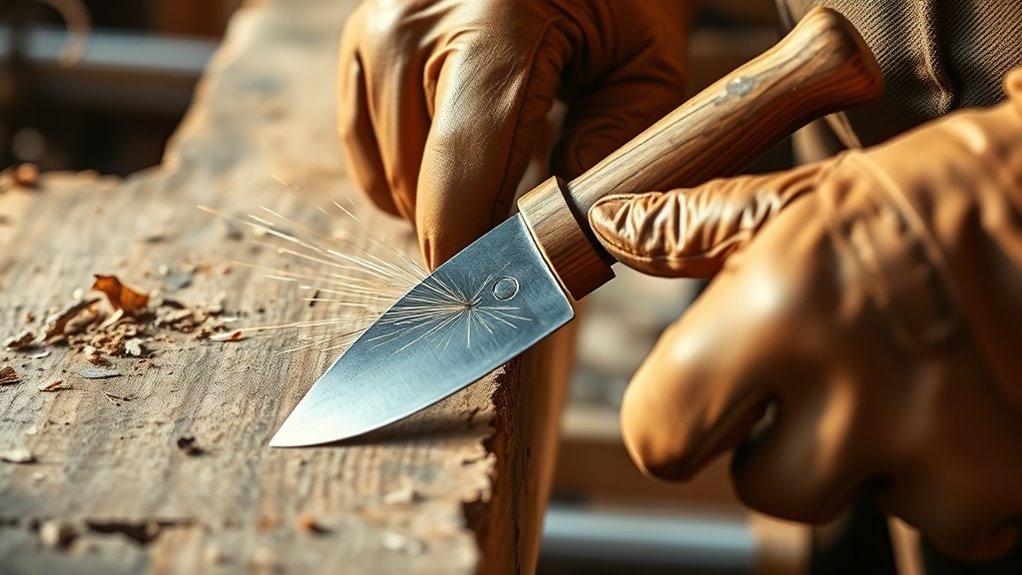
Have you ever wondered how to use a drawknife safely and effectively? Mastering this versatile tool requires understanding proper techniques, especially when it comes to handle grip, maintenance, and sharpening. Your grip on the handles is vital for control and safety. Always hold the drawknife with a firm but relaxed grip, placing your hands comfortably on the handles, ensuring your thumbs rest along the top for stability. Keep your hands slightly apart to maintain control, but avoid squeezing too tightly, which can cause fatigue or reduce finesse. Position your body so that you’re facing your workpiece directly, using your whole body to guide the blade rather than relying solely on arm strength. This stance helps prevent slips and ensures smooth, controlled cuts. Proper technique for handle grip isn’t just about safety; it directly affects the quality of your work. When pulling the blade toward you, keep your hands close to your body to exert steady pressure. When pushing or guiding the drawknife away from you, use your legs and core to generate power, not just your arms. Always keep the handles dry and free of debris to prevent slipping, especially when working for extended periods. If your grip starts to feel slippery, wipe the handles with a clean cloth or apply a light coating of wax or oil to improve traction. Maintaining your drawknife is equally important. Regularly inspect the handles for cracks or looseness, tightening any loose parts promptly. Clean off any sap, dirt, or rust from the blade, and store it in a dry place to prevent corrosion. Additionally, being aware of proper maintenance practices can significantly extend the lifespan of your tool and ensure safe operation. Sharpen your drawknife frequently to keep it cutting smoothly and to reduce the risk of accidents caused by dull blades. Use a sharpening stone or file appropriate for the steel, and maintain the bevel angle recommended by the manufacturer—usually around 20 to 25 degrees. When sharpening, work on both sides evenly to create a keen edge, ensuring you remove any nicks or dull spots. After sharpening, hone the blade with a fine stone or leather strop for a razor-sharp finish. Keep the blade clean and dry after each use, and apply a light coat of oil to prevent rust. Proper maintenance and sharpening not only extend the life of your drawknife but also make your work safer and more precise.
Frequently Asked Questions
Can a Drawknife Be Used for Carving or Only for Shaping?
You can definitely use a drawknife for both carving and shaping wood. It’s perfect for detailed wood carving projects and creating decorative shaping on furniture or sculptures. With controlled, careful strokes, you’ll remove layers of wood efficiently, making it versatile for various woodworking tasks. Just make sure to keep your grip firm and work with the grain to achieve smooth, precise results in your decorative shaping and carving projects.
What Safety Gear Is Recommended Besides Gloves and Goggles?
Besides gloves and goggles, you should wear ear protection to guard against loud noise and dust masks to prevent inhaling wood chips or dust. These safety gear pieces help protect your ears from hearing damage and keep your respiratory system safe. Always make certain your safety gear fits well and is in good condition, and remember to work in a well-ventilated area to minimize dust inhalation.
How Do I Maintain and Sharpen a Drawknife Properly?
Ever wondered how to keep your drawknife in top shape? To maintain and sharpen it properly, start by cleaning the blade after each use. Use a file or sharpening stone for blade sharpening, working along the edge’s bevel. Regular tool maintenance guarantees your drawknife stays effective and safe. Do it often, and you’ll enjoy smoother cuts and longer tool life!
Is It Safe to Use a Drawknife on Wet or Green Wood?
You should avoid using a drawknife on wet or green wood because high wood moisture can make the tool slip or cause kickback. Green wood’s softness can also dull the blade quickly, increasing the risk of accidents. Keep your drawknife well-maintained and sharp to guarantee safe, effective work. If you must work on green wood, let it dry slightly or use proper technique to reduce hazards and maintain tool longevity.
What Are Common Mistakes to Avoid When Using a Drawknife?
You should avoid poor blade control and improper grip when using a drawknife. Keep a firm, comfortable grip and control the blade’s angle to prevent slips. Don’t rush or force your cuts, as this can cause accidents or uneven surfaces. Stay focused, maintain steady pressure, and always cut away from your body. Proper technique guarantees safety and better results, so take your time to master your grip and control.
Conclusion
Remember, safety is key when using a drawknife. Always wear protective gear and keep your hands clear of the blade’s path. Did you know that accidents involving hand tools like drawknives make up about 20% of woodworking injuries? Staying focused and following proper techniques can markedly reduce your risk. By working carefully and responsibly, you’ll enjoy woodworking safely and create beautiful projects without unnecessary harm. Happy carving!