To choose the right hammer, consider the task you’re working on and select a tool with durable materials, like steel or fiberglass, that matches the job’s demands. Make sure it has ergonomic features such as comfortable grips and balanced weight to reduce fatigue and improve control. For lighter tasks, opt for smaller hammers, while larger ones work best for heavy-duty work. Keep in mind that the right choice enhances safety, efficiency, and comfort—if you keep exploring, you’ll find how to pick the perfect tool for every project.

Get business pricing on tools and workshop supplies
- Business-only prices and quantity discounts
- Tax-exempt purchasing
- Multiple users, one account, clear invoices
Key Takeaways
- Match hammer type and size to the specific task for optimal efficiency and safety.
- Prioritize durable materials like steel or fiberglass for reliability and longevity.
- Choose ergonomic handles with features like non-slip grips to reduce fatigue and enhance control.
- Use lightweight hammers for delicate work and heavier ones for heavy-duty tasks.
- Consider task-specific features such as face type and weight distribution to improve performance.
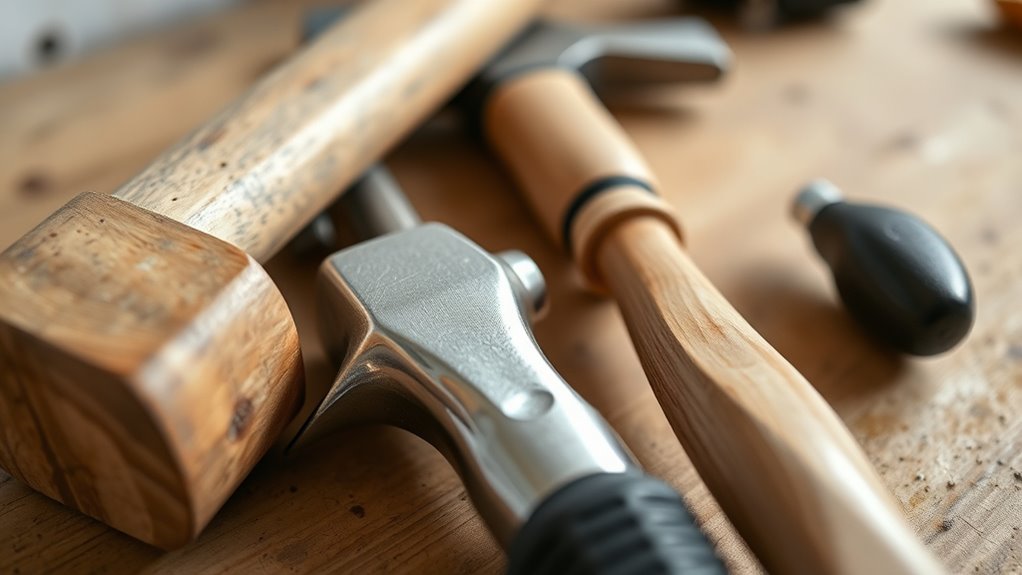
Selecting the right hammer is essential for guaranteeing your projects go smoothly and safely. The first step is understanding the different hammer materials and how they influence performance and durability. Hammers are typically made from various materials, such as steel, fiberglass, or wood. Steel heads are incredibly sturdy and last a long time, making them ideal for heavy-duty tasks like framing or demolition. Fiberglass hammers combine strength with lighter weight, which helps reduce fatigue during extended use. Wooden handles, while traditional, are generally less durable but can absorb shock better, offering a more comfortable experience when working on lighter tasks. Choosing a hammer with the right material depends on your specific needs, but always prioritize durability and reliability to prevent accidents or damage to your tools.
Next, consider the ergonomic design of the hammer. An ergonomic hammer features a handle designed to fit comfortably in your hand, reducing strain and improving control. A well-designed handle minimizes vibrations and shock transfer, which is especially important if you’ll be using the hammer for prolonged periods. Look for features like a non-slip grip, contoured shape, and balanced weight distribution. These details might seem minor, but they considerably impact your comfort and safety. When you use a hammer with an ergonomic design, you’ll find it easier to strike accurately and with less effort, reducing the risk of slips or missed hits that could cause injury or damage your workpiece. Investing in a hammer with ergonomic features ensures you stay comfortable and focused, even during demanding projects. Additionally, choosing the right hammer can also help prevent tool fatigue and extend the lifespan of your tools.
Furthermore, think about the specific task you’re tackling. For light carpentry or delicate work, a smaller, lightweight hammer with a softer face might be best. For heavier jobs like framing or demolition, a larger, more robust hammer with a heavier head will give you the power needed. The choice of materials and ergonomic features should align with these requirements. If you frequently work on different types of projects, consider having multiple hammers tailored to each task, ensuring that you always have the right tool at hand. Remember that the right combination of hammer materials and ergonomic design not only improves efficiency but also enhances safety, helping you avoid fatigue and injury. When you select a hammer thoughtfully, you set yourself up for successful, safe, and comfortable work every time.
Products Worth Considering

Levoit Core 600S-P Smart Air Purifier for Large Rooms

Ring Battery Doorbell Plus, Satin Nickel

Philips Hue Secure Wired Video Doorbell, 2K, Black
As an affiliate, we earn on qualifying purchases.
Frequently Asked Questions
What Materials Are Best for Hammer Handles?
You should choose a handle made from durable materials like hickory, fiberglass, or steel for your hammer. These materials offer strength, shock absorption, and longevity. When choosing the right handle, consider comfort and the type of work you’ll do. Hickory handles are traditional and dependable, while fiberglass handles provide lighter weight and better resistance to weather. Steel handles are tough but can transmit more vibration, so pick based on your needs.
How Do I Maintain and Sharpen Hammer Tools?
To maintain and sharpen your hammer tools, start by inspecting the handle for cracks and replacing it if needed. Keep the hammerhead secure, and if it’s chipped or damaged, consider a hammerhead replacement. Regularly clean the head with a wire brush to remove dirt and rust. For sharpening, lightly file any mushroomed or uneven edges to guarantee safety and efficiency. Proper handle maintenance and tool upkeep extend your hammer’s life and performance.
Can Different Hammers Be Used Interchangeably?
Using different hammers is like trying to fit puzzle pieces that don’t quite match; they aren’t always interchangeable. You need to contemplate the hammer’s weight and handle length for each job. A lighter hammer with a shorter handle works for delicate tasks, while a heavier one with a longer handle provides more power for tougher jobs. Always choose the right tool to avoid damaging your project or yourself.
What Safety Gear Should I Wear When Using a Hammer?
When using a hammer, you should wear personal protective equipment like safety goggles to shield your eyes from flying debris. Proper glove selection is essential to safeguard your hands from splinters and blisters, so choose gloves that fit well and provide good grip. Consider hearing protection if you’re working in a loud environment, and always inspect your gear before use to guarantee safety and effectiveness.
How Do I Identify My Hammer’s Manufacturer and Quality?
Think of your hammer as a trusted friend—your first clue is the brand name stamped on the handle or head. To gauge quality, look for reputable brands with strong reputation and clear warranty coverage, which signals durability. Inspect the material and craftsmanship—well-made hammers feel solid and balanced. Research online reviews and check for any certifications or standards; these details help you determine if your hammer is reliable and high-quality.
Conclusion
Now that you know how each hammer fits different jobs, you can confidently pick the perfect one. Imagine the satisfying weight in your hand, the satisfying thunk as it connects, and the steady rhythm of your work. With the right hammer, every tap becomes a confident strike, turning your project into a smooth, flowing dance. Trust your choice, feel the balance, and let your work unfold seamlessly—because the right tool makes all the difference.