To pick a better hacksaw frame and blade combo, focus on comfort, control, and compatibility. Choose a sturdy, lightweight frame with ergonomic handles to reduce fatigue and improve grip. Match the blade material and tooth type to your project—fine teeth for precision, coarse for rough cuts, and tough materials like high-speed steel. Proper tension and safety features enhance performance and reduce accidents. Keep exploring to discover even more tips for selecting the perfect setup.

Get business pricing on tools and workshop supplies
- Business-only prices and quantity discounts
- Tax-exempt purchasing
- Multiple users, one account, clear invoices
Key Takeaways
- Choose a lightweight, ergonomic frame with a comfortable handle for reduced fatigue and better control.
- Match blade material and tooth type to your project material for optimal cutting efficiency.
- Ensure blade size and compatibility suit the frame to maintain stability and safety.
- Prioritize safety features like secure grips and proper tensioning for precise, secure cuts.
- Regularly maintain and test the setup for consistent performance and extended tool lifespan.
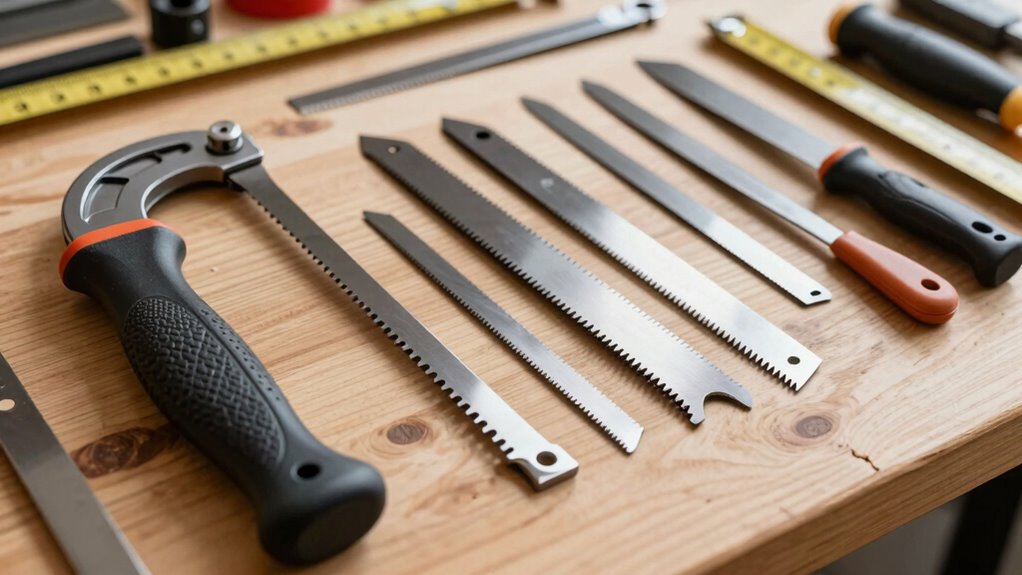
Choosing the right hacksaw frame and blade combo is vital for making precise cuts and guaranteeing safety during your projects. The frame’s design, especially its ergonomics, influences how comfortably and accurately you work. Look for a frame that feels sturdy yet lightweight, so you can maneuver easily without fatigue. An ergonomic handle reduces strain on your hand and wrist, which is essential when you’re working on longer tasks. When selecting a frame, consider how it balances weight and control—your goal is a tool that feels natural in your grip, not awkward or cumbersome. Additionally, understanding blade materials can help you select the most durable and efficient options for your specific tasks. Blade materials play a significant role in cutting efficiency and durability. Steel blades are common, offering a good balance of flexibility and toughness, suitable for most general-purpose tasks. If you plan to cut through tougher materials like metal or thick plastic, consider blades made from high-speed steel or bi-metal. These materials resist breaking and stay sharp longer, giving you cleaner cuts and reducing the need for frequent blade changes. For finer, detailed work, blades with narrower teeth made from high-speed steel can provide better precision. When it comes to selecting a blade, your project’s specifics matter. For example, a fine-tooth blade is ideal for smooth, precise cuts in metal, while a coarse-tooth blade works better for rough cuts in wood or plastic. Make sure the blade size matches the frame; some frames are designed for specific blade lengths, and using the wrong size can lead to instability or poor cutting performance. Always check the compatibility before purchasing. The frame’s ergonomics also affect safety. A well-designed frame minimizes slips and accidental contact with the blade, especially when applying pressure. A comfortable, secure grip helps you control the saw better, reducing the risk of kickback or mishandling. Additionally, look for features like a comfortable trigger or grip padding to enhance safety and reduce hand fatigue. Incorporating ergonomic design into your choice can significantly improve your comfort during extended use. Furthermore, selecting a blade tensioning system that allows easy adjustments can help maintain consistent tension, improving cutting accuracy and prolonging blade life. Being aware of blade compatibility can also prevent issues related to fitting or performance. To ensure optimal performance, it’s also important to consider the maintenance of your hacksaw and blades, as regular care can extend their lifespan. Ultimately, your choice depends on balancing blade materials with frame ergonomics to suit your cutting needs. A sturdy, ergonomic frame paired with the right blade material improves accuracy, safety, and comfort. Take the time to test different designs if possible, and consider how each feature feels during actual use. Making informed decisions about these factors ensures you pick a hacksaw combo that’s reliable, efficient, and safe for your projects.
ergonomic hacksaw frame with adjustable tension
As an affiliate, we earn on qualifying purchases.
As an affiliate, we earn on qualifying purchases.
Frequently Asked Questions
What Is the Average Lifespan of a Hacksaw Blade?
You can expect a hacksaw blade’s lifespan to vary based on blade material and cutting speed. Generally, a high-quality steel blade lasts longer, especially if you cut at moderate speeds. If you work quickly or press too hard, the blade wears out faster. Proper tension and avoiding unnecessary rough cuts help extend its life. On average, a blade lasts about 10-15 hours of use, but this can change depending on your cutting conditions.
Can I Use a Hacksaw for Cutting Metal and Plastic?
Yes, you can use a hacksaw for cutting both metal and plastic, but you need to take into account material compatibility and blade tension. Use blades specifically designed for each material—metal blades for metal, plastic blades for plastic. Adjust the blade tension properly to ensure smooth cuts and prevent blade breakage. Always check the manufacturer’s recommendations to avoid damaging your hacksaw or compromising your work quality.
How Often Should I Replace My Hacksaw Blade?
You should replace your hacksaw blade every 10 to 15 cuts or when it becomes dull. Notably, dull blades can require up to 50% more effort, risking injury and damaging your work. Keep an eye on blade sharpening and consider an ergonomic handle for comfort. Regular replacement ensures clean cuts, reduces fatigue, and maintains safety, especially if you use your hacksaw frequently.
Are There Specific Safety Gear Recommendations for Using a Hacksaw?
When using a hacksaw, you should wear protective gloves to prevent cuts and eye protection like safety goggles to shield your eyes from flying debris. Always guarantee your gloves fit well and are suitable for cutting tasks. Eye protection is essential to avoid injury from metal shards or sawdust. Prioritize these safety gear items to keep yourself safe while working with a hacksaw, especially during demanding or prolonged projects.
What’s the Best Way to Store My Hacksaw Blades?
To keep your hacksaw blades in top shape, store them properly with storage solutions like blade cases or a dedicated toolbox compartment. Always clean blades after use to prevent rust and inspect them regularly for dullness or damage, ensuring blade maintenance. Avoid storing blades loose to prevent bending or dulling. Proper storage prolongs blade life, maintains cutting efficiency, and keeps your workspace safe and organized.
high-speed steel hacksaw blades for metal cutting
As an affiliate, we earn on qualifying purchases.
As an affiliate, we earn on qualifying purchases.
Conclusion
Choosing the right hacksaw frame and blade combo is like finding the perfect pair of shoes—you want comfort, durability, and the right fit for your task. By considering blade material, frame strength, and your specific project needs, you’ll make smarter choices that make cutting easier and safer. When you pick wisely, your hacksaw becomes an extension of your hand—precise and reliable, like a finely tuned instrument ready to tackle any job with confidence.
lightweight durable hacksaw with safety features
As an affiliate, we earn on qualifying purchases.
As an affiliate, we earn on qualifying purchases.
fine-tooth bi-metal hacksaw blades
As an affiliate, we earn on qualifying purchases.
As an affiliate, we earn on qualifying purchases.
Fall Picks
fall essentials
As an affiliate, we earn on qualifying purchases.