When working with hand tools, wearing the right personal protective equipment is crucial to stay safe. Choose gloves suited for handling sharp or rough materials and make certain they fit snugly to prevent slipping or restricting movement. Always wear impact-resistant eye protection like safety glasses or goggles that meet industry standards to shield against debris and sparks. Regularly inspect, clean, and replace your gear to keep it effective. More tips on selecting and maintaining PPE for hand tool use can help you stay protected.
Key Takeaways
- Select PPE such as gloves, eye protection, and face shields based on the specific hazards of hand tool work.
- Ensure PPE fits properly and is regularly inspected for damage or wear before use.
- Use impact-resistant goggles or safety glasses that meet ANSI Z87.1 standards to protect against debris and sparks.
- Choose appropriate gloves—cut-resistant, insulating, or grip-enhancing—based on the task and material handled.
- Maintain and clean PPE regularly to preserve its protective qualities and ensure safety during hand tool operations.
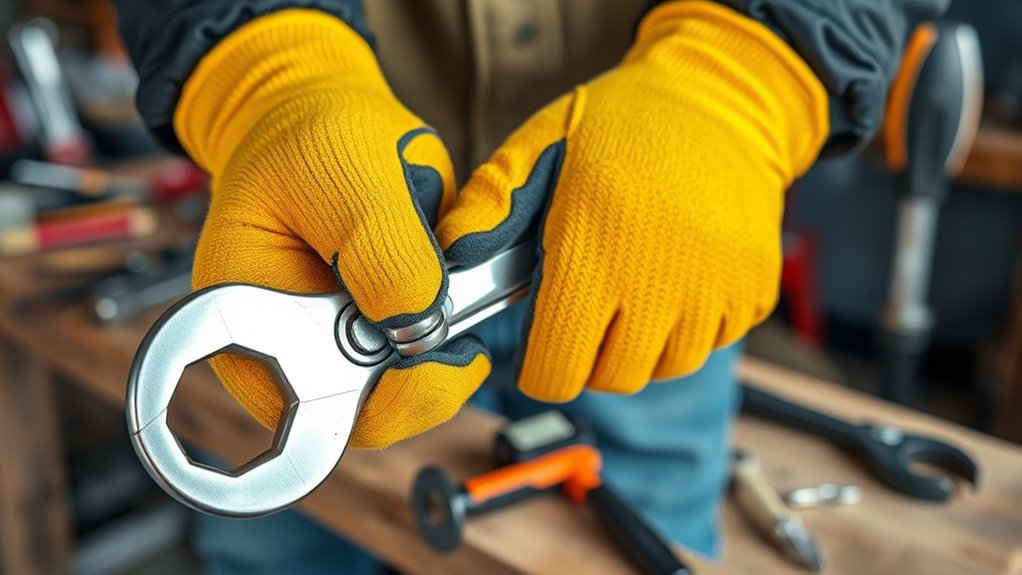
When using hand tools, wearing the right personal protective equipment (PPE) is essential to prevent injuries and guarantee safety. One of the most important aspects of PPE is choosing the correct gloves. Your glove selection should be based on the type of hand tools you’re working with and the specific hazards involved. For example, if you’re handling sharp or rough materials, select cut-resistant gloves that provide adequate grip and dexterity. When working with power tools or items that generate heat, insulating gloves can protect you from burns or electric shocks. Proper glove fit is critical; gloves that are too loose can slip off or impair your grip, while tight gloves may restrict movement and reduce tactile sensitivity. Always inspect your gloves for tears, holes, or signs of wear before use, and replace them regularly to maintain their protective qualities. Additionally, choosing gloves that meet safety standards such as ANSI Z87.1 can help ensure proper protection.
In addition to gloves, understanding eye protection standards is fundamental to safeguard your vision. Eye injuries are common in hand tool work, often caused by flying debris, sparks, or accidental splashes. You should always wear safety glasses or goggles that meet the relevant eye protection standards, such as ANSI Z87.1 in the United States. These standards guarantee that your eye protection can withstand impacts and prevent particles from reaching your eyes. When selecting eye protection, consider the type of work you’re doing. For grinding, cutting, or hammering, full-coverage goggles or face shields offer the best protection against flying fragments and debris. For tasks involving liquids or chemicals, chemical splash goggles provide a secure barrier against splashes and vapors.
It’s not enough to just wear PPE; you need to guarantee it complies with safety standards and fits properly. Ill-fitting gear can reduce protection and increase the risk of injury. For gloves, try different sizes and styles until you find one that offers both comfort and safety. For eye protection, make sure goggles or glasses fit snugly without pinching or slipping. Regularly clean and maintain your PPE to keep it in excellent condition. Dirty or damaged equipment can compromise safety and effectiveness. Being aware of regional resources and tools can help you access the best protective gear suited for your specific work environment.
Frequently Asked Questions
Are There Specific PPE Requirements for Different Types of Hand Tools?
Yes, you need specific PPE depending on the hand tool you’re using. For example, when handling sharp or abrasive tools, wear gloves made of cut-resistant or durable materials to protect your hands. Always use eye protection like safety glasses to guard against flying debris or sparks. Proper PPE minimizes injuries, so select gloves and eye protection suited for each tool’s hazards and follow safety guidelines to stay safe.
How Often Should PPE for Hand Tool Use Be Inspected or Replaced?
You should inspect your PPE for hand tool use before each use, regularly during work, and after any incident that might cause damage. Follow the replacement guidelines provided by the manufacturer or safety standards, replacing PPE immediately if you notice any wear, tear, or damage. Consistent inspection frequency and prompt replacement guarantee your safety, maintain equipment effectiveness, and prevent accidents caused by compromised protective gear.
Can PPE Be Reused After Exposure to Hazardous Materials?
You can reuse PPE after exposure to hazardous materials only if it’s properly cleaned and inspected. Reusability concerns include material contamination, which could compromise protection. Always follow manufacturer guidelines and safety protocols to verify the PPE remains effective. If cleaning isn’t sufficient or if there’s any damage, replacing the equipment is necessary to maintain safety. Never reuse PPE that might be contaminated if it can’t be adequately decontaminated or inspected.
What Are the Cost Considerations for Different PPE Options?
Did you know that the global PPE market is projected to reach $96.4 billion by 2026? When choosing PPE, consider your budget constraints and material durability. Cheaper options might save money upfront but could wear out quickly, increasing long-term costs. Investing in higher-quality, durable PPE can reduce replacement expenses and improve safety. Balance initial costs with long-term savings to make sure you get effective protection without overspending.
How Do I Ensure Proper Fit and Comfort of PPE During Use?
To guarantee proper fit and comfort, you should conduct fit testing regularly and choose PPE with ergonomic design features. Try on different sizes and styles to find the best fit, and adjust straps or features for comfort. Prioritize PPE that allows free movement and reduces pressure points. Regular fit testing helps identify issues early, ensuring your equipment remains effective and comfortable during use, minimizing fatigue and discomfort.
Conclusion
Think of your safety gear as your trusty shield in a quest, protecting you from unexpected attacks. Just like a knight wouldn’t venture into battle without armor, you shouldn’t handle tools without the right PPE. When you wear your gloves, goggles, and helmets, you’re equipping yourself for success. Stay vigilant and protect yourself—your safety gear is the legendary armor that keeps you safe on every task’s journey.