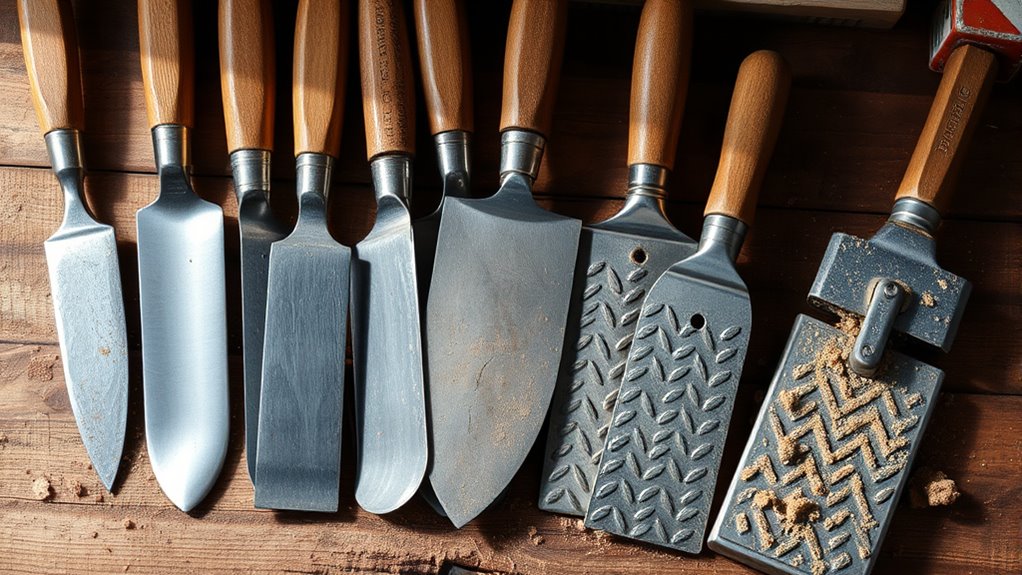

To choose and care for masonry tools, prioritize quality and safety. Select tools suited for specific tasks, such as durable trowels and chisels, and check for damage before use. Keep tools clean, sharpen blades regularly, and store them properly to prevent damage. Always wear protective gear and follow safety guidelines. Proper maintenance extends your tools’ lifespan and ensures safer, more efficient work. Keep going to discover essential tips for maintaining your masonry tools effectively.
Key Takeaways
- Select high-quality, durable masonry tools suited for specific tasks to ensure efficiency and safety.
- Regularly inspect and maintain tools by cleaning, sharpening, and repairing to extend their lifespan.
- Use protective gear and follow manufacturer instructions to ensure safe handling and operation of tools.
- Store tools properly in organized, secure spaces to prevent damage and tripping hazards.
- Replace worn or damaged tools immediately to maintain safety standards and project quality.

Choosing the right masonry tools is essential for completing your projects efficiently and safely. When you select quality tools, you’ll find that your work becomes more precise, and the risk of accidents decreases. Proper tool maintenance plays a critical role in keeping your tools in top condition, ensuring they perform well and last longer. Regularly inspecting your tools for damage, cleaning them after each use, and storing them properly help prevent issues like rust, dullness, or breakage. Sharpening chisels and trowels when needed keeps them effective and reduces the effort required during work. Remember, well-maintained tools not only improve your results but also promote safety on the job site. Using the right tool maintenance practices can extend the lifespan of your equipment and improve safety.
Safety precautions should always be a priority when working with masonry tools. Always wear protective gear such as safety glasses, gloves, and dust masks to shield yourself from flying debris, dust, and potential injuries. Before starting any project, check your tools for damage or defects—cracks, loose handles, or dull blades can cause accidents or compromise the quality of your work. Using tools that are in poor condition increases the risk of slips or breaks, which can lead to injuries. Never force a tool to do a job it’s not designed for; instead, use the right tool for the task. This not only improves safety but also extends the lifespan of your equipment.
When handling masonry tools, adopt safe work habits. Keep your workspace organized to avoid tripping hazards and ensure that tools are stored properly after use. Keep blades sharp and handles secure, and never leave tools lying around where they can cause someone to trip or cut themselves. Always follow the manufacturer’s instructions regarding tool use and maintenance. If you notice any unusual vibrations, sounds, or other signs of wear during operation, stop immediately and assess the problem. Continuing to use damaged or poorly maintained tools can lead to accidents or further damage, which might delay your project and increase costs.
Frequently Asked Questions
How Often Should Masonry Tools Be Sharpened or Replaced?
You should sharpen masonry tools when they start to become dull, typically every few months with regular use. Regular tool maintenance helps maintain their effectiveness, so don’t wait too long. Replacement intervals depend on usage and tool condition; replace tools when they become chipped, cracked, or worn beyond sharpening. Proper care prolongs their lifespan, but timely replacement ensures safety and efficiency on your projects.
What Safety Gear Is Recommended When Using Masonry Tools?
When using masonry tools, safety should be your top priority. You should wear protective eyewear to shield your eyes from flying debris and respiratory masks to prevent inhaling dust. While chiseling or grinding, these safety gears act as your first line of defense, turning a potentially hazardous task into a safer, more manageable experience. Remember, protecting yourself is just as important as the work you’re doing.
Can Masonry Tools Be Used for Non-Masonry Projects?
Yes, you can use masonry tools for non-masonry projects. Many multi-purpose tools, like chisels and hammers, are perfect for hobbyist projects beyond masonry work. These tools can help you with carving, shaping, or breaking materials like wood, plastic, or soft metals. Just make sure to select the right tool for your specific project, and always follow safety guidelines to avoid accidents or damage.
How Do I Store Masonry Tools to Prevent Rust and Damage?
Did you know that rust can ruin your masonry tools within just a week of exposure? To prevent this, you should prioritize tool maintenance and storage solutions. Store your tools in a dry, cool place, preferably in a toolbox or on a rack with ventilation. Wipe them down after use and apply a light oil coating to protect against moisture. Proper storage keeps your tools sharp, durable, and ready for your next project.
Are There Eco-Friendly Options for Cleaning Masonry Tools?
Yes, you can choose eco-friendly options for cleaning masonry tools. Use biodegradable cleaning solutions that break down naturally and are safe for the environment. Additionally, opt for recycled tool brushes made from sustainable materials, which help reduce waste. These options effectively clean your tools without harming the planet, ensuring you maintain your masonry equipment responsibly while supporting eco-conscious practices.
Conclusion
By choosing the right masonry tools and caring for them properly, you build more than walls—you build confidence and craftsmanship. Just as a sturdy trowel withstands years of wear, your skills grow stronger with regular maintenance. Remember, neglect can crack your progress, but attentive care keeps your work solid and lasting. So, invest in your tools as you do in your craft—because every brick you lay is a demonstration to your dedication and expertise.