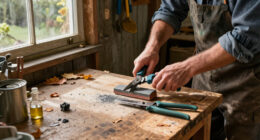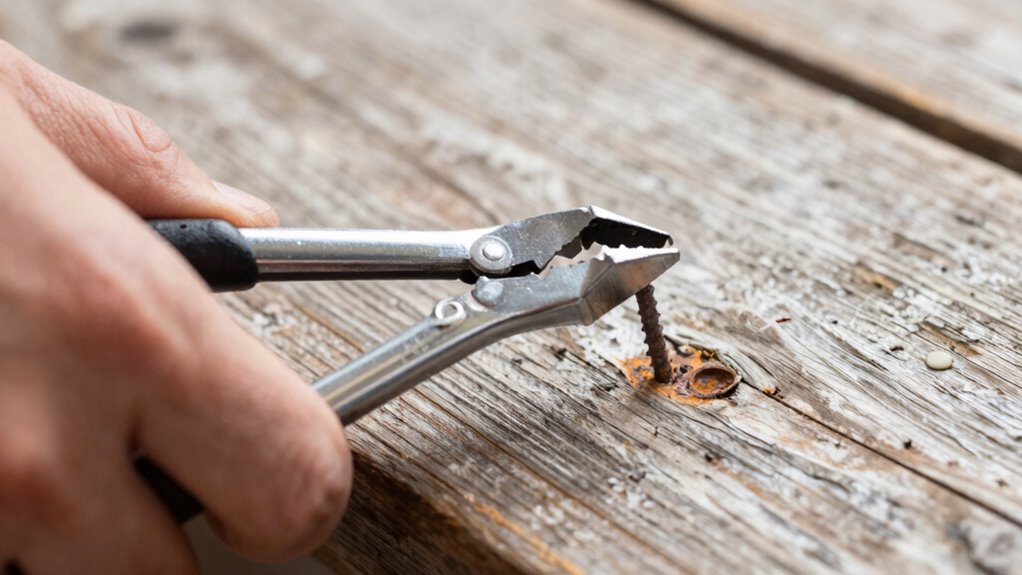
To use nail pullers and cats paws without damaging the surface, start by protecting delicate materials with scrap wood or padding under the tool. Work slowly and carefully, sliding the tool gently under the nail head and applying steady, controlled pressure. Avoid forceful jerks and focus on gradual leverage to prevent gouging or scratches. Make sure your tools are in good condition and use proper technique for tricky nails. If you’re interested in mastering these methods, you’ll find helpful tips ahead.

Get business pricing on tools and workshop supplies
- Business-only prices and quantity discounts
- Tax-exempt purchasing
- Multiple users, one account, clear invoices
Key Takeaways
- Use scrap wood or pry guards under the tool to distribute force and protect the surface.
- Insert padding or beveled edges on tools when working on delicate materials.
- Apply slow, steady leverage with controlled movements to prevent gouging or scratching.
- Gradually increase pressure on stubborn nails, avoiding sudden jerks or forceful pulls.
- Ensure tools are in good condition and properly positioned to avoid slips and surface damage.
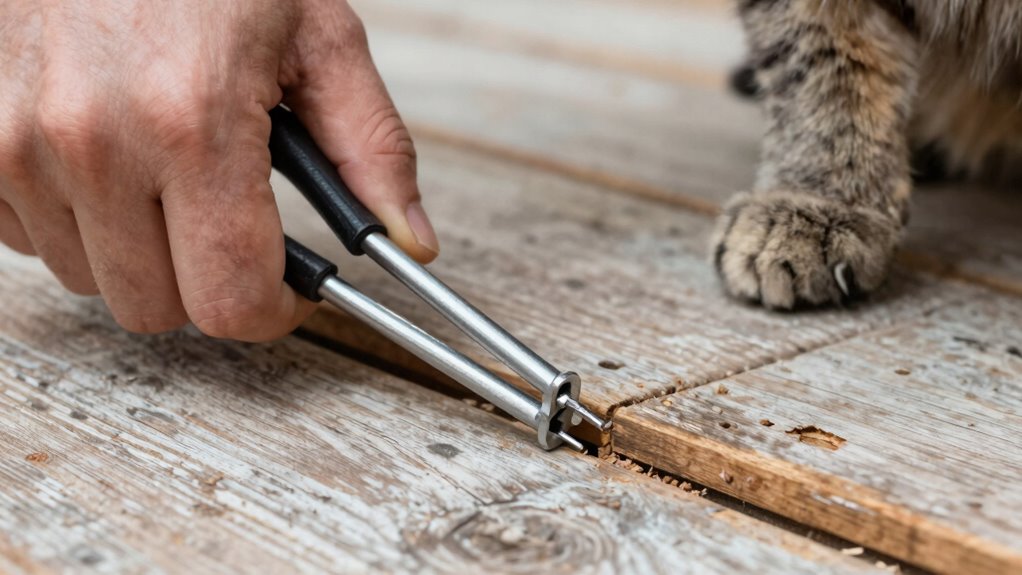
Removing nails or tacks without damaging your surfaces can be straightforward if you use the right tools and techniques. Nail removal techniques, especially when using tools like nail pullers and cats paws, require precision and care to avoid scratches, gouges, or other surface damage. Nail removal techniques, especially when using tools like nail pullers and cats paws, require precision and care to avoid scratches, gouges, or other surface damage. Before starting, it’s essential to prepare your workspace and select the appropriate tools for the job. A good quality nail puller or cats paw with a sturdy, flat blade is ideal for gripping nails securely without slipping.
To protect your surfaces, start by placing a thin piece of scrap wood or a pry guard underneath the tool’s tip. This surface protection method helps distribute the force evenly, reducing the chances of gouging the material beneath. When you position the tool, slide the flat end of the nail puller or cats paw under the nail head carefully, ensuring that the edge doesn’t dig into the surface. Applying gentle, steady leverage is key—forceful prying can cause splintering or cracking. If a nail is deeply embedded or rusted, work slowly, gradually increasing pressure to loosen it without sudden jerks. Using appropriate tools that are designed for specific materials can further reduce the risk of surface damage.
Use scrap wood under your tool to protect surfaces when removing nails or tacks carefully.
In addition to choosing the right tool and surface protection methods, it’s crucial to work in a controlled manner. Use your body weight to apply consistent pressure, and avoid sudden movements that could cause slips or surface damage. If you’re working on delicate materials like drywall or painted surfaces, consider using a pry bar or a flat tool with a padded or beveled edge to minimize contact points. Proper technique and patience are essential for preventing surface harm during removal. Additionally, understanding the material properties of the surface you’re working on can help you select the most suitable removal method and tools. Always prioritize slow and steady movements, as rushing increases the risk of surface damage.
Products Worth Considering

Philips Hue Amarant Outdoor Smart Light Bar, Black

Philips Hue Play Gradient Light Tube, Large, Black

TCL 32-Inch R3D Series QLED Full HD Roku Smart TV (32R3D, 2026)
As an affiliate, we earn on qualifying purchases.
Frequently Asked Questions
Can Nail Pullers Be Used on Delicate or Painted Surfaces?
Nail pullers can be used on delicate or painted surfaces if you prioritize paint protection and surface compatibility. Use a thin, flexible pry bar or a specialized cat’s paw with a wide, flat blade to minimize damage. Always work gently, applying even pressure, and avoid forcing nails. Applying painter’s tape around the area can provide extra protection, helping you remove nails without harming the surface or paint finish.
What Safety Precautions Should I Take When Using a Cats Paw?
Did you know that proper tool handling reduces accidents by 50%? When using a cats paw, always wear personal protective equipment like gloves and eye protection to prevent injuries. Keep a firm grip, work slowly, and avoid excessive force to prevent slipping or damaging surfaces. Make certain your work area is clear, and double-check the tool’s condition. These safety precautions help you stay safe while effectively removing nails.
Are There Specific Types of Nail Pullers Better for Certain Materials?
Yes, specific nail pullers are better suited for certain materials. For example, a curved claw nail puller works well on hardwoods, while a flat pry bar is more versatile for softer materials like drywall or plywood. Material compatibility is key—using the right tool avoids surface damage and guarantees efficiency. Tool versatility allows you to handle various materials effectively, so choose your nail puller based on the surface you’re working with for best results.
How Do I Prevent Scratches When Using a Nail Puller?
Imagine gently sliding a thin sheet of plastic or a soft cloth between your nail puller and the surface, creating a barrier. To prevent scratches, always use surface protection like this, and make certain your tool is clean and well-maintained. Regular tool maintenance, including sharpening and cleaning, helps avoid unnecessary damage. By handling your tools carefully and protecting the surface, you can pull nails without leaving a mark, preserving your work’s integrity.
What Tools Are Recommended for Removing Stubborn Nails Without Damage?
For stubborn nails, use a nail puller or cats paw with a wide, flat face to distribute pressure evenly. To guarantee surface protection, slip a thin pry bar or putty knife underneath the nail head before pulling. Applying lubricant like WD-40 can also loosen rusted nails. These tools and techniques minimize surface damage during nail removal, making the process safer and more efficient.
Conclusion
To avoid surface damage, you must choose the right tool, apply steady pressure, and work patiently. You need to position the nail puller or cats paw carefully, leverage your strength wisely, and focus on controlled movements. You should inspect your work frequently, adjust your approach as needed, and always prioritize gentle techniques over brute force. By following these steps, you’ll protect your surfaces, preserve your materials, and achieve successful results every time.