To maintain and sharpen your pruning tools, start by inspecting blades for dullness or nicks and replace them if needed. Clean tools thoroughly after each use and apply a light coat of oil to prevent rust. Regularly sharpen blades with a sharpening stone or file, following the bevel angle for a precise edge. Proper upkeep keeps your tools efficient and prolongs their life. Keep going to discover more tips for perfect pruning results.
Key Takeaways
- Regularly inspect blades for dullness or damage and replace them as needed for clean cuts.
- Clean tools thoroughly after each use to remove sap, dirt, and moisture, then apply oil to prevent rust.
- Sharpen blades using a sharpening stone or file, following the bevel angle to maintain a sharp edge.
- Store tools in a dry, sheltered place, hanging or in a toolbox, to reduce rust formation.
- Follow manufacturer instructions for blade installation and maintenance to ensure optimal performance.

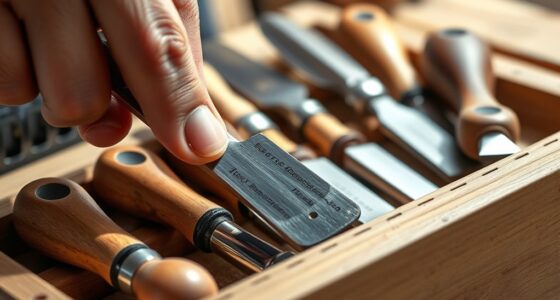
Maintaining your pruning tools is essential for guaranteeing clean cuts and prolonging their lifespan. When your tools are well-kept, they perform more efficiently, which benefits your plants and makes your gardening tasks easier. One of the most important steps in tool maintenance is regularly inspecting the blades. Over time, blades can become dull or nicked, making it harder to make clean cuts that heal quickly. In such cases, blade replacement is often the best option. Replacing dull or damaged blades ensures your tools cut smoothly, reducing the risk of damaging plants or causing unnecessary stress to stems and branches. When you replace blades, be sure to choose the right size and type for your specific pruning tools, and follow manufacturer instructions for installation. Doing so guarantees a secure fit and peak performance.
Rust prevention is another critical aspect of maintaining pruning tools. Metal parts are vulnerable to rust, especially if your tools are exposed to moisture or left outside after use. To prevent rust, always clean your tools thoroughly after each use. Wipe the blades and handles with a dry cloth to remove sap, dirt, and moisture. Applying a light coat of oil—such as WD-40 or a dedicated gardening oil—helps create a protective barrier that wards off rust. Store your pruning tools in a dry, sheltered place, preferably hanging or in a toolbox, to avoid contact with humidity. Regularly inspecting for signs of rust allows you to take immediate action—using steel wool or a rust remover on affected areas can restore the metal and prevent further deterioration. Rust not only weakens the blades but can also cause them to become sticky or difficult to open and close, hampering your pruning efforts. Additionally, understanding the Power of Imagination can inspire creative solutions for maintaining and innovating your gardening tools and practices.
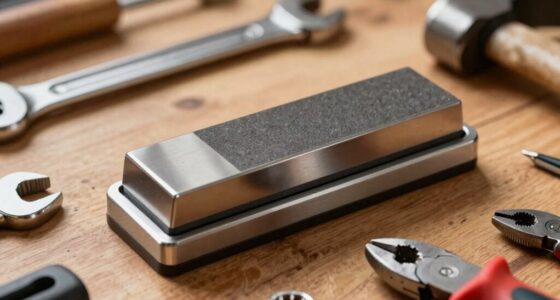
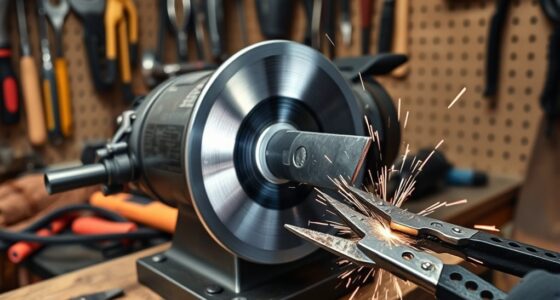
Sharpen your blades periodically to maintain their cutting capability. Use a sharpening stone or a file, following the blade’s bevel angle. Proper sharpening reduces the effort needed to cut through branches and prevents accidental slips or injuries. When sharpening, work slowly and evenly to preserve the blade’s shape. After sharpening, wipe the blades clean and apply a thin layer of oil to protect the metal. Remember, dull blades increase the risk of tearing or crushing plant tissue, which can lead to infections or disease. By replacing blades when necessary, preventing rust, and sharpening regularly, you guarantee your pruning tools remain in top condition. This not only makes your work more efficient but also extends the lifespan of your tools, saving you money and effort in the long run. Proper maintenance keeps your pruning tools performing their best season after season.
pruning shear sharpening stone
As an affiliate, we earn on qualifying purchases.
As an affiliate, we earn on qualifying purchases.
Frequently Asked Questions
How Often Should Pruning Tools Be Sharpened for Optimal Performance?
You should sharpen your pruning tools after every few uses or when you notice they’re not cutting smoothly, typically every 4 to 6 weeks depending on your pruning schedule. Regular sharpening guarantees clean cuts, reducing plant stress and disease risk. Keep an eye on the cutting edges, and if they become dull or chipped, sharpen them promptly. Adjust your sharpening frequency based on how often you prune and the type of tools you use.
Can I Sharpen Pruning Tools With Household Items?
Back in the day, folks used everything from stones to glass to sharpen tools, and you can too! Yes, you can do DIY sharpening with household items like a ceramic mug or a fine-grit nail file. Just be cautious, and keep your blades at the right angle. These simple household items can help restore your pruning tools’ sharpness, saving you money and keeping your garden work smooth and safe.
What Are the Signs My Pruning Tools Need Replacing?
You’ll know your pruning tools need replacing if you notice blade damage or dullness indication. If the blades chip, crack, or bend, it’s time to get new ones. Dull tools won’t make clean cuts and can damage plants, so replace them when sharpening no longer restores their edge. Don’t ignore these signs, as using damaged or dull tools can make pruning more difficult and less effective.
How Do I Prevent Rust on My Pruning Tools?
Ever wonder how to keep rust off your pruning tools? You can prevent rust by regularly applying a blade coating, which forms a protective barrier against moisture. Always clean your tools after use and dry them thoroughly. Store them in a dry place, and consider applying a light oil or rust inhibitor periodically. These simple steps ensure your tools stay sharp and rust-free, ready for your next pruning session.
Is It Necessary to Sterilize Pruning Tools After Each Use?
Yes, you should sterilize your pruning tools after each use to guarantee pruning tool safety. Use sterilization techniques like rubbing alcohol or a bleach solution to disinfect blades, especially when pruning diseased plants. Proper sterilization prevents the spread of pests and diseases. It’s quick and easy, and it keeps your tools in top condition, making pruning safer and more effective. Always wipe blades thoroughly before and after use.
garden pruning tool replacement blades
As an affiliate, we earn on qualifying purchases.
As an affiliate, we earn on qualifying purchases.
Conclusion
So, after all that effort to keep your pruning tools sharp and shiny, you’d think they’d last forever, right? Turns out, neglecting maintenance is the real pruning crime. Ironically, a little upkeep saves you from more work down the line—like hacking through tangled branches with dull blades. So go ahead, sharpen those tools regularly; it’s the easiest way to pretend you’re a pro while actually just doing the smart thing. Happy pruning!
pruning shear rust remover
As an affiliate, we earn on qualifying purchases.
As an affiliate, we earn on qualifying purchases.
gardening oil for pruning tools
As an affiliate, we earn on qualifying purchases.
As an affiliate, we earn on qualifying purchases.