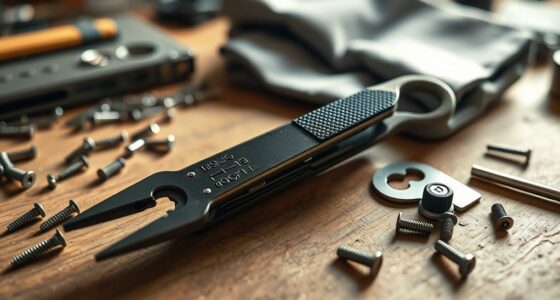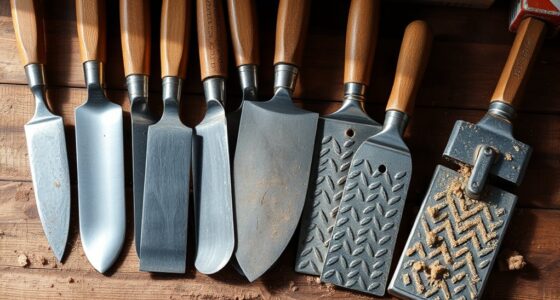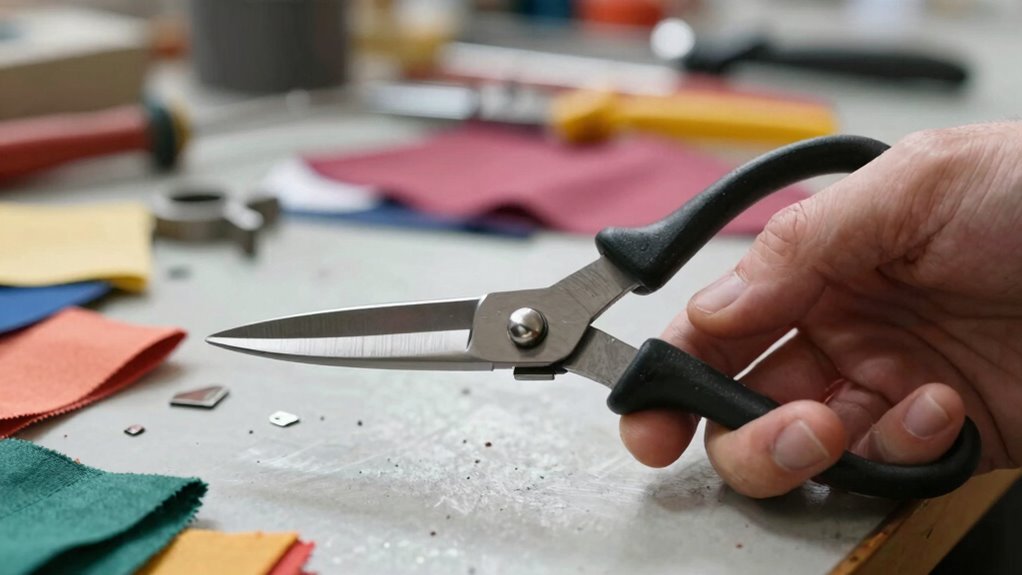

To pick better snips, shears, and cutters, match your tools to the materials you work with. Look for sharp blades made from high-quality steel to guarantee durability and cleaner cuts. Consider ergonomic designs that reduce fatigue and improve control during extended use. Proper storage and regular maintenance extend tool life and safety. Investing in the right tools saves time, effort, and costs long-term. Keep exploring for more tips to upgrade your shop toolkit even further.
Key Takeaways
- Match tool type and blade size to the specific material and task for optimal performance.
- Prioritize high-quality blades with proper maintenance to ensure clean cuts and durability.
- Choose ergonomic designs with comfortable grips for reduced fatigue during prolonged use.
- Store tools safely with protective sheaths to preserve blade sharpness and prevent accidents.
- Consider specialized blade features or coatings for improved cutting efficiency on particular materials.
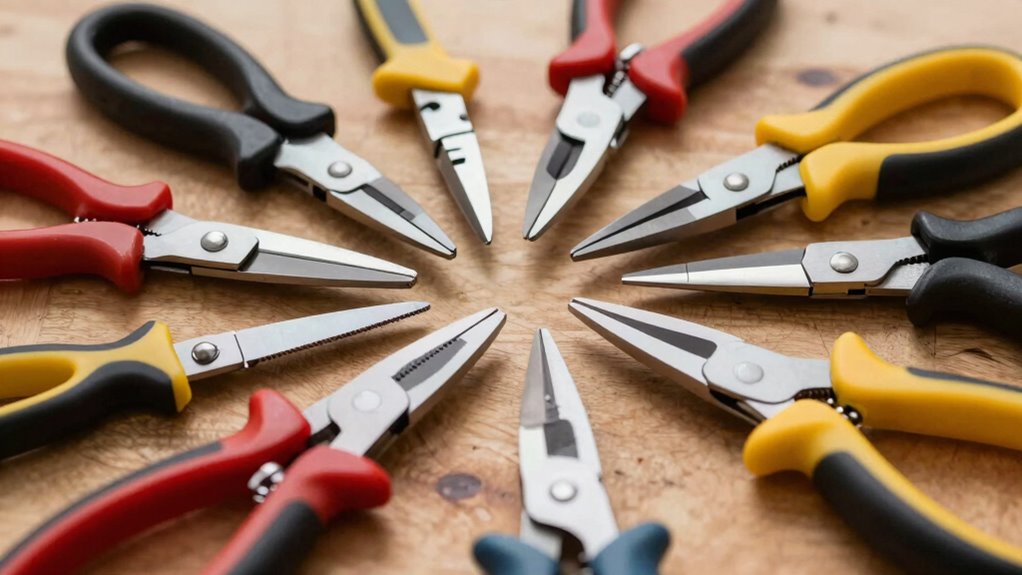
Choosing the right snips, shears, and cutters can make a significant difference in your work, whether you’re tackling a DIY project or professional tasks. The key to selecting the best tools lies in understanding material compatibility and blade maintenance. Different materials demand specific tools; for example, cutting thin sheet metal requires heavy-duty snips with strong, durable blades, while delicate aluminum or plastic might need lighter, more precise shears. Before making a purchase, consider what materials you’ll encounter most often and choose tools designed for those applications. Using incompatible tools can lead to faster wear, poor cuts, and even safety hazards.
Choosing the right cutting tools based on material improves safety, quality, and tool longevity.
Blade maintenance is equally important in guaranteeing your tools perform at their best over time. Sharp blades provide cleaner cuts, reduce effort, and help prevent material damage. Investing in a good sharpening routine or replacement blades keeps your cutters in top shape. Dull blades not only make work more difficult but can also cause jagged edges or tearing, especially on sensitive materials. Regular cleaning and proper storage also extend blade life. Avoid neglecting blade maintenance, as it directly affects cutting accuracy and safety, making sure you get the most out of your tools for years. Additionally, understanding material compatibility can help prevent premature tool wear and improve cutting efficiency. Proper storage techniques, such as keeping blades in protective sheaths or designated cases, further preserve blade sharpness and safety.
When choosing snips, shears, and cutters, consider the ergonomic design and comfort. Tools with comfortable grips reduce fatigue, especially during prolonged use. Look for features like spring-loaded handles or cushioned grips that improve control and lessen hand strain. The style of the tool matters, too—whether straight, curved, or angled blades—each serves specific purposes, so select according to your typical tasks. For example, angled blades are excellent for tight spaces, while straight blades provide more control for general cuts.
Material quality plays a vital role in durability. Cheaper tools often compromise on blade quality and construction, leading to quicker wear and potential breakage. Investing in well-made tools with high-quality steel blades ensures they stay sharp longer and resist corrosion. Pay attention to the blade design—some blades are segmented or coated for specific materials, which can improve cutting efficiency and longevity. When choosing tools, consider blade design features that enhance your work, especially for specialized tasks.
Ultimately, choosing better snips, shears, and cutters involves understanding your material needs, maintaining blades properly, and selecting ergonomic, durable designs. When you match your tools to your tasks, you’ll experience smoother cuts, increased safety, and better results. This approach not only saves you time and effort but also prolongs the lifespan of your tools, making your work more efficient and satisfying in the long run.
high-quality metal snips for sheet metal
As an affiliate, we earn on qualifying purchases.
As an affiliate, we earn on qualifying purchases.
Frequently Asked Questions
How Do I Maintain the Sharpness of My Snips and Shears?
To keep your snips and shears sharp, regularly perform blade sharpening using a fine file or sharpening stone, focusing on maintaining the original bevel angle. Also, check and clean the pivot point to guarantee smooth operation. Handle maintenance is essential too; oil the pivot for easy cutting, and keep the blades dry to prevent rust. Proper storage and occasional cleaning extend their sharpness and overall lifespan.
What Safety Precautions Should I Take When Using Cutters?
When using cutters, you should always wear personal protective equipment like gloves and safety glasses to protect yourself from sharp edges and flying debris. Follow safe handling techniques by keeping a firm grip, cutting away from your body, and ensuring your workspace is clear. Never force the cutters through materials, and always store them safely after use. These precautions help prevent accidents and keep you safe during your shop tasks.
Are There Specific Materials Best Suited for Different Snips?
Think of snips as your trusted compass, guiding your work with precision. Different materials demand specific tools for material compatibility and cutting precision. For soft metals like aluminum, use snips with sharp blades designed for delicate work. Heavy-duty stainless steel requires stronger, more durable cutters. Choosing the right snip for each material guarantees clean cuts and reduces fatigue, turning tough tasks into smooth sailing.
How Do I Identify High-Quality Versus Cheap Tools?
You can identify high-quality tools by checking the tool brand reputation—trusted brands usually guarantee better durability and performance. Compare prices carefully; extremely cheap tools often compromise quality, while higher prices might reflect better craftsmanship. Look for solid construction, sharp blades, and comfortable grips. Reading reviews and inspecting the tool’s material can also help you spot the difference between cheap, disposable tools and reliable, long-lasting ones.
Can Different Cutters Be Used Interchangeably for the Same Task?
You can’t always use different cutters interchangeably for the same task, as each tool is designed for specific materials and cuts. Imagine slicing through paper with a bread knife—ineffective and frustrating. Using the wrong cutter risks compromising tool longevity and cutting precision. Stick to the appropriate tool for each task to guarantee clean cuts, preserve your tools, and get the best results every time.
ergonomic fabric shears with cushioned grips
As an affiliate, we earn on qualifying purchases.
As an affiliate, we earn on qualifying purchases.
Conclusion
Now that you know what to look for, choosing the right snips, shears, and cutters becomes easier, like finding the perfect tool in a toolbox full of options. Remember to take into account the material, size, and purpose of each tool to match your specific shop tasks. When you pick wisely, your work will flow smoothly, cutting through projects like a hot knife through butter. Trust your instincts and enjoy the satisfying feel of a job well done.
professional cutter blades replacement
As an affiliate, we earn on qualifying purchases.
As an affiliate, we earn on qualifying purchases.
precision aluminum and plastic shears
As an affiliate, we earn on qualifying purchases.
As an affiliate, we earn on qualifying purchases.