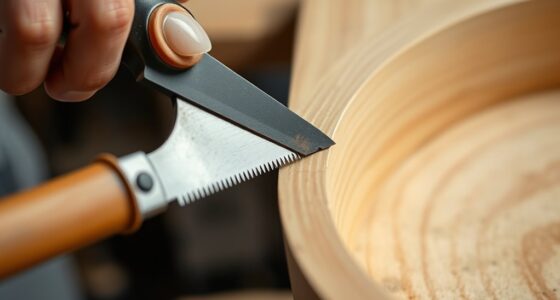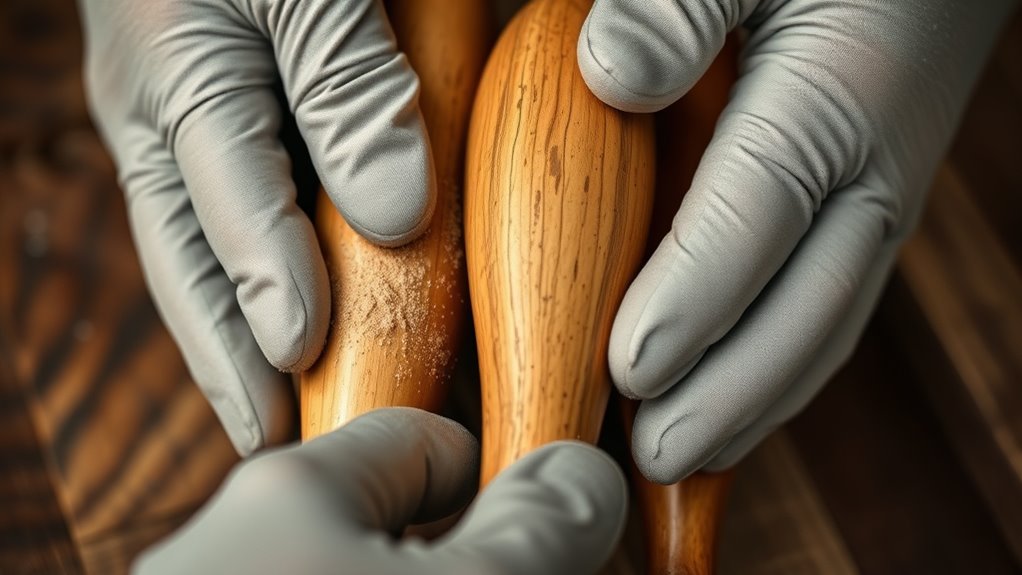

To care for your wooden tool handles, start by cleaning off dirt and grime, then sand rough spots for a smooth grip. Repair any cracks with wood filler, and then apply a deep-penetrating oil like linseed or tung oil to nourish the wood and prevent drying out. Repeating this process regularly keeps your handles safe, strong, and looking great. Keep going to discover detailed steps that will help you maintain your tools effectively.
Key Takeaways
- Regularly clean handles to remove dirt and grime, preventing buildup and damage.
- Sand rough spots and cracks, then fill and smooth for safe handling and improved appearance.
- Apply penetrating oils like linseed or tung oil to nourish wood and enhance durability.
- Avoid excess moisture and harsh chemicals to prevent cracking, warping, and deterioration.
- Reapply oil periodically based on usage to maintain flexibility, strength, and natural finish.

Wooden handles add a warm, natural touch to your tools and utensils, but they require proper care to stay in top condition. If your handles are showing signs of wear or damage, restoring old handles can breathe new life into them and extend their usefulness. Restoring involves cleaning off dirt and grime, sanding rough patches, and sometimes repairing cracks. You want to gently sand the surface to remove splinters and smooth out any rough spots, making the handle safe and comfortable to grip again. If there are deep cracks or splits, filling them with wood filler or glue, then sanding smooth, helps prevent further damage. Restoring old handles isn’t just about aesthetics; it also improves safety and functionality. Once you’ve restored your handle, it’s essential to protect it with the right treatment. Choosing the right oil is a key step in maintaining its durability and appearance. You need to select an oil that penetrates deeply without leaving a sticky residue—linseed oil, tung oil, or mineral oil are popular choices. These oils nourish the wood, keep it from drying out, and enhance its natural grain. When applying oil, use a clean cloth or brush to coat the handle evenly, paying special attention to the end grain, which tends to absorb more oil. Let the oil soak in for a few hours or overnight, then wipe off any excess. Regular application helps keep the wood moisturized and resistant to cracking and splintering. Remember, avoiding harsh chemicals and excessive moisture is essential; water can cause the wood to swell or warp, undoing your care efforts. Properly choosing and applying oil not only preserves the handle’s strength but also maintains its aesthetic appeal. If you notice your handle becoming dry or dull over time, don’t hesitate to repeat the oiling process. It’s a simple, cost-effective way to extend the life of your tools. Additionally, when selecting the right oil, consider the type of tool and how often you use it. Heavy-use tools benefit from more frequent oiling, while less frequently used items might only need occasional maintenance. Incorporating sound design principles like creating a soothing ambiance through subtle ambient sounds can also make your workspace more enjoyable. Restoring old handles and choosing the right oil are straightforward steps that markedly impact the longevity and look of your wooden tools. With a little effort, you can keep your handles sturdy, beautiful, and safe to use for years to come. Proper care ensures that your tools perform well and retain their natural charm, making your work easier and more enjoyable.
Frequently Asked Questions
How Can I Prevent Wooden Handles From Cracking Over Time?
To prevent wooden handles from cracking over time, you should regularly perform wooden handle maintenance by keeping the wood dry and clean. Apply linseed oil or a similar protective coating to nourish the wood and enhance crack prevention techniques. Store your tools in a dry place and avoid exposing them to extreme temperatures. These simple steps help maintain the handle’s integrity and extend its lifespan, keeping your tools in good condition for years.
What Is the Best Way to Remove Old Paint or Stain From Handles?
To remove old paint or stain from handles, start with paint removal by applying a gentle solvent like mineral spirits or a commercial paint stripper, then use a plastic scraper to lift the residue. For stain stripping, lightly sand the handle with fine-grit sandpaper, ensuring you don’t damage the wood. Always work in a well-ventilated area and wear gloves to protect your skin during paint removal and stain stripping.
Can I Replace Wooden Handles With Synthetic Ones?
You can definitely replace wooden handles with synthetic handle options, giving your tools a new lease on life. Think of synthetic handles as the sturdy, modern armor that withstands the battle of daily use. Replacing wooden handles is straightforward—you just remove the old, fragile wood and fit the new, durable synthetic ones. This upgrade not only boosts longevity but also offers a comfortable grip, turning your tools into reliable companions for years to come.
How Often Should I Apply Oil to Maintain Wooden Handles?
You should apply oil to your wooden handles every 3 to 6 months to maintain proper wooden handle maintenance. Regular oil application keeps the wood moisturized, prevents cracking, and extends the handle’s lifespan. Always clean the handle thoroughly before applying oil, and use a suitable product like linseed or tung oil. Consistent oil application guarantees your tools stay in top condition, making them safer and more durable over time.
Are There Specific Cleaning Methods for Different Types of Tools?
You should use specific cleaning techniques tailored to each tool’s material compatibility. For metal tools, wipe with a damp cloth and dry thoroughly, avoiding harsh chemicals. For wooden handles, gently scrub with a soft brush and mild soap, then dry immediately. Always check the manufacturer’s instructions for material compatibility to prevent damage. Regular cleaning extends your tools’ lifespan and maintains their effectiveness, so adapt your methods accordingly.
Conclusion
Now that you know how to care for wooden handles, imagine the tools in your hands—smooth, sturdy, ready for anything. With just a little effort, you can keep them in perfect shape, ensuring they last for years to come. But don’t forget—neglect them, and even the strongest wood can weaken when you least expect it. So, stay vigilant, and your tools will reward you with reliable performance whenever you need them most.