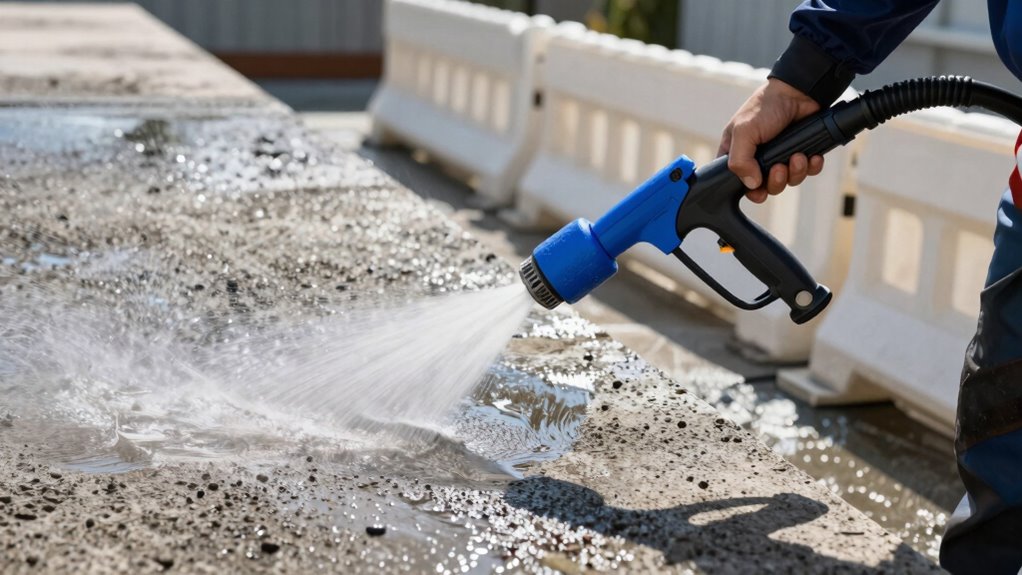

To avoid damaging surfaces like concrete when using a gas pressure washer, choose the right nozzle and set appropriate pressure levels. Use wider spray pattern nozzles (25-40°) for delicate surfaces and narrower ones (15° or less) for stubborn dirt, but avoid high-pressure nozzles directly on fragile areas. Always inspect surfaces first and keep the wand at a safe distance. For more tips on selecting the best nozzle and preventing etching, explore further guidance.
Key Takeaways
- Use wide-angle nozzles (25-40°) with low pressure for delicate surfaces like concrete to prevent etching.
- Select brass or ceramic nozzles for better control and reduced risk of surface damage.
- Always start with low pressure and test on small areas before full cleaning.
- Maintain a safe distance (~12 inches) between the nozzle and the concrete surface.
- Adjust pressure settings based on surface durability and avoid high-pressure jets that cause gouging or etching.
gas pressure washer nozzle kit
As an affiliate, we earn on qualifying purchases.
As an affiliate, we earn on qualifying purchases.
Types of Pressure Washer Nozzles and When to Use Them

Pressure washer nozzles come in various types, each designed for specific cleaning tasks. The different nozzle types produce distinct spray patterns, which determine how the water hits the surface. For example, a 0-degree nozzle creates a pinpoint jet ideal for tough stains or rust, but it can damage delicate surfaces if misused. A 15-degree nozzle offers a more focused spray, suitable for cleaning stubborn dirt on concrete or heavy-duty tasks. A 25-degree nozzle provides a wider spray, making it effective for general cleaning without damaging surfaces. The 40-degree nozzle delivers the widest spray pattern, perfect for rinsing or cleaning large surfaces gently. Knowing these spray patterns helps you choose the right nozzle type for each task, ensuring effective cleaning without risking damage. Proper nozzle selection can also prevent surface damage by matching the spray pattern to the cleaning surface. Additionally, understanding surface safety is essential to avoid etching or gouging delicate materials like concrete or wood. Using the appropriate nozzle can also extend equipment lifespan by reducing unnecessary wear and tear. Being aware of the different surface types and their sensitivities helps in selecting the optimal nozzle for each cleaning project. Moreover, selecting the correct nozzle can optimize cleaning efficiency, saving time and water during the process.
concrete surface safety pressure washer
As an affiliate, we earn on qualifying purchases.
As an affiliate, we earn on qualifying purchases.
Why the Right Nozzle Matters for Protecting Your Surfaces

Choosing the correct nozzle is essential because using the wrong one can damage your surfaces or reduce cleaning efficiency. The nozzle material and spray angle directly influence surface safety. First, a brass nozzle provides durability without damaging delicate surfaces. Second, a stainless steel nozzle offers strength for tough jobs but may be too harsh for softer materials. Third, a narrow spray angle (around 0-15°) delivers concentrated power, risking etching or gouging. Fourth, a wider spray angle (25°-40°) disperses water more evenly, protecting surfaces like painted wood or concrete. Selecting the right combination ensures effective cleaning while avoiding surface etching or damage. Always match nozzle material and spray angle to your surface’s sensitivity to maintain safety and maximize results. Additionally, understanding the contrast ratio can help you choose the right pressure settings to prevent surface damage during cleaning. It’s also important to consider pressure regulation to avoid applying excessive force that could harm your surfaces. Moreover, choosing a nozzle with surface compatibility ensures that you do not inadvertently cause surface degradation during cleaning. A better understanding of surface material properties can further help in selecting the most appropriate nozzle for each specific task. Incorporating surface testing can also help verify that your chosen settings are safe before full cleaning.
adjustable pressure washer spray nozzle
As an affiliate, we earn on qualifying purchases.
As an affiliate, we earn on qualifying purchases.
How Different Surfaces Respond to Water Pressure and Nozzles

Different surfaces react differently to water pressure and nozzle choices, so understanding these responses is key to safe and effective cleaning. Surface texture plays a significant role; rougher textures can handle higher pressures without damage, while smooth surfaces are more vulnerable. Material durability also affects how a surface responds—sturdier materials like brick or stone tolerate aggressive nozzles better than delicate surfaces like wood or painted finishes. Using a narrow, high-pressure nozzle on a soft surface can cause etching or surface damage. Conversely, wider, low-pressure nozzles are gentler and better suited for sensitive surfaces. Knowing the surface texture and material durability helps you select the right nozzle and pressure setting, ensuring effective cleaning while preventing costly damage. Recognizing the surface texture and material durability is essential for choosing appropriate water pressure and nozzle type, helping to avoid damage and achieve optimal cleaning results. Additionally, appropriate pressure settings can greatly extend the lifespan of your surfaces by preventing unnecessary wear, especially when considering the heat and fumes produced during high-pressure cleaning. Properly adjusting pressure based on these factors also minimizes the risk of surface etching or deterioration, ensuring long-term surface integrity. Being aware of surface condition and age can also guide you in selecting the safest pressure levels, further protecting your surfaces from harm.
brass nozzle for pressure washer
As an affiliate, we earn on qualifying purchases.
As an affiliate, we earn on qualifying purchases.
How to Recognize and Avoid Concrete Etching and Surface Damage

Understanding how to recognize and avoid concrete etching and surface damage is essential for safe pressure washing. Chemical etching occurs when high pressure or incompatible cleaners damage the concrete’s surface. To prevent this, look for signs like dull patches, discoloration, or rough spots that indicate surface damage. You should also focus on proper surface preparation before washing. Key tips include:
- Inspect for uneven patches or discoloration that signal etching.
- Use the right nozzle, avoiding high-pressure tips on delicate surfaces.
- Test a small area first to observe any adverse effects.
- Apply appropriate cleaning solutions to minimize chemical etching risks.
- Understanding surface compatibility can help you select the safest cleaning methods and protect your concrete from damage. Being aware of pressure settings and how they interact with different materials can further reduce the risk of etching or surface deterioration. Additionally, consulting manufacturer guidelines ensures you’re following recommended practices for specific surfaces. Recognizing surface porosity can also guide you in choosing the appropriate pressure and cleaning agents to prevent damage. Moreover, knowing about material hardness can aid in selecting the correct pressure and nozzle type to avoid etching or etching-related damage.
How to Choose the Best Nozzle for Your Surface Type

Selecting the right nozzle is essential for achieving effective cleaning without damaging your surfaces. Consider the nozzle material—plastic nozzles are suitable for light cleaning, while brass or stainless steel resist wear during tougher jobs. Water temperature also matters; hot water can improve cleaning but may degrade plastic nozzles. Use the table below to match nozzle type to surface needs:
| Surface Type | Recommended Nozzle Material | Water Temperature Advice |
|---|---|---|
| Delicate surfaces | Plastic | Use cold water |
| Hard surfaces | Brass or stainless steel | Suitable for hot or cold water |
Choosing the correct nozzle ensures efficiency and surface safety, preventing etching or damage. Always match your nozzle to the material and water temperature for ideal results. Additionally, understanding pressure washer safety can help prevent accidents and surface damage during use.
Adjusting Pressure Settings to Prevent Surface Damage

To prevent damaging your surfaces, it’s crucial to adjust your pressure settings appropriately before starting the cleaning process. First, check your pressure gauge to ensure the PSI matches the recommended level for your surface. Next, inspect your nozzle for any signs of wear or damage, which can affect spray intensity. Then, set your pressure to a lower setting for delicate surfaces like wood or siding, and higher for tougher stains. Remember to perform nozzle maintenance regularly—clean or replace nozzles as needed—to maintain consistent pressure. Visualize these steps: 1. Reading the pressure gauge accurately 2. Inspecting nozzle condition carefully 3. Setting adjustable pressure controls properly 4. Verifying spray consistency before starting. Additionally, ensuring your household safety equipment is used appropriately can help prevent accidents during pressure washing. Using pressure regulation devices can also help maintain a safe and effective cleaning process. Proper nozzle selection based on surface type is essential to avoid surface etching or damage, ensuring safe, effective cleaning.
Best Practices for Safe Pressure Washing on Concrete and Delicate Surfaces

When pressure washing concrete and delicate surfaces, applying the right techniques is essential to prevent damage and guarantee effective cleaning. Start with proper surface preparation by removing loose debris and dirt, ensuring the surface is ready for cleaning. Use a low-pressure setting initially to assess how the surface responds. Choose the correct nozzle, and always perform nozzle maintenance to ensure ideal spray accuracy. Keep the nozzle at a consistent distance—about 12 inches from the surface—and use smooth, overlapping strokes to avoid streaks and etching. Test on a small, inconspicuous area first. Regularly inspect your equipment for damage or buildup, which can affect spray pattern and pressure, risking surface damage. Proper pressure washer nozzle selection and consistent maintenance routines are crucial for surface safety. Additionally, understanding surface material properties helps in choosing appropriate pressure and techniques to prevent etching or damage. Being aware of surface hardness assists in adjusting pressure settings accordingly to prevent surface etching or deterioration. Following these practices helps protect surfaces while achieving thorough cleaning.
Common Mistakes That Cause Surface Damage: And How to Avoid Them

Many common pressure washing mistakes can lead to surface damage, even if you follow proper techniques. For example, using too high a pressure can cause paint peeling or etching on concrete, and improper nozzle selection worsens these issues. To avoid damage:
- Use the right nozzle—a wide-angle tip reduces concentrated force that can peel paint or etch surfaces.
- Maintain proper distance—holding the wand too close can gouge surfaces or strip paint.
- Avoid prolonged spraying—overexposure damages paint layers and can roughen concrete.
- Watch for mold removal pitfalls—using excessive pressure can spread mold or damage delicate surfaces.
Tools and Accessories to Protect Surfaces During Pressure Washing

To safeguard surfaces during pressure washing, you should use the right tools and accessories. Wearing surface protection gear helps prevent damage to your skin and nearby objects. Choosing the proper nozzle ensures you control pressure and avoid unintended harm to delicate surfaces.
Surface Protection Gear
Protecting surfaces during pressure washing is vital to prevent damage and guarantee a clean finish. To do this effectively, you need the right gear. First, wear protective gloves to keep your hands safe from sharp edges and chemicals. Second, don safety goggles to shield your eyes from flying debris and spray. Third, consider using a pressure washing apron or coveralls to protect your clothing and skin from splashes. Fourth, place protective pads or sheets over delicate surfaces like glass or painted areas to prevent accidental etching or scratches. These tools and accessories create a barrier between the high-pressure spray and the surface, ensuring you clean efficiently without causing harm. Proper surface protection gear is essential for a safe, damage-free pressure washing experience.
Proper Nozzle Selection
Choosing the right nozzle is essential for safeguarding surfaces during pressure washing. Your nozzle’s material and spray pattern determine how much pressure hits the surface. A ceramic or brass nozzle offers durability and precise spray control. A wider spray pattern, like a 25 or 40-degree nozzle, spreads the pressure over a larger area, reducing the risk of etching or damage. Conversely, a narrow pattern concentrates force, ideal for stubborn grime but risky for delicate surfaces. Here’s a quick guide:
| Nozzle Material | Spray Pattern | Use Case |
|---|---|---|
| Brass | 25-40° | General cleaning, surfaces |
| Ceramic | 15-25° | Heavy-duty, tough stains |
| Plastic | 40° | Light cleaning, sensitive surfaces |
| Steel | 15° | Stubborn dirt, concrete |
| Aluminum | 25-40° | Versatile, safe for surfaces |
Choose wisely to protect your surfaces.
Troubleshooting Surface Damage: Repair Tips for Etched or Damaged Areas

When your surface shows signs of etching or damage after pressure washing, addressing the issue promptly can prevent further deterioration. To repair these areas, start by evaluating the damage: is it a shallow etch or deeper gouge? Then, consider these steps:
- Use a concrete patching compound to fill small potholes or etched spots, smoothing the surface.
- Sand the repaired area to match the surrounding texture for a seamless finish.
- Apply a concrete sealant to protect the surface from future damage.
- For graffiti removal, carefully select a gentle cleaning solution to avoid further etching while restoring the surface’s appearance.
Taking these steps quickly helps preserve your surface and simplifies future maintenance, whether it’s pothole repair or graffiti removal.
Frequently Asked Questions
How Do I Determine the Correct Nozzle Size for Specific Surfaces?
You determine the correct nozzle size by considering surface compatibility and nozzle material. Start by identifying the surface you’re cleaning, then choose a nozzle with the appropriate spray angle—wider angles for delicate surfaces and narrower for tough stains. Always match the nozzle material to the surface; for example, brass nozzles suit concrete, while plastic ones work on softer materials. Testing on a small area helps prevent damage and guarantees the right fit.
Can Adjusting Pressure Alone Prevent Concrete Etching?
While adjusting pressure regulation helps, it’s not a foolproof way to prevent concrete etching. Relying solely on pressure changes can be risky if your nozzle isn’t compatible with your surface. You need to choose the right nozzle size and type, guaranteeing it’s suitable for concrete. Proper nozzle compatibility combined with gentle pressure ensures you clean effectively without risking damage, allowing your surface to shine without harm.
What Are Signs of Surface Damage After Pressure Washing?
You’ll notice signs of surface damage after pressure washing if you see surface discoloration or concrete pitting. Discoloration appears as uneven or faded patches, indicating the surface has been compromised. Pitting shows small, crater-like holes, which weaken the concrete. If you observe these issues, it’s a sign that the pressure or nozzle choice may have been too aggressive, and you should adjust your technique to prevent further damage.
Are There Eco-Friendly Nozzle Options for Gentle Cleaning?
Did you know eco-friendly nozzles exist that make gentle cleaning easier? You can choose recycled nozzle materials, which reduce waste, and combine them with biodegradable detergents for an even greener approach. These options help protect your surfaces while minimizing environmental impact. Look for nozzles made from sustainable materials, ensuring your cleaning routine is both effective and eco-conscious—perfect for maintaining your surfaces and the planet.
How Often Should I Inspect Nozzles for Wear and Tear?
You should inspect your nozzles for wear and tear after every 10 to 15 hours of use, as nozzle durability varies with usage. Regular inspection guarantees peak performance and prevents damage to surfaces. Check for cracks, corrosion, or deformities during these intervals, and replace nozzles promptly if any issues are found. Staying proactive with inspection intervals helps maintain pressure consistency and extends your nozzle’s lifespan.
Conclusion
Just like Icarus flying too close to the sun, using the wrong nozzle or too much pressure can damage your surfaces beyond repair. By choosing the right tools and respecting each surface’s limits, you protect your investment and avoid costly mistakes. Remember, the power of water is a gift—use it wisely, and you’ll keep your surfaces shining without falling into the trap of overreach. Balance is key to lasting beauty and safety.