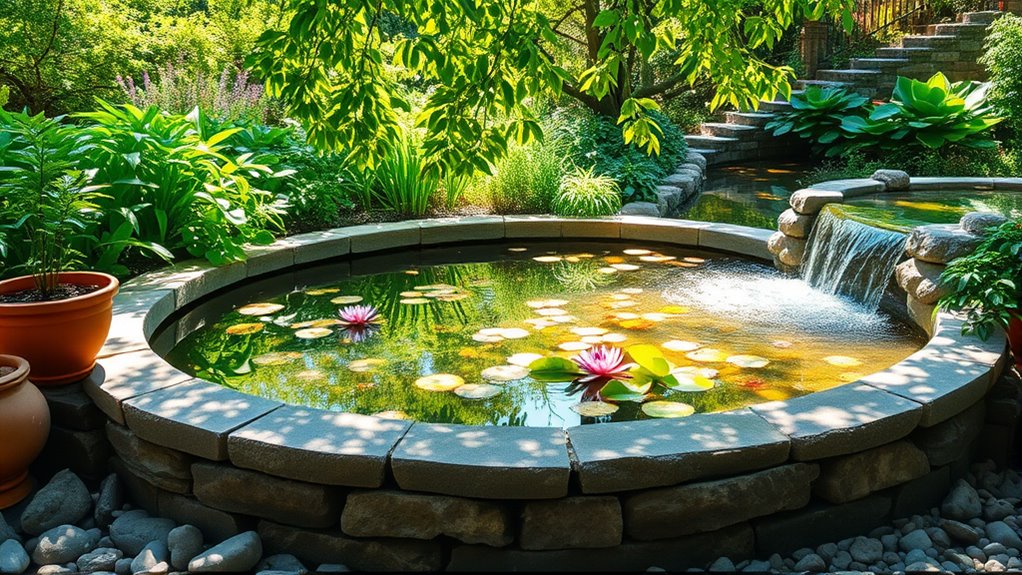

To build a small garden pond or water feature, choose a peaceful spot that’s easy to access and fits your space. Use quality materials for the pond liner, add aquatic plants like water lilies and reeds, and install reliable filtration to keep the water clean and healthy. Regular cleaning and maintenance, including removing debris and managing algae, are essential to keep your pond thriving. Keep exploring for tips to create a beautiful, tranquil water feature that lasts.

Get business pricing on tools and workshop supplies
- Business-only prices and quantity discounts
- Tax-exempt purchasing
- Multiple users, one account, clear invoices
Key Takeaways
- Choose a suitable, level location with adequate sunlight for the pond or water feature.
- Incorporate aquatic plants like water lilies, reeds, and floating plants for natural filtration and aesthetics.
- Install a high-quality filtration system and establish a regular cleaning routine to maintain water clarity.
- Design with proper depth and edging to support aquatic life and prevent erosion or weed overgrowth.
- Maintain consistent care, including debris removal and water quality checks, to ensure a healthy, tranquil pond environment.

Creating a small garden pond can transform your outdoor space into a tranquil oasis. As you plan your pond, you’ll want to consider how to keep it clean and healthy, which means understanding pond cleaning and the role of aquatic plants. Regular pond cleaning is essential to prevent algae buildup, remove debris, and maintain clear, inviting water. You don’t have to do it daily, but setting a schedule—perhaps every few weeks—will keep your pond looking its best. Use a pond net or skimmer to remove leaves and floating debris, especially during autumn. Also, check the pond’s filter system if you have one, and clean or replace filters as needed. This helps ensure proper water circulation and oxygenation, which benefits both aquatic life and water clarity. High-quality filtration systems can significantly improve water quality and reduce maintenance efforts.
Regular pond cleaning and aquatic plants keep your pond clear and healthy.
Integrating aquatic plants into your pond is another key step. These plants do more than just add beauty; they also naturally filter the water. Plants like water lilies, reeds, and marginal plants absorb excess nutrients, which helps prevent algae growth. They provide shelter for pond life and contribute to a balanced ecosystem. When selecting aquatic plants, consider their growth habits and space requirements. For example, water lilies thrive on the pond’s surface, creating shade that keeps algae in check, while submerged plants like anacharis oxygenate the water and support fish health. You can also include floating plants like duckweed or water hyacinths, which quickly cover the water surface and provide natural shade.
Creating a small pond isn’t just about digging a hole and filling it with water; it’s about fostering a balanced environment. Regular pond cleaning and the strategic use of aquatic plants go hand in hand, ensuring your pond remains clear and vibrant. When you establish a routine for maintenance, you’ll find it easier to spot issues early and address them before they become bigger problems. Additionally, aquatic plants improve the overall health of your pond, making it more resilient to algae blooms and water quality issues.
As you develop your pond, remember that patience pays off. A well-maintained pond with thriving aquatic plants will become a peaceful retreat that enhances your garden’s beauty. With consistent care, your pond will not only look inviting but will also support a thriving ecosystem for fish, frogs, and beneficial insects. Ultimately, the time and effort you put into pond cleaning and planting aquatic vegetation will reward you with a serene, natural water feature that elevates your entire outdoor space.
small pond liner for garden pond
As an affiliate, we earn on qualifying purchases.
As an affiliate, we earn on qualifying purchases.
Frequently Asked Questions
What Are the Best Plants for Small Pond Ecosystems?
You should choose aquatic plants like water lilies, duckweed, and submerged species such as hornwort, as they thrive in small pond ecosystems. These plants provide essential pond shading, helping to control algae growth and maintain water clarity. By selecting the right aquatic plants, you create a balanced environment that supports wildlife and keeps your pond healthy. Make sure to regularly monitor and maintain your plants for ideal pond health.
How Do I Prevent Algae Growth in My Pond?
To prevent algae growth in your pond, you should guarantee proper pond aeration, which helps maintain oxygen levels and discourages algae. Avoid overfeeding fish and limit direct sunlight exposure by adding shade or aquatic plants. If algae persists, consider using chemical treatments carefully, following instructions. Regularly removing debris and excess nutrients also keeps algae at bay, resulting in a healthier, clearer pond.
What Wildlife Can I Attract to a Small Pond?
Imagine discovering vibrant dragonflies darting above your pond or glimpsing frogs nestled among the aquatic plants. By creating a thriving wildlife habitat, you can attract diverse creatures to your pond ecosystem. Birds, insects, and amphibians will feel welcomed, turning your small pond into a lively sanctuary. With the right plants and clean water, you’ll invite nature’s most fascinating wildlife, transforming your garden into a vibrant, living masterpiece.
How Often Should I Clean and Maintain the Pond?
You should clean and maintain your pond monthly to keep it healthy. Regularly remove debris, check pH balancing, and inspect the pond liner for damage. During cleaning, guarantee the pond’s ecosystem remains balanced, preventing algae buildup. Keep an eye on water clarity and adjust maintenance routines as needed. Proper pond liner maintenance and pH balancing help sustain wildlife and keep your pond looking beautiful all year round.
What Safety Precautions Are Necessary for Children?
To guarantee child safety around your pond, you should install sturdy pond barriers that prevent children from falling in. Always supervise kids when they’re nearby, and consider adding a safety cover when the pond isn’t in use. Keep the area clear of toys or objects that could tempt children to get closer. Regularly check barriers for stability and make sure they’re secure to help prevent accidents and keep your little ones safe.
aquatic plants for pond water lilies reeds
As an affiliate, we earn on qualifying purchases.
As an affiliate, we earn on qualifying purchases.
Conclusion
Creating your small garden pond transforms your outdoor space into a peaceful retreat. Imagine adding a few colorful koi fish, like Mrs. Johnson did, and watching them glide gracefully through the water. Not only does it enhance your garden’s beauty, but it also offers a calming retreat after busy days. With simple steps, you can enjoy the soothing sights and sounds of your own pond—making your garden a true haven for relaxation and nature.
As an affiliate, we earn on qualifying purchases.
As an affiliate, we earn on qualifying purchases.
Columbus Day / Indigenous Peoples' Day Picks
long weekend sales
As an affiliate, we earn on qualifying purchases.