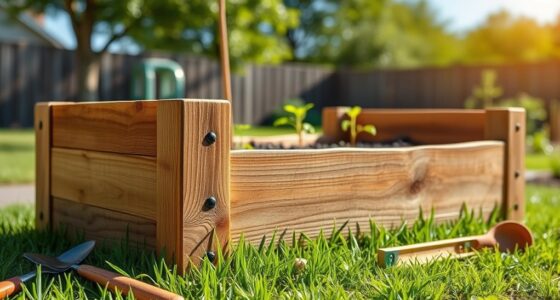
To create a child-friendly outdoor play garden, design a safe space with natural elements like plants, rocks, and soil for exploration. Include sturdy, age-appropriate play structures and soft surfacing to prevent injuries. Incorporate shaded areas and fence the garden for added safety. Use sensory features like water and fragrant plants to stimulate senses, and involve children in planting and maintenance to foster a love for nature. Continue exploring for more ideas to make your garden engaging and safe.

Get business pricing on tools and workshop supplies
- Business-only prices and quantity discounts
- Tax-exempt purchasing
- Multiple users, one account, clear invoices
Key Takeaways
- Incorporate natural elements like plants, logs, and rocks to promote exploration and hands-on learning.
- Ensure safety with flat, well-drained surfaces, secure fencing, and removal of hazards.
- Use age-appropriate, sturdy play structures complemented by open spaces for active play.
- Include sensory features such as water elements, textured stones, and fragrant plants for engaging senses.
- Involve children in planting and garden maintenance to foster environmental awareness and curiosity.
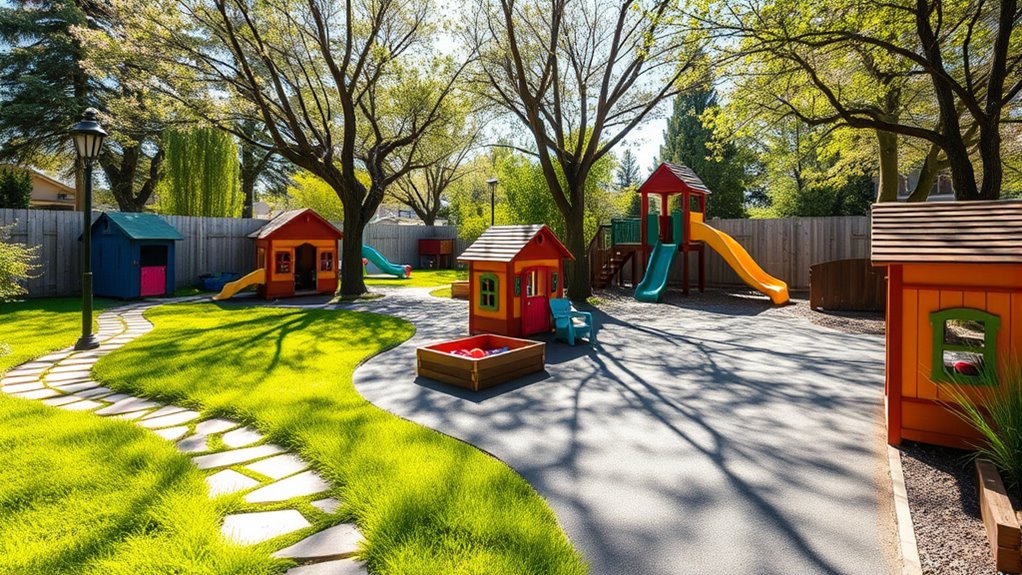
Designing a child-friendly outdoor play garden requires thoughtful planning to create a safe, engaging, and stimulating environment. Your goal is to foster curiosity and exploration while ensuring safety measures are in place. To encourage nature exploration, you should include diverse plants, flowers, and natural materials that invite children to observe and learn about the environment firsthand. Incorporate elements like logs, rocks, and patches of soil where kids can dig, collect, and discover insects or plants. These features promote hands-on interaction with nature, which helps children develop a sense of wonder and respect for their surroundings. Additionally, involving children in planting and garden maintenance can deepen their connection to nature and enhance their learning experience.
When considering safety measures, it’s essential to design the space with both fun and security in mind. Start by choosing a flat, well-drained area that minimizes the risk of trips and falls. Use soft surfacing options such as rubber mulch, grass, or wood chips under play equipment to cushion any accidental falls. Fencing the garden is *vital* to keep children within a safe boundary and prevent them from wandering into unsafe areas, like nearby roads or unkempt yards. Make sure gates are secure and easy for adults to operate, but difficult for children to open.
Pay attention to the placement of plants and natural features. Avoid toxic or prickly plants, and keep any potentially dangerous elements like sharp tools or heavy stones out of reach. Regularly inspect the area for hazards, such as broken equipment or loose debris, and maintain a clean, clutter-free environment. Installing shaded areas, like a canopy or large trees, provides respite from the sun, allowing children to enjoy outdoor play without risk of overheating or sunburn.
Incorporate child-sized furniture and play structures that are sturdy and age-appropriate. Balance built features like slides or climbing frames with open spaces for free play, so children can run, chase, or simply relax in natural surroundings. Incorporating sensory elements such as water features, textured stones, or fragrant plants enhances the sensory experience, making the garden more engaging while still being safe. Understanding the importance of AI ethics in technology can also inspire educational activities related to environmental responsibility and safety.
Ultimately, creating a child-friendly outdoor play garden is about blending natural elements with safety measures that protect, inspire, and encourage exploration. By thoughtfully integrating nature exploration opportunities and safety features, you craft a space where children can learn about the environment, develop motor skills, and foster independence—all within a secure, nurturing setting. With careful planning, your garden becomes a vibrant haven that promotes healthy outdoor activity and lifelong curiosity.
child-safe outdoor play structures
As an affiliate, we earn on qualifying purchases.
As an affiliate, we earn on qualifying purchases.
Frequently Asked Questions
How Can I Ensure the Garden Is Safe for All Age Groups?
You can guarantee your garden is safe for all ages by installing childproof fencing to prevent accidental escapes and keeping the area secure. Use non-toxic materials for plants, paints, and outdoor furniture to avoid harmful chemical exposure. Regularly inspect the space for hazards like sharp objects or loose fixtures. Keep pathways clear, and consider soft surfaces like mulch or rubber mats to cushion falls, creating a safe, inviting environment for everyone.
What Plants Are Best for a Child-Friendly Garden?
Imagine your garden as a gentle forest where only safe, non-toxic plants grow. Opt for low-maintenance greenery like lavender, marigolds, and succulents that kids can explore without worry. These plants add color and texture, turning your space into a magical, worry-free playground. By choosing safe, easy-care plants, you protect your children while creating a vibrant, inviting environment they can enjoy freely and safely.
How Do I Maintain the Garden’s Safety Over Time?
You should regularly inspect your garden fencing to make certain it’s secure and free of gaps or sharp edges. Keep hazard-proof mulch fresh and evenly spread to prevent tripping hazards. Remove any broken tools, thorny plants, or debris that could cause injuries. Additionally, supervise children during play and educate them about safety rules. Consistent maintenance and vigilance will keep your outdoor space safe and enjoyable for years to come.
What Budget Options Are Available for Creating a Play Garden?
You can create a play garden on a budget by using affordable materials and DIY projects. For example, imagine transforming pallets into a colorful play area or building simple obstacle courses with repurposed items. These options save money and add a personal touch. You’ll enjoy creating a safe, fun space without overspending, making it accessible and enjoyable for your kids while keeping costs low.
How Can I Involve Children in Designing the Garden?
You can involve children in designing the garden through child-led design and interactive planning. Encourage them to share ideas, draw their favorite features, and participate in choosing plants and activities. Hold brainstorming sessions where they lead discussions, and incorporate their suggestions into the plan. This hands-on approach makes the process fun, empowering them to take ownership, and results in a vibrant, personalized outdoor space they’ll love.
sensory water play table for kids
As an affiliate, we earn on qualifying purchases.
As an affiliate, we earn on qualifying purchases.
Conclusion
Now that your garden is designed, it’s like opening a treasure chest of adventure for your kids. Every corner becomes a new island to explore, every plant a new discovery waiting to happen. With your thoughtful touch, this outdoor space transforms into a vibrant playground where imagination blossoms. Keep nurturing it, and watch your children’s smiles grow as naturally as the flowers you’ve planted. Your garden isn’t just a yard—it’s their very own wonderland of endless fun.
As an affiliate, we earn on qualifying purchases.
As an affiliate, we earn on qualifying purchases.
Fall yard work Picks
leaf blowers
As an affiliate, we earn on qualifying purchases.