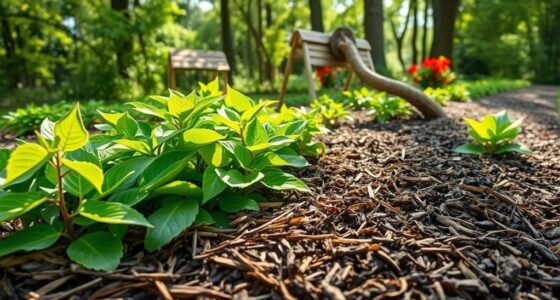
To effectively use drought-tolerant plants in landscaping, choose species suited to your climate and soil type. Incorporate well-prepared soil with organic matter and mulch to retain moisture and reduce watering needs. Use deep, infrequent watering techniques early in the day and consider soil amendments to promote deep root growth. Combining smart plant selection, proper soil prep, and efficient watering creates a resilient, eco-friendly landscape that minimizes water use—discover more ways to make your garden thrive during dry conditions.
Key Takeaways
- Select native or drought-tolerant plants suited to your local climate and soil conditions.
- Incorporate organic matter and mulch to improve soil moisture retention and reduce watering frequency.
- Use deep, infrequent watering methods like drip irrigation to promote deep root growth.
- Prepare soil with proper drainage and loosened structure to support drought-resistant plant health.
- Combine drought-tolerant plant choices with strategic watering and soil practices for sustainable landscaping.
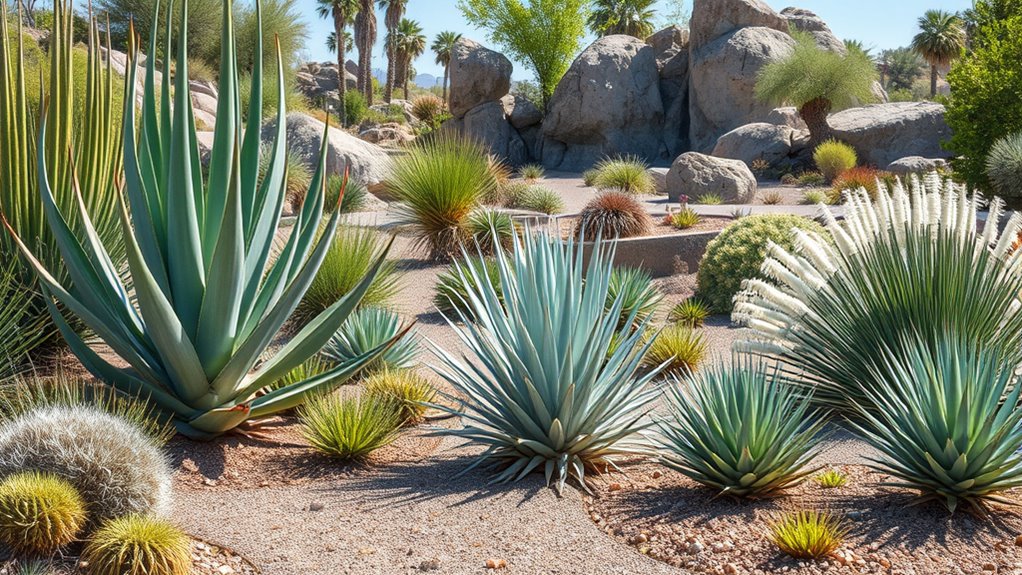
Are you looking for ways to create a beautiful landscape that requires less water? Using drought-tolerant plants is a smart choice, and your success begins with understanding effective watering techniques and proper soil preparation. These elements work together to ensure your plants thrive while conserving water.
Start by focusing on watering techniques that maximize efficiency. Deep, infrequent watering encourages plants to develop strong, deep roots, making them more resilient during dry spells. Instead of daily shallow watering, aim to soak the soil thoroughly once or twice a week, depending on your climate and soil type. Use a soaker hose or drip irrigation system to deliver water directly to the roots, reducing evaporation and runoff. Early morning watering is ideal because it allows moisture to seep into the soil before the heat of the day, and it minimizes fungal issues. Avoid overhead sprinklers during the hottest part of the day, as they waste water through evaporation and can promote disease.
Equally important is soil preparation—this lays the foundation for healthy drought-tolerant plants. Before planting, loosen the soil to improve drainage and aeration, which helps roots access water more efficiently. Incorporate organic matter such as compost or mulch into the soil to boost water retention. Well-prepared soil reduces the need for frequent watering because it holds moisture longer, giving your plants a steady supply even during dry periods. Additionally, consider amending the soil to match the specific needs of your chosen plants; some drought-tolerant species prefer sandy or rocky soils that drain quickly, while others thrive in looser, richer soils. When planting, make sure to create a raised bed or mound the soil slightly to prevent water runoff and enhance absorption. Enhanced natural language processing can also assist in selecting the best plant varieties for your specific climate and soil conditions.
Choosing the right drought-tolerant plants is only part of the equation. Proper soil preparation and watering techniques are essential for establishing a resilient landscape that conserves water. As you tend to your plants, remember that consistent but strategic watering will help them develop deep roots, making them less dependent on frequent irrigation. Mulching around plants also helps retain soil moisture and suppress weeds, further reducing water demand. By combining these practices, you’ll create a sustainable, attractive landscape that withstands dry conditions and minimizes water waste. With patience and attention to detail, you’ll enjoy a vibrant, eco-friendly yard that thrives even during droughts.
drought-tolerant plants for landscaping
As an affiliate, we earn on qualifying purchases.
As an affiliate, we earn on qualifying purchases.
Frequently Asked Questions
How Do Drought-Tolerant Plants Impact Local Ecosystems?
Drought-tolerant plants positively impact local ecosystems by supporting native species and aiding habitat preservation. When you choose these plants, you reduce water use and help maintain the natural balance, encouraging local wildlife to thrive. They require less irrigation, which minimizes runoff and pollution. By planting native, drought-tolerant species, you contribute to a resilient ecosystem, ensuring the survival of local flora and fauna while creating a sustainable, beautiful landscape.
Can Drought-Tolerant Plants Be Used in Container Gardening?
Yes, you can definitely use drought-tolerant plants in container gardening. In fact, they’re highly versatile for containers, thriving with minimal water. With smart plant selection, you can create stunning displays while conserving resources. Studies show that drought-tolerant plants can reduce water use by up to 50%. Their adaptability makes them perfect for small spaces, patios, or balconies, giving you beautiful, low-maintenance containers that stay healthy even in dry conditions.
What Maintenance Is Required for Drought-Tolerant Landscapes?
You’ll need to prune drought-tolerant plants periodically to maintain their shape and remove dead or damaged growth. Fertilize on a slow-release schedule, typically once or twice a year, to support healthy development without overwatering. These landscapes generally require less water and maintenance, but staying attentive to pruning requirements and fertilization schedules helps guarantee your plants stay vigorous and attractive. Keep an eye on soil moisture and adjust care as needed.
Are Drought-Tolerant Plants Suitable for Shady Areas?
Sure, drought-tolerant plants can adapt to shady areas with proper plant selection. While many think they only thrive in full sun, there are shade-adapted varieties that do well in low-light conditions. You just need to choose plants specifically suited for shade and drought tolerance, like certain succulents or native understory plants. With the right plant selection, you’ll enjoy a beautiful, low-water landscape even in shady spots.
How Do Drought-Tolerant Plants Affect Water Runoff and Soil Health?
Drought-tolerant plants help reduce water runoff by absorbing more water and promoting soil stability, preventing erosion. Their deep roots improve water filtration, keeping pollutants from reaching groundwater. You’ll notice healthier soil that retains nutrients better, supporting overall plant growth. By choosing these plants, you create a landscape that conserves water, enhances soil health, and minimizes runoff, making your outdoor space more sustainable and resilient.
drip irrigation system for gardens
As an affiliate, we earn on qualifying purchases.
As an affiliate, we earn on qualifying purchases.
Conclusion
Think of your garden as a resilient ship steering through a drought’s storm. By choosing drought-tolerant plants, you’re equipping your vessel with sturdy sails that withstand harsh winds. These plants are your steadfast crew, conserving water and thriving despite tough conditions. Just as a well-prepared ship braves any tempest, your landscape will flourish with resilience and beauty. Embrace these hardy choices, and your garden will sail smoothly through dry seasons, resilient and vibrant.
garden mulch for moisture retention
As an affiliate, we earn on qualifying purchases.
As an affiliate, we earn on qualifying purchases.
organic soil amendments for drought-resistant plants
As an affiliate, we earn on qualifying purchases.
As an affiliate, we earn on qualifying purchases.