
Mulching offers many benefits, such as conserving soil moisture, suppressing weeds, and regulating temperature to protect your plants’ roots. You can choose organic options like wood chips, bark, or straw, which decompose to enrich your soil, or inorganic mulches like rubber for long-term weed control. Proper application keeps your garden tidy, reduces watering needs, and promotes healthier growth. Keep exploring to discover more tips on selecting and maintaining the right mulch for your garden.
Key Takeaways
- Mulching retains soil moisture, regulates temperature, and reduces water evaporation, promoting healthy plant growth.
- Organic mulches decompose, enriching soil with nutrients, while inorganic mulches offer durable, low-maintenance weed control.
- Proper mulching application involves spreading 2-4 inches evenly around plants, keeping it away from stems or trunks.
- Mulching suppresses weeds, minimizes garden maintenance, and prevents soil erosion and runoff.
- Choosing the right mulch type depends on your garden needs, balancing benefits like soil enrichment and durability.
Are you looking for an easy way to boost your garden’s health and appearance? Mulching offers a simple yet effective solution that can transform your outdoor space. By applying a layer of mulch around your plants, you help maintain ideal soil moisture, which is essential for healthy growth. Mulch acts as a barrier that reduces water evaporation from the soil, ensuring your plants stay hydrated during hot, dry periods. This not only supports vigorous plant development but also cuts down on the need for frequent watering, saving you time and effort.
Mulching maintains soil moisture, reduces watering needs, and promotes healthy plant growth effortlessly.
Another significant advantage of mulching is weed suppression. When you cover your soil with mulch, it becomes much harder for weeds to penetrate and establish themselves. The mulch layer blocks sunlight, which weeds rely on to sprout and grow. As a result, you’ll notice fewer weeds competing with your plants for nutrients and water, making garden maintenance more manageable. This weed suppression not only keeps your garden looking tidy but also prevents weeds from overtaking your beds, allowing your desired plants to flourish without constant weeding.
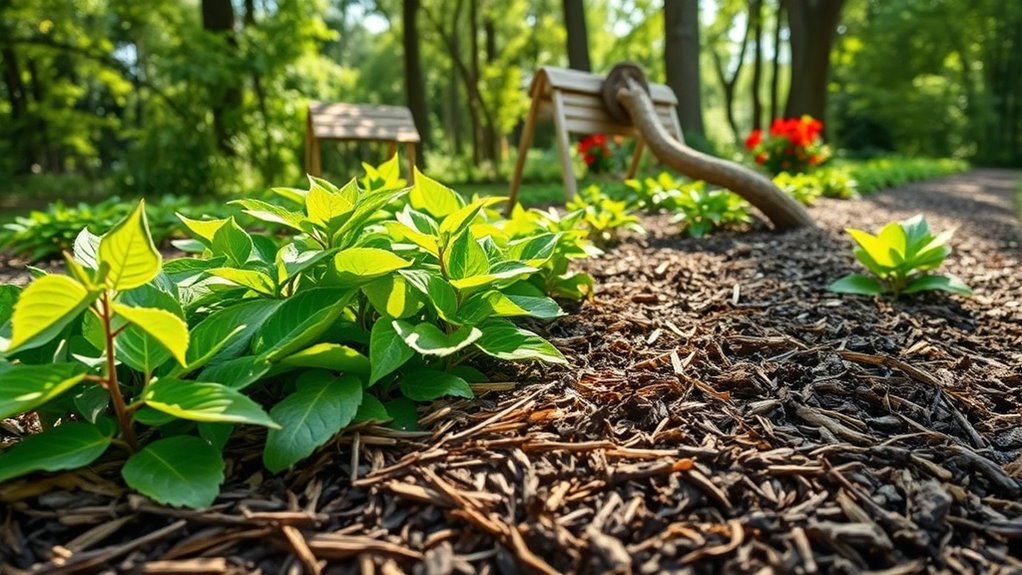
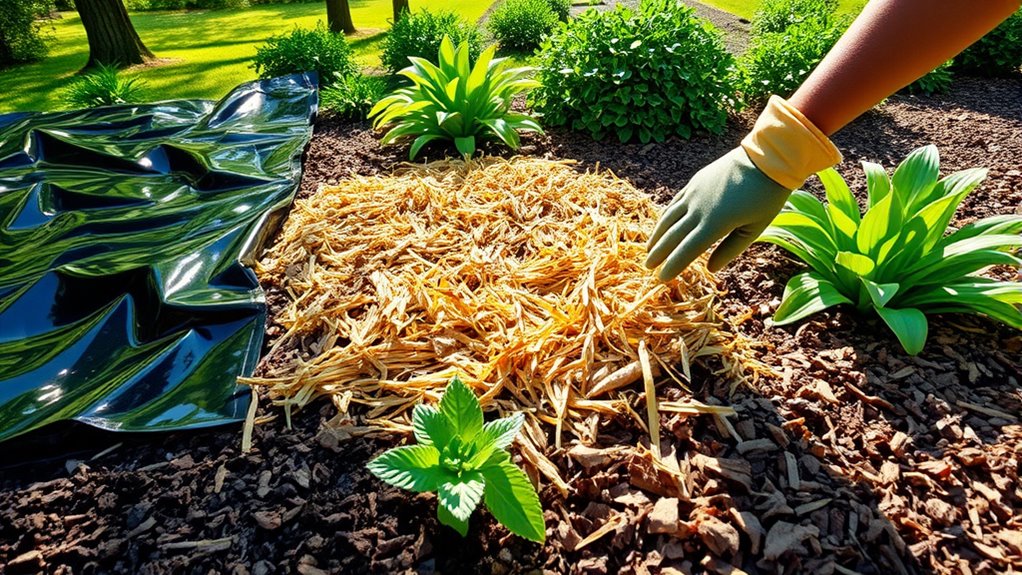
Choosing the right type of mulch depends on your garden’s needs and aesthetic preferences. Organic mulches like wood chips, bark, straw, or compost break down over time, enriching the soil with nutrients. These mulches improve soil structure, increase microbial activity, and promote healthy root development. In contrast, inorganic mulches such as rubber or landscape fabric don’t decompose but provide long-lasting weed control and moisture retention. If you prefer a natural, eco-friendly option that benefits your soil, organic mulches are ideal. For durability and low maintenance, inorganic options might suit your needs better.
Applying mulch is straightforward. Spread it evenly around your plants, keeping it a few inches away from stems or trunks to prevent rot. The depth of mulch depends on the material, but generally, 2 to 4 inches suffices for most garden beds. Regularly check your mulch layer, replenishing it as needed to maintain its benefits. Organic mulches may need topping up as they decompose, while inorganic mulches typically require less attention once installed. Additionally, selecting mulches made from durable and safe materials ensures your garden remains healthy and free from potential toxins.
Incorporating mulching into your gardening routine offers numerous benefits beyond soil moisture retention and weed suppression. It helps regulate soil temperature, protecting roots from extreme heat or cold. It also reduces soil erosion and runoff, keeping your garden neat and sustainable. Overall, mulching is a cost-effective, low-effort way to improve your garden’s vitality, making your outdoor space healthier, more attractive, and easier to maintain.
As an affiliate, we earn on qualifying purchases.
Frequently Asked Questions
How Often Should I Replace Mulch in My Garden?
You should replace mulch in your garden roughly every 1 to 2 years, depending on its mulch lifespan and your replacement schedule. Over time, mulch decomposes, loses its effectiveness, and can harbor pests or weeds. Check your mulch regularly; if it looks thin, faded, or starts to decompose, it’s time for a fresh layer. Proper maintenance ensures your garden stays healthy and benefits from ideal mulch performance.
Can Mulch Be Used Around Vegetable Plants Safely?
You can safely use mulch around vegetable plants, but choose carefully. Organic mulch like straw or compost adds nutrients, while inorganic mulch such as plastic or rubber helps with weed control. Just avoid piling mulch directly against plant stems to prevent rot. With proper application, mulch protects your vegetables from weeds, retains moisture, and improves soil health, making it a valuable addition for healthy, productive garden beds.
Which Mulch Type Is Best for Weed Suppression?
When considering weed control through mulch, your choice of mulch selection plays a key role. Organic mulches like wood chips and straw are effective, but for best weed suppression, synthetic options such as landscape fabric covered with mulch are ideal. These prevent weed growth while allowing water to penetrate. You should evaluate your garden needs, considering durability and ease of use, to pick the mulch type that offers the most effective weed control.
How Does Mulch Influence Soil Temperature?
Mulch influences soil temperature by providing insulation, which helps regulate it throughout the year. You’ll notice that during hot summers, mulch keeps the soil cooler, protecting roots from excessive heat. In colder months, it acts as a barrier, trapping warmth and preventing rapid cooling. This temperature regulation promotes healthy plant growth, improves soil conditions, and creates a stable environment, making mulch an essential tool for maintaining ideal soil insulation.
Are There Environmentally Friendly Mulch Options Available?
Like a knight seeking greener pastures, you can find eco-friendly mulch options today. Yes, there are compost alternatives and biodegradable options that protect the environment. You’ll want to choose materials like straw, wood chips, or grass clippings, which break down naturally and enrich your soil. These options reduce waste and avoid synthetic plastics, making your garden more sustainable. It’s a win-win for your plants and Mother Earth.
As an affiliate, we earn on qualifying purchases.
Conclusion
By now, you see how mulching transforms your garden, much like a trusty knight shields a castle. Whether you choose bark, straw, or compost, each type offers unique benefits that help your plants thrive. Don’t forget to apply it wisely, and you’ll enjoy healthier soil and happier blooms. Remember, even in a world of modern tech, mulching remains a timeless secret—like a well-kept spell in a wizard’s tome—that keeps your garden flourishing through seasons.
As an affiliate, we earn on qualifying purchases.
As an affiliate, we earn on qualifying purchases.