In low-light conditions, you should water your houseplants only when the top inch of soil feels dry, as less light slows down their water needs. Use pots with drainage holes and well-draining soil to prevent root rot, and keep an eye on your plants for signs of overwatering, like yellowing or wilting leaves. Adjust your watering schedule seasonally and observe your plants closely—successfully caring for them in limited light is easier when you pay attention to their signals.

Get business pricing on tools and workshop supplies
- Business-only prices and quantity discounts
- Tax-exempt purchasing
- Multiple users, one account, clear invoices
Key Takeaways
- Use plants suited for low-light conditions and avoid overwatering to prevent root rot.
- Check soil moisture regularly; water only when the top inch feels dry.
- Ensure containers have drainage holes to prevent water from stagnating around roots.
- Select well-draining soil mixes and avoid heavy, water-retentive soils.
- Observe plant health closely and adjust watering and care routines seasonally.
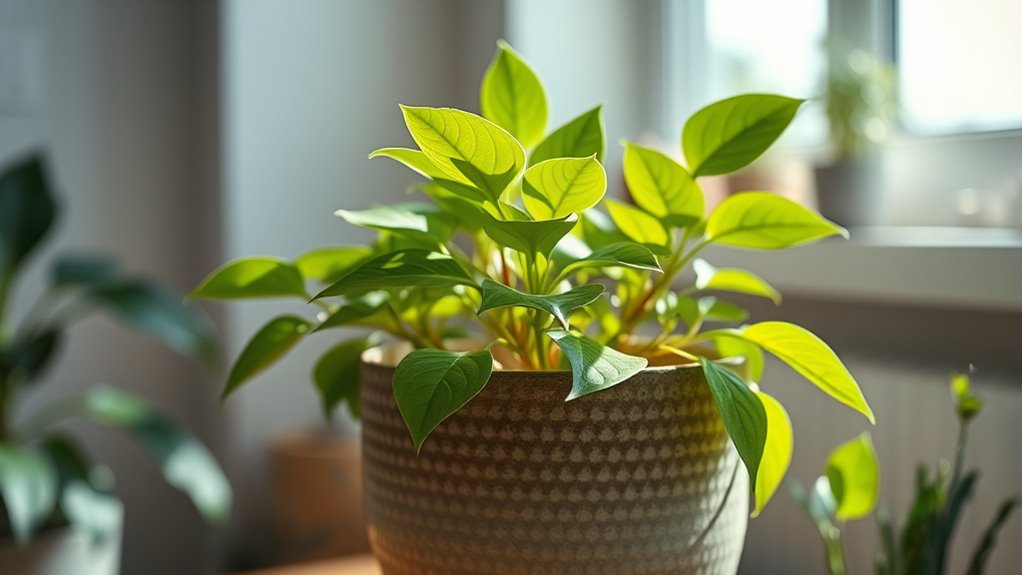
If your home doesn’t get much natural light, caring for houseplants can still be rewarding with the right approach. In low-light environments, your plants need extra attention to their watering schedule and soil drainage to thrive. Since limited light slows down photosynthesis, your plants won’t use water as quickly, which means overwatering becomes a common mistake. To prevent root rot and other problems, you should carefully monitor your watering habits. Check the top inch of soil before watering—if it feels dry, it’s time to hydrate. If it’s still moist, hold off. Consistency is key, but so is adjusting your schedule based on the plant’s response and the season. During winter, plants generally need less water, so cut back your watering schedule accordingly.
In low-light homes, monitor watering carefully and adjust seasonally to keep houseplants healthy.
Soil drainage is equally important in low-light conditions. Adequate drainage guarantees excess water doesn’t sit around the roots, which can cause them to rot in the damp environment. Use pots with drainage holes and a well-draining soil mix that contains perlite, pumice, or sand. This combination allows water to flow freely through the soil, preventing standing water at the bottom of the pot. Even if you’re watering less frequently, poor drainage can still lead to problems. When repotting or potting new plants, always check that the soil is appropriate for limited light conditions and that the container facilitates water escape. Remember, in low light, the soil stays moist longer, so good drainage becomes even more critical to avoid waterlogged roots. Proper GMC tuning techniques can also improve overall plant care by optimizing environments for growth.
You should also pay attention to your plants’ overall appearance. Wilting, yellowing leaves, or slowed growth can indicate overwatering or poor soil drainage. Conversely, if your plant looks healthy but the soil remains consistently damp, it might be time to improve drainage or adjust your watering plan. Using a moisture meter can help you get precise readings, especially when natural cues are less obvious due to lower light levels. Keep in mind, different plants have different needs—some prefer slightly drier soil, while others like a consistently moist environment. Research your specific plant’s requirements and tailor your watering schedule accordingly.
In low-light conditions, patience and observation are your best tools. With careful attention to watering and soil drainage, you can create a supportive environment that keeps your houseplants healthy despite the limited natural light. Over time, you’ll learn to read your plants’ signals and adjust your care routine, resulting in lush, thriving greenery even in the darkest corners of your home.
Products Worth Considering

Philips Hue Large Smart Light Tube, Black – White and Color Ambiance LED Color-Changing Light – 1 Pack

Philips Hue Festavia Globe Outdoor String Lights, 32 Bulbs, 91 ft

Sonos Era 100 SL Compact Microphone-Free Speaker, Black
As an affiliate, we earn on qualifying purchases.
Frequently Asked Questions
Can Houseplants Survive Long-Term in No Sunlight?
Houseplants can’t survive long-term without natural sunlight because they need light to photosynthesize and thrive. In low-light conditions, some plants adapt better than others, but no plant can fully thrive without any sunlight. You can help your houseplants by providing indirect natural sunlight or using grow lights. Understanding plant adaptation is key; select shade-tolerant varieties, and make certain they get as much light as possible to keep them healthy.
What Are the Best Artificial Light Options for Low-Light Plants?
You should use LED grow lights or fluorescent bulbs for low-light plants. LED grow lights are energy-efficient, last long, and provide the specific spectrum your plants need to flourish. Fluorescent bulbs are affordable and widely available, making them good options for supplemental lighting. Position these lights close to your plants, about 12-18 inches away, and keep them on for 12-16 hours a day to ensure healthy growth.
How Often Should I Rotate Plants in Limited Light?
You should rotate your plants every 2-3 weeks to guarantee even light exposure. For example, if you notice one side of your pothos leaning toward the window, rotating it helps balance growth. Regular plant rotation prevents uneven stretching and encourages healthy development. By adjusting the position regularly, you give each side equal access to limited light, promoting overall plant health and reducing the risk of legginess.
Are There Specific Fertilizers Suitable for Low-Light Houseplants?
You should choose fertilizers like balanced liquid or slow-release options that meet low-light houseplants’ nutrient requirements. Look for fertilizer types with a balanced NPK ratio, such as 10-10-10 or 20-20-20, to guarantee your plants get essential nutrients without overfeeding. Apply them sparingly, typically once a month, because low-light conditions slow growth and reduce nutrient needs, helping your plants stay healthy without risking fertilizer burn.
How Do I Identify and Treat Low-Light Plant Deficiencies?
To diagnose deficiencies, look for telltale signs like yellowing leaves, stunted growth, or leaf spots. Correct nutrient shortages by using a balanced, low-light suitable fertilizer. Guarantee you’re providing consistent, moderate watering and avoid over-fertilizing, which can worsen deficiencies. Keep an eye on your plant’s overall health, and adjust feeding schedules as needed. Regularly inspecting your plant helps catch issues early and keeps it thriving in limited light.
Conclusion
Even with limited light, your houseplants can thrive if you choose the right varieties and adjust your care. Did you know that plants like pothos and snake plants can survive with as little as 8 hours of indirect light? By paying attention to their needs and avoiding overwatering, you’ll create a lush, healthy space indoors. Keep experimenting, and soon you’ll be surprised how vibrant your low-light oasis becomes!