
To cut yard work while keeping color, choose a diverse mix of native plants like flowering perennials, shrubs, and grasses that bloom at different times. Group similar plants for easier care and select drought-tolerant varieties to save water. Native plants require less pruning and fertilizing, so you can enjoy a vibrant, low-maintenance landscape. Keep in mind how their natural growth habits support soil health and wildlife. If you’re keen to discover more tips, there’s plenty to explore.

Get business pricing on tools and workshop supplies
- Business-only prices and quantity discounts
- Tax-exempt purchasing
- Multiple users, one account, clear invoices
Key Takeaways
- Incorporate a diverse mix of native flowering perennials, shrubs, and grasses for continuous color throughout the year.
- Group native plants with similar watering and sunlight needs to simplify maintenance.
- Choose drought-tolerant native species to reduce watering and support resilience during dry seasons.
- Allow native plants to grow naturally, minimizing pruning and size control efforts.
- Select native plants suited to your yard’s conditions to ensure healthy growth and vibrant blooms.
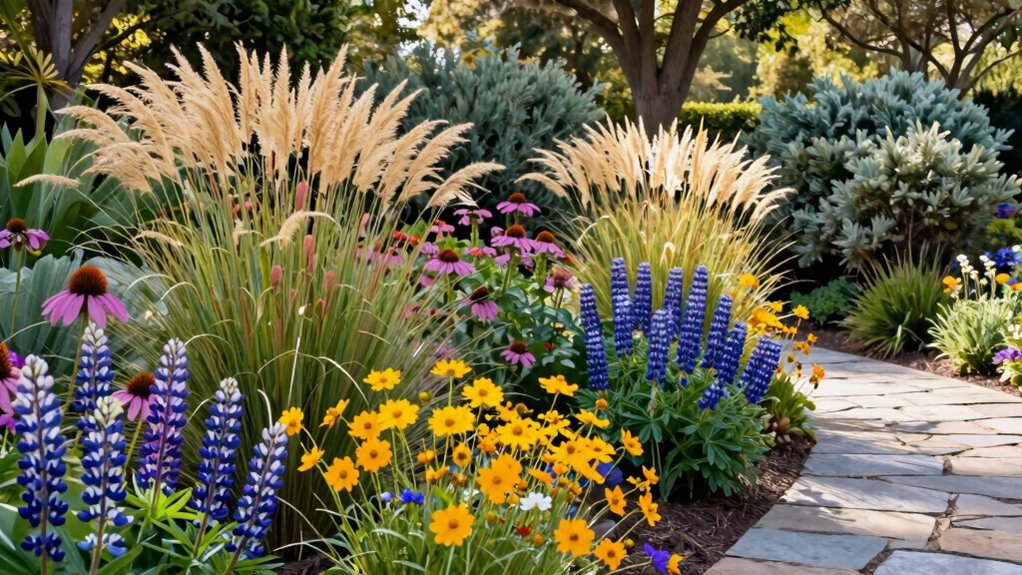
Incorporating native plants into your yard can considerably cut down on maintenance and effort. These plants are adapted to your local climate and soil, meaning they require less watering, fertilizing, and pruning. As a result, you spend less time tending to your garden while still enjoying a vibrant landscape. Native plants also attract local wildlife, creating a thriving wildlife habitat right in your backyard. Birds, butterflies, bees, and other pollinators are naturally drawn to native species, which provide essential food and shelter sources. This not only enhances the ecological balance but also brings natural beauty and activity to your yard, all without the constant upkeep of exotic plants.
Native plants reduce yard work while attracting local wildlife and enhancing natural beauty.
One of the key benefits of using native plants is their positive impact on soil health. These plants have evolved alongside the native soil ecosystem, supporting beneficial soil microbes and reducing the need for chemical fertilizers. Their root systems help improve soil structure, increase organic matter, and prevent erosion. As native plants establish themselves, they create a sustainable foundation that supports other plants and benefits the environment. Healthy soil promotes overall plant vigor, meaning your yard remains colorful and lush without frequent intervention. Plus, native plants tend to be more resistant to pests and diseases, further reducing your need for chemical treatments and upkeep. Additionally, selecting plants that are well-suited to your specific conditions can lead to a more resilient landscape that withstands environmental stresses better over time. Incorporating native plant diversity also helps create a more balanced and adaptable ecosystem in your yard.
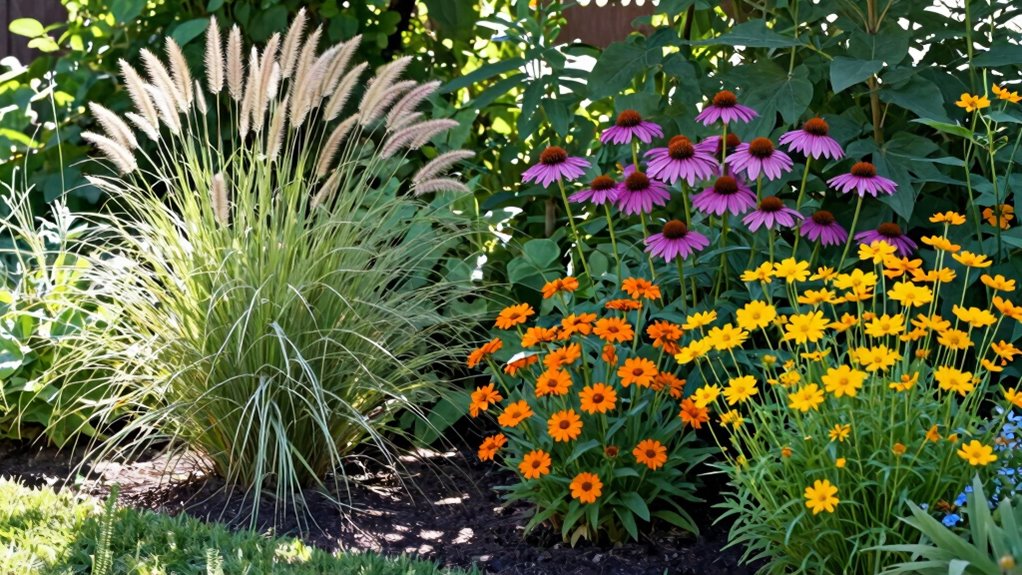
To maximize these benefits while maintaining color, choose a diverse mix of native species that bloom at different times of the year. This ensures continuous visual interest and supports a broad spectrum of wildlife. Incorporate flowering native perennials, shrubs, and grasses that provide color, texture, and structure. Many native plants are drought-tolerant, so you’ll save water without sacrificing vibrancy. Grouping plants with similar watering and sunlight needs simplifies maintenance and enhances their overall health. Over time, these plantings establish a natural, low-maintenance landscape that withstands the elements and offers year-round interest. Additionally, selecting plants with drought-tolerance can help you create a more resilient yard that requires less water and effort. Understanding the benefits of native plant adaptation can further guide you in choosing the best species for your environment.
You should also consider the natural growth habits of native plants. Instead of constant pruning to control size, allow them to grow naturally, which reduces effort and encourages wildlife to thrive. Native plants often have deeper roots, which help them access water and nutrients efficiently, making them more resilient during droughts or tough seasons. By selecting the right native varieties for your yard’s conditions, you create a sustainable, colorful landscape that minimizes work while maximizing ecological benefits. Furthermore, understanding the importance of biodiversity in maintaining resilient ecosystems can guide you in choosing a variety of native plants that support a diverse range of species. With a thoughtful approach, your yard becomes a vibrant haven that requires less effort but still delivers the beauty and wildlife appeal you desire.
native perennial flowering plants for yard
As an affiliate, we earn on qualifying purchases.
As an affiliate, we earn on qualifying purchases.
Frequently Asked Questions
Which Native Plants Are Drought-Tolerant and Low-Maintenance?
You’ll find many native plants are drought-tolerant and low-maintenance, making them perfect for your yard. Drought-resistant shrubs like sage, manzanita, and ceanothus thrive with minimal watering. To expand your garden, try native plant propagation methods such as seed collection or cuttings. These plants require little care once established, saving you time and effort while ensuring your yard stays colorful and healthy through dry seasons.
How Do Native Plants Improve Local Biodiversity?
Native plants boost local biodiversity by providing essential wildlife habitats and supporting soil health. When you plant natives, you create a welcoming environment for pollinators, birds, and other wildlife, helping them thrive. Their deep roots improve soil structure, reduce erosion, and increase nutrient levels. This natural balance encourages a diverse ecosystem, making your yard more resilient and vibrant while requiring less maintenance and fewer resources.
What Are Common Challenges When Planting Native Species?
Planting native species is like steering through a delicate dance. You’ll face challenges like invasive species that compete for resources and soil compatibility issues that hinder growth. You need to stay vigilant, removing invasives early and choosing plants suited to your soil type. This careful step-by-step approach guarantees your native garden thrives, reducing maintenance and creating a vibrant, sustainable landscape that supports local ecology.
How to Select Native Plants for Shady Areas?
To select native plants for shady areas, focus on species that thrive in low-light conditions and support pollinator attraction, like ferns or woodland wildflowers. Check soil compatibility by testing your soil’s moisture and acidity, then choose plants suited to those conditions. This guarantees your shade garden stays vibrant and eco-friendly, reducing maintenance while attracting beneficial pollinators that enhance your yard’s overall health.
When Is the Best Time to Plant Native Species?
Timing is everything when planting native species—strike while the iron’s hot by spring or early fall, giving your plants a head start. Native plant propagation benefits from seasonal planting tips, ensuring they establish well before extreme weather hits. You should plant when soil is workable and temperatures are moderate. This way, you’ll boost your garden’s resilience, and your native plants will flourish, adding color and life to your yard for years to come.
As an affiliate, we earn on qualifying purchases.
Conclusion
By choosing native plants, you’ll spend less time on yard work and enjoy a vibrant, low-maintenance landscape. Imagine stepping outside in the morning, effortlessly admiring colorful blooms that thrive naturally in your area—no need for constant watering or pruning. Sure, some might worry about a less diverse garden, but with native plants, your yard becomes a resilient, lively space that stays beautiful year-round. Embrace native plants and transform your yard into a flourishing, easy-to-maintain haven.
native grasses for low maintenance landscape
As an affiliate, we earn on qualifying purchases.
As an affiliate, we earn on qualifying purchases.
native plant grouping garden tools
As an affiliate, we earn on qualifying purchases.
As an affiliate, we earn on qualifying purchases.
Halloween Picks
halloween
As an affiliate, we earn on qualifying purchases.