
To water new plants properly, water slowly and evenly, allowing the soil to absorb moisture without becoming waterlogged. Keep the soil moist but not soaked, as overwatering can suffocate roots and cause rot, while underwatering stresses the plant. Loosen soil if dense and add organic matter to improve drainage and aeration. Monitoring soil moisture helps you find the right balance, ensuring healthy growth. Stay tuned to discover more tips for thriving new plants.

Get business pricing on tools and workshop supplies
- Business-only prices and quantity discounts
- Tax-exempt purchasing
- Multiple users, one account, clear invoices
Key Takeaways
- Water slowly and evenly to allow thorough absorption without waterlogging the soil.
- Check soil moisture regularly and water only when the top inch feels dry.
- Loosen soil around plants to improve aeration and drainage during watering.
- Use organic matter to enhance soil structure and water retention capacity.
- Avoid overwatering by ensuring proper soil drainage and monitoring plant response.
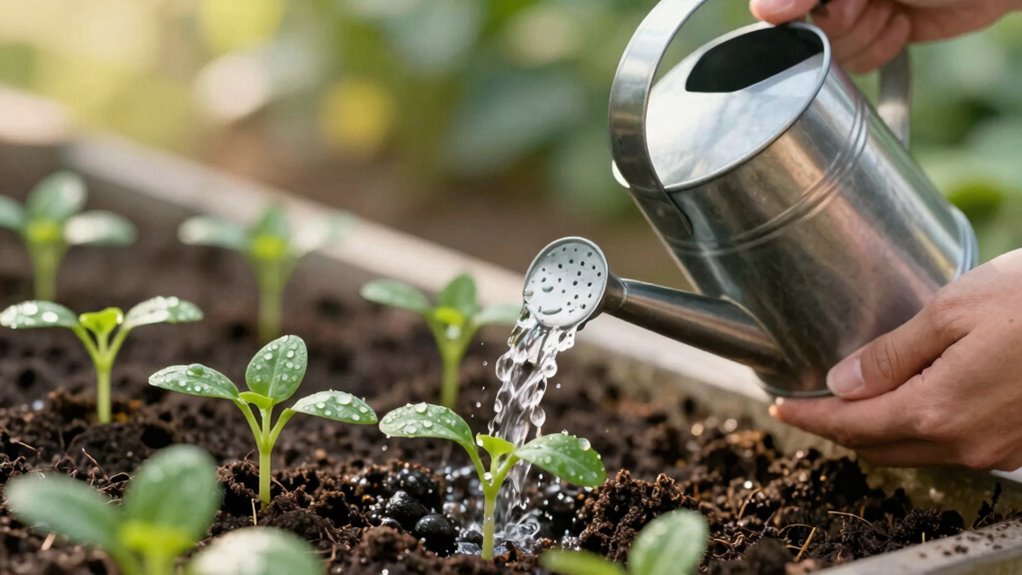
Watering new plants correctly is essential for helping them establish strong roots and thrive. When you water properly, you support healthy soil conditions that promote root growth and ensure the plant can access the moisture it needs. One key aspect is understanding how to keep the soil adequately moist without overdoing it. Too much water can drown roots and lead to issues like root rot, while too little leaves the plant stressed and unable to develop properly. Striking this balance is crucial, especially during the early stages of planting.
A vital part of effective watering is ensuring good soil aeration. When you water correctly, you avoid compacting the soil, which can restrict air flow around roots. Proper soil aeration allows oxygen to reach the roots, helping them grow stronger and more resilient. To achieve this, water slowly and evenly, giving the soil a chance to absorb moisture without becoming waterlogged. You can also loosen the soil around the plant if it feels compacted, especially if you’ve recently planted in dense soil. This helps improve aeration and drainage, making sure your plant isn’t sitting in water, which can suffocate roots. Additionally, understanding the importance of soil health can guide you in maintaining optimal conditions for your plants. Maintaining healthy soil also involves adding organic matter, which can enhance soil structure and microbial activity, further supporting plant growth. Proper watering practices also contribute to soil structure, ensuring it remains loose and well-draining. Moreover, integrating soil testing into your routine can help you better understand and adjust watering needs based on specific soil conditions. Furthermore, maintaining favorable soil conditions through proper watering can also deter pests and reduce the likelihood of plant diseases.
Products Worth Considering

Sonos One (Gen 2) Two-Room Set Voice-Controlled Smart Speaker with Alexa (2-Pack, Black)

Roborock Q7 M5+ Robot Vacuum and Mop with Self-Emptying Dock

Dyson Ball Animal 2 Total Clean Upright Vacuum Cleaner, Blue
As an affiliate, we earn on qualifying purchases.
Frequently Asked Questions
How Often Should I Check Soil Moisture Levels?
You should check soil moisture levels daily, especially during the first few weeks after planting. This helps prevent overwatering, which can harm soil aeration and root health. Use your finger or a moisture meter to gauge dampness. Keep in mind that consistent moisture supports ideal fertilizer timing and overall plant growth. Adjust your watering schedule based on weather, container size, and plant type to keep your new plants thriving.
What Water Temperature Is Best for New Plants?
Water temperature for new plants should be lukewarm, around room temperature—think of it as a gentle bath rather than a shock. When it comes to plant watering, using water that’s too cold or hot can stress delicate roots. Keep the water comfortable—about 68-72°F—so your new plants can absorb nutrients without any hiccups. Remember, a little patience goes a long way in nurturing healthy growth.
Can Overwatering Cause Root Rot in New Plants?
Yes, overwatering can cause root rot in new plants. When you water excessively, poor soil drainage prevents proper water absorption, leading to soggy roots. This creates an ideal environment for fungi that cause root rot. To prevent this, make sure your soil drains well and only water when the top inch feels dry. Proper watering helps roots breathe and absorb nutrients, keeping your new plants healthy and thriving.
How Do I Water Plants During a Drought?
During a drought, you should water your plants early morning or late evening to minimize evaporation. Focus on drought-resistant plants that need less water, and use mulching techniques to retain soil moisture effectively. Deep watering encourages roots to grow deeper, making plants more resilient. Avoid frequent shallow watering; instead, provide thorough, infrequent watering to sustain your garden during dry spells.
Are There Specific Watering Tools Recommended for New Plants?
For new plants, gentle tools work best. You should use a watering can with a fine spout to deliver a delicate cascade of water, ensuring even coverage without overwhelming young roots. Pair this with a moisture meter to monitor soil dampness, preventing overwatering. These tools help you nurture your plants patiently, giving them just enough moisture to thrive without the risk of waterlogging or underwatering.
Conclusion
Remember, watering your new plants is like giving them a gentle hug—enough to nourish, but not so much that you drown them. Imagine the soil as a cozy bed, moist but not soaked, inviting roots to stretch out and settle in. With each careful sip, you’re helping your plants grow strong and vibrant, turning your garden into a lush, thriving oasis. So, nurture with love, and watch your green friends flourish under your attentive care.