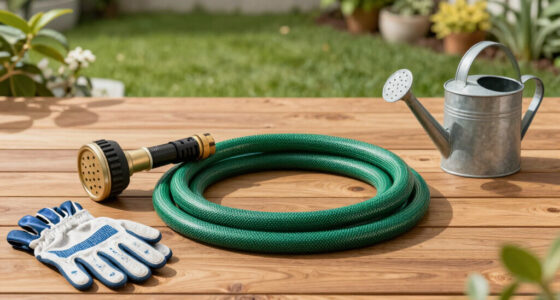
To reduce water waste with your hose and sprayer, use spray nozzles with adjustable settings to control flow and avoid runoff. Water early in the morning or late in the evening to minimize evaporation, and check soil moisture levels first. Incorporate mulch to retain moisture and make sure to maintain your tools by cleaning nozzles and fixing leaks. Small, smart changes like these can make a big difference—if you keep exploring, you’ll find even more tips to conserve water effectively.

Get business pricing on tools and workshop supplies
- Business-only prices and quantity discounts
- Tax-exempt purchasing
- Multiple users, one account, clear invoices
Key Takeaways
- Use adjustable spray nozzles to control flow and prevent unnecessary water runoff.
- Turn off hoses when not actively watering to avoid leaks and waste.
- Water early morning or late evening to reduce evaporation and increase efficiency.
- Check soil moisture levels before watering to ensure plants need water.
- Maintain hoses and sprayers regularly to prevent leaks and ensure proper water flow.
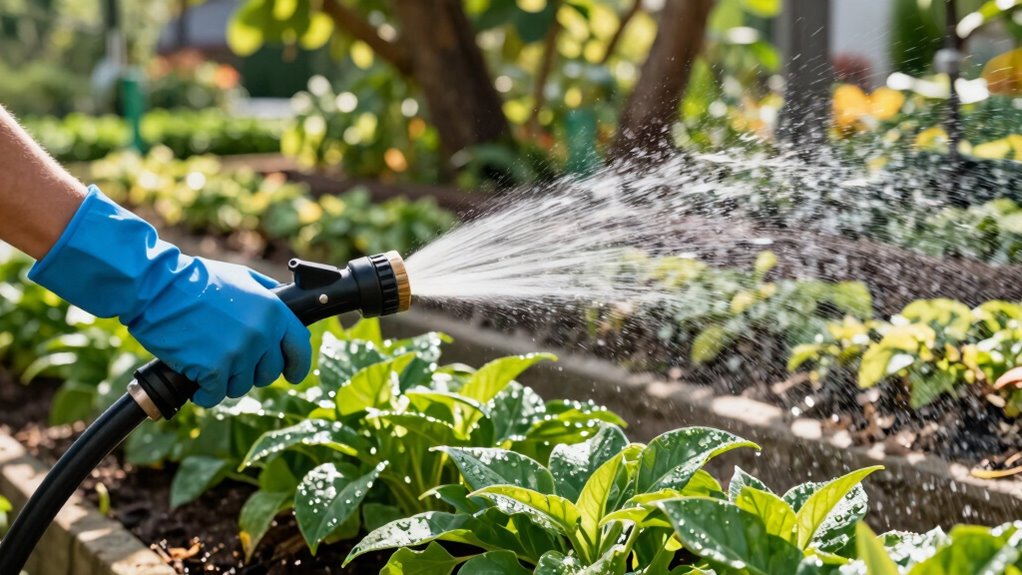
Have you ever wondered how much water you waste daily without realizing it? Small habits with your hose and sprayer can add up to significant savings, and understanding how to use them efficiently makes a big difference. When watering your garden, you might be surprised to learn that overwatering or watering at the wrong times wastes a lot of water. Instead, consider adopting better habits to reduce waste. For example, using a spray nozzle with adjustable settings allows you to control the flow and avoid unnecessary runoff. This way, you only water what’s needed and prevent water from splashing onto pavement or into areas where it won’t infiltrate the soil. Proper watering techniques are essential for minimizing water waste. Rainwater harvesting can be a game-changer in managing your water use. By collecting rainwater, you reduce your dependence on municipal water supplies and cut down on waste. When you install a rain barrel or a more extensive rainwater harvesting system, you can use this free resource to water your garden and landscape. It’s an easy way to ensure you’re watering with natural, untreated water, which benefits your plants and the environment. Plus, rainwater is typically softer than tap water, reducing mineral buildup on plants and soil. This method also supports soil moisture retention, helping your garden stay hydrated during dry spells without constantly turning on the hose. Incorporating efficient watering practices can further enhance water conservation efforts. When you use your hose or sprayer, aim to water early in the morning or late in the evening. Doing so minimizes evaporation, ensuring that more water penetrates the soil and reaches the roots. Additionally, avoid watering on windy days, as wind can cause water to drift away from your target area, leading to waste. Always check your soil’s moisture level before watering; if it’s still moist, hold off until it dries out a bit. This prevents unnecessary watering and helps maintain healthy soil conditions. Implementing proper watering techniques, such as using mulch to retain soil moisture, can also significantly reduce water usage. Using automatic watering systems can help you water more precisely and consistently, reducing waste due to human error. Properly maintaining your watering tools, like cleaning nozzles and checking for leaks, also contributes to water efficiency. By adjusting your watering habits, you’re not just conserving water—you’re also promoting healthier plants and soil. Incorporating these simple habits—using efficient sprayers, harvesting rainwater, and timing your watering—can make a big difference in reducing water waste. Over time, you’ll notice your water bills decrease, your garden flourish with less effort, and your environmental impact lessen. Small changes in how you handle your hose and sprayer can lead to a more sustainable and efficient way to care for your yard. Remember, every drop counts, and by being mindful of your watering habits, you’re contributing to a healthier planet while keeping your garden thriving.
adjustable garden hose spray nozzle
As an affiliate, we earn on qualifying purchases.
As an affiliate, we earn on qualifying purchases.
Frequently Asked Questions
What Types of Hoses Are Most Water-Efficient?
You should choose hoses made from lightweight, flexible materials like rubber or reinforced plastic for water efficiency. These hoses typically have better water flow control, reducing waste. Look for hoses with adjustable nozzles or flow control valves, which help you manage water flow precisely. Avoid hoses with leaks or cracks, as they waste water. Using a hose with a good material and flow control guarantees you water effectively without unnecessary waste.
How Often Should I Replace My Garden Hoses?
You should replace your garden hoses when they show signs of significant wear, such as leaks, cracks, or reduced water flow. Typically, a good replacement schedule is every 5 to 7 years, but hose durability varies based on use and climate. Regularly inspect hoses to prevent waste, and don’t delay replacing damaged ones. Maintaining a mindful replacement routine helps maximize hose longevity and minimizes water waste.
Are There Eco-Friendly Sprayer Options Available?
Yes, eco-friendly sprayer options are available. You can look for recycling sprayer components that are designed for reuse or easy recycling, reducing waste. Biodegradable nozzle options are also popular, as they break down naturally without harming the environment. These choices help you minimize your ecological footprint while maintaining effective watering habits. Investing in such eco-friendly sprayers guarantees you’re making a positive impact on water conservation and sustainability.
Can Watering Early in the Morning Save More Water?
Watering early in the morning can definitely save more water, especially when combined with rainwater harvesting and drip irrigation. During this time, evaporation rates are lower, so your plants absorb more water efficiently. Using rainwater harvesting systems collects natural rain, reducing reliance on tap water. Pairing these methods with drip irrigation guarantees precise watering, minimizing waste and optimizing water use, making your garden more eco-friendly and cost-effective.
How Do I Prevent Leaks in My Hose Connections?
Did you know that leaks can waste up to 10,000 gallons of water annually? To prevent leaks, regularly inspect hose connections for cracks or damage. Store your hose properly to avoid unnecessary wear—coil it neatly and keep it out of harsh sunlight. Perform connection maintenance by tightening fittings securely and replacing worn-out washers. These simple steps help conserve water and prolong your hose’s lifespan.
As an affiliate, we earn on qualifying purchases.
Conclusion
By adopting mindful hose and sprayer habits, you gently steer your water use toward a more sustainable path. Small adjustments—like avoiding over-spraying and turning off the flow when not needed—can subtly craft a significant impact. Think of it as tending your garden with a tender touch, nurturing growth without excess. In this way, your efforts become a quiet testament to care, helping conserve our precious resource while maintaining the beauty and liveliness of your outdoor space.
automatic garden watering system
As an affiliate, we earn on qualifying purchases.
As an affiliate, we earn on qualifying purchases.
As an affiliate, we earn on qualifying purchases.
Fall yard work Picks
leaf blowers
As an affiliate, we earn on qualifying purchases.