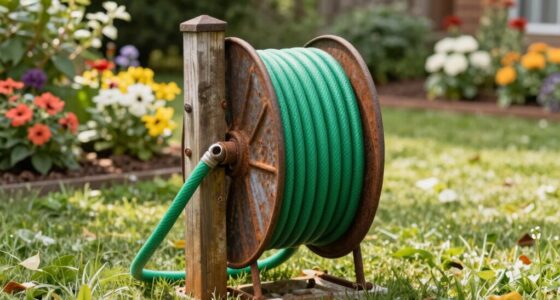

To design sustainable outdoor spaces with reclaimed materials, start by identifying areas where recycled bricks, stones, and wood can replace new resources for pathways, fences, or seating. Incorporate native plants and rain gardens to manage stormwater naturally, supporting local wildlife and reducing maintenance. Using these eco-friendly elements creates a resilient, charming landscape that minimizes waste and environmental impact. Continuing to explore this approach will reveal even more ways to enhance your outdoor space sustainably.

Get business pricing on tools and workshop supplies
- Business-only prices and quantity discounts
- Tax-exempt purchasing
- Multiple users, one account, clear invoices
Key Takeaways
- Incorporate reclaimed bricks, stone, and wood for pathways, edging, and structures to reduce waste and add rustic charm.
- Use native plants in rain gardens to enhance water absorption, support local biodiversity, and minimize maintenance.
- Select strategic locations for rain gardens to naturally collect runoff, promoting sustainable stormwater management.
- Combine reclaimed materials and native plants to create resilient landscapes that require less water and ongoing care.
- Personalize outdoor spaces with recycled decor and native vegetation to foster eco-friendly, inviting environments.
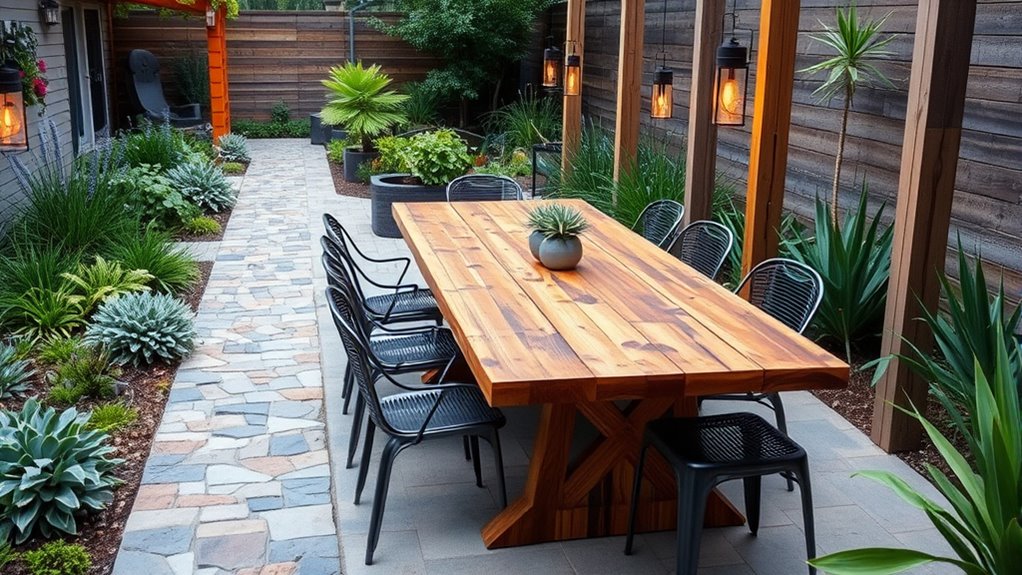
Have you ever wondered how to create outdoor spaces that are both beautiful and eco-friendly? One effective way is to incorporate a rain garden into your landscape. Rain gardens are designed to manage stormwater runoff naturally, reducing pollution and erosion while providing a lush, inviting area for relaxation. To make your rain garden truly sustainable, choose native plants. Native plants are adapted to your region’s climate and soil, so they require less water, fertilizers, and pesticides. They thrive without much intervention, making them an eco-conscious choice that supports local biodiversity.
Incorporate native plants into your rain garden for a sustainable, eco-friendly landscape.
When designing your rain garden, start by selecting a suitable location—preferably an area where water naturally accumulates after rain. Dig a shallow depression and fill it with well-draining soil to encourage water absorption. Then, fill the garden with native plants that can tolerate both wet and dry conditions. These plants will not only help absorb excess water but also attract pollinators like bees and butterflies, enhancing your outdoor ecosystem. Incorporating native grasses, wildflowers, and shrubs creates a natural, low-maintenance landscape that blends seamlessly into your environment.
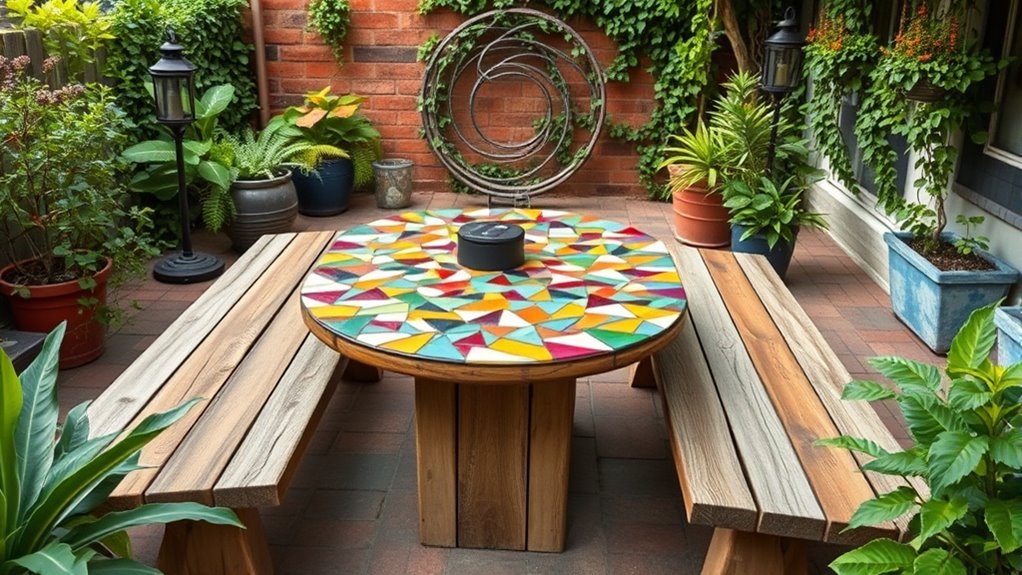
Using reclaimed materials in your outdoor design amplifies the sustainability factor. Instead of buying new stones, pavers, or wood, seek out reclaimed or recycled materials. For example, old bricks or salvaged stone can create pathways or edging around your rain garden, adding character and reducing waste. Reclaimed wood can serve as fencing, benches, or decorative features, giving your space a rustic charm while keeping materials out of landfills. Using these materials not only minimizes environmental impact but also adds a unique, personalized touch to your outdoor space.
Incorporating reclaimed materials with native plants and a rain garden creates a harmonious, sustainable landscape. You’ll benefit from reduced water and maintenance needs, lower environmental impact, and a space that supports local wildlife. As you plan and build, remember that sustainability isn’t just about the materials but also about creating a resilient ecosystem. Your choices—native plants, rain gardens, reclaimed materials—work together to foster a healthy, beautiful outdoor area that you’ll enjoy for years to come. Plus, by making eco-friendly choices, you contribute to the broader effort of reducing urban heat, conserving water, and protecting native habitats. Your outdoor space becomes more than just a pretty yard—it becomes a valuable asset to the local environment, reflecting your commitment to sustainability and natural harmony.
Products Worth Considering

Philips Hue Amarant Outdoor Smart Light Bar, Black

Levoit Air Purifier for Home, Pets, Bedroom – Smart Wi‑Fi for Large Rooms

Hisense 55-Inch E6SR Series 4K UHD Hi-QLED Roku Smart TV (2026 Model)
As an affiliate, we earn on qualifying purchases.
Frequently Asked Questions
How Do Reclaimed Materials Withstand Weather Over Time?
Reclaimed materials can withstand weather over time if properly treated and maintained. They offer good weather resistance, especially when sealed or finished to protect against moisture and UV damage. Material longevity depends on the type of material used; for example, reclaimed wood with proper sealing can last decades, while metals resist corrosion. Regular upkeep ensures your outdoor space remains durable and attractive despite exposure to the elements.
What Are Cost Differences Between Reclaimed and New Materials?
Isn’t it true that every penny counts? Reclaimed materials often cost less upfront, leading to significant cost savings. While they might have higher initial durability, their long-term performance can match new materials, reducing replacement costs. You’ll find that choosing reclaimed options not only saves money but also supports sustainability, making your outdoor space both eco-friendly and budget-conscious. Ultimately, the investment pays off through durability and savings over time.
Are There Safety Concerns With Using Recycled Materials Outdoors?
Yes, there are safety concerns when using recycled materials outdoors. You need to check for material toxicity, as some reclaimed items may contain harmful chemicals. Also, verify structural integrity, since recycled materials might weaken over time or with weather exposure. Proper testing and treatment can mitigate these risks, helping you create a safe, sustainable outdoor space without compromising safety or durability.
How Do Reclaimed Materials Impact Local Ecosystems?
Reclaimed materials can dramatically influence local ecosystems, but if sourced carefully, they often support healthier wildlife habitats and soil health. You might think they’re harmless, but poorly selected or contaminated reclaimed items can disrupt soil and harm native species. By choosing eco-friendly, non-toxic materials and considering their placement, you protect your environment while creating beautiful, sustainable outdoor spaces that blend seamlessly with nature’s delicate balance.
Can Reclaimed Materials Be Customized for Specific Designs?
Yes, reclaimed material customization is definitely feasible, allowing you to tailor pieces to fit your specific design vision. You can cut, shape, and finish reclaimed materials to achieve a unique design potential that reflects your style. By working with artisans or DIY techniques, you turn salvaged materials into custom features, making your outdoor space truly one-of-a-kind while promoting sustainability. This flexibility ensures your project aligns perfectly with your aesthetic goals.
Conclusion
By choosing reclaimed materials, you’re not just creating beautiful outdoor spaces—you’re making a lasting impact on the environment. Every piece you incorporate tells a story of reuse and care. Remember, building sustainability is a journey, not a sprint. When you embrace these eco-friendly choices, you’re planting seeds for a greener future. Keep in mind, it’s like turning over a new leaf—you can transform your outdoor space into a haven that benefits both nature and your community.