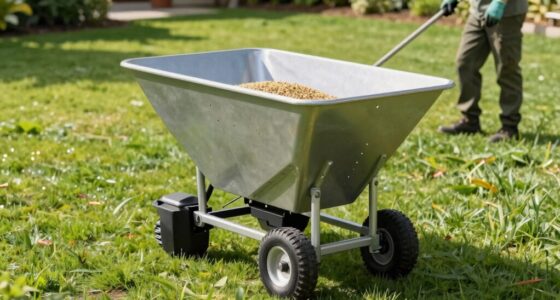
To store fertilizer, soil, and yard supplies neatly, choose a cool, dry, and level spot away from children and pets. Use sturdy, sealed containers and label everything clearly for easy identification. Keep compost bins ventilated and on a level surface, and store tools in designated areas. Organize supplies on shelves to prevent pests and leaks, and regularly inspect for damage. For more expert tips, keep exploring how to maintain a tidy and safe yard storage system.

Get business pricing on tools and workshop supplies
- Business-only prices and quantity discounts
- Tax-exempt purchasing
- Multiple users, one account, clear invoices
Key Takeaways
- Use sturdy, sealed containers and label them clearly to prevent leaks and facilitate easy identification.
- Store supplies on shelves or in organized bins to maintain tidiness and quick access.
- Keep fertilizers and chemicals separate from soil and organic materials to avoid cross-contamination.
- Place compost bins and soil on level, well-ventilated surfaces to contain odors and prevent spills.
- Conduct regular inspections for leaks, pests, or deterioration to maintain a clean, safe storage environment.
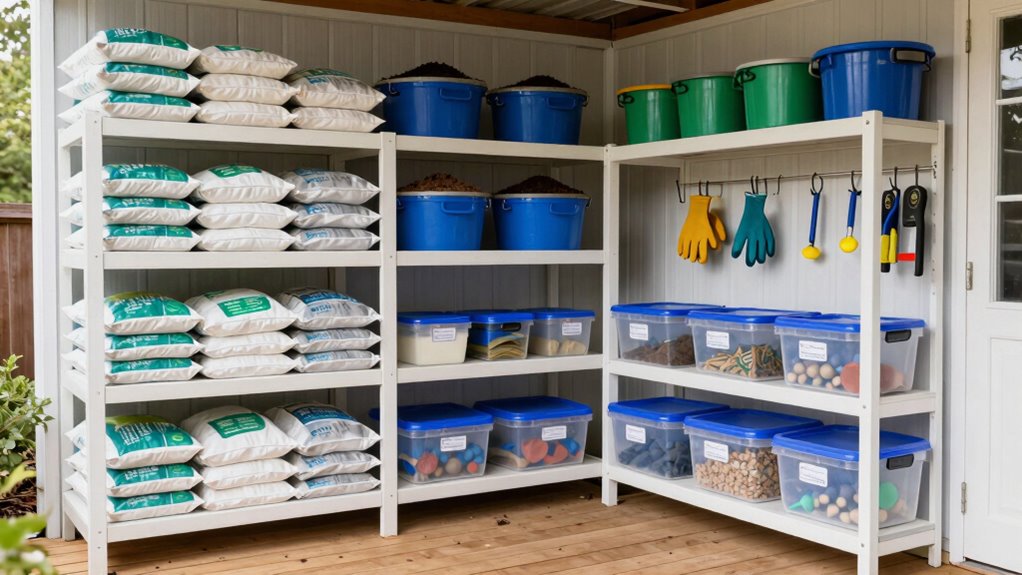
Properly storing fertilizer, soil, and yard supplies is essential to keep them safe, effective, and ready for use when needed. When you organize these materials properly, you not only avoid clutter but also guarantee the longevity of your supplies. If you’re into organic composting, keeping compost bins and related tools in a designated area helps prevent odors and pests from becoming a problem. Clear labeling of containers makes it easy to identify what’s inside, whether it’s compost, fertilizer, or soil amendments, minimizing the risk of accidental misuse.
To prevent messes and maintain safety, always store fertilizers and chemicals in a cool, dry place, away from children and pets. Use sturdy, tightly sealed containers to avoid leaks and spills, which can create hazards or attract pests. Consider repurposing old buckets or storage bins with secure lids for added protection. When it comes to pest control methods, keeping yard supplies organized helps prevent pests like rodents and insects from nesting in your storage area. Regularly inspect stored items for signs of pest activity, and clean the storage space periodically to eliminate crumbs, debris, or spillage that might attract unwanted guests. Proper storage conditions are vital to preserving the quality and safety of your supplies. Additionally, ensuring proper ventilation in your storage area can help reduce moisture buildup and prevent mold growth. Maintaining adequate airflow can significantly extend the lifespan of stored materials by reducing humidity levels.
If you’re storing organic composting materials, guarantee that the compost bins are well-ventilated and placed on a level surface to keep odors contained. Composting helps recycle organic waste, but if not stored properly, it can attract pests or cause foul smells. Maintaining a balance of green and brown materials and turning the compost regularly will keep it in good condition, reducing the chance of pests. When storing soil, keep it covered to prevent it from becoming muddy or contaminated by rain or debris, which could affect its quality and effectiveness when you use it later. Proper soil storage also involves selecting a location that minimizes exposure to elements that can degrade its nutrients. Additionally, choosing the right storage location can help maintain the soil’s nutrients and moisture levels.
For fertilizers, especially those containing chemicals, follow the manufacturer’s instructions for storage. Many fertilizers are best kept away from direct sunlight, heat sources, or moisture, which can cause them to break down or become unstable. If you’re using pest control methods in your yard, store these products separately from fertilizer, soil, and food supplies to prevent cross-contamination. Keeping everything organized in clearly labeled containers or shelves makes it easier to find what you need quickly and easily while maintaining a neat, mess-free space. When you follow these simple habits, your yard supplies remain safe, effective, and ready for use whenever you need them. Proper storage practices also include regular checks for any signs of deterioration or leaks to ensure ongoing safety.
Products Worth Considering

Levoit Core 400S-P Smart Air Purifier for Large Rooms

Hisense 85 U6 Pro Series Mini-LED ULED 4K UHD HDR Gaming AI Smart Fire TV (85U6SF Pro)

Google Nest Doorbell (Wired, 2nd Gen) – Snow
As an affiliate, we earn on qualifying purchases.
Frequently Asked Questions
What Safety Precautions Should I Take When Storing Fertilizer?
When storing fertilizer, you should prioritize safety by ensuring proper ventilation in the storage area to prevent harmful fumes buildup. Always wear protective gear like gloves, goggles, and a mask to avoid skin and eye irritation. Keep fertilizers away from heat sources and open flames, and store them in tightly sealed, labeled containers. Regularly check for leaks or damage, and keep the area clean and dry to minimize risks.
How Often Should I Check Stored Yard Supplies for Damage?
You should check your stored yard supplies every few months for damage or signs of pest activity. Use sturdy storage container options like airtight bins to keep supplies secure. During inspections, look for leaks, cracks, or pest entry points. Apply pest prevention techniques, such as sealing containers tightly and placing them in pest-resistant areas, to minimize risks. Regular checks guarantee your supplies stay safe, dry, and ready for use.
Can I Store Fertilizer Outdoors Year-Round?
You can store fertilizer outdoors year-round if you follow fertilizer safety and outdoor storage tips. Keep it in a sealed, weather-resistant container and place it in a shaded, well-ventilated area to prevent moisture and damage. Make sure it’s away from children and pets, and avoid direct sunlight or rain. Regularly check for leaks or deterioration, and always follow manufacturer instructions for safe storage to prevent accidents.
What Are Eco-Friendly Storage Options for Yard Chemicals?
Did you know that using eco-friendly storage reduces chemical runoff by 30%? You can opt for compost bins, which naturally contain yard waste and chemicals, or use recycled containers to store fertilizers and pesticides safely. These options help minimize environmental impact while keeping your yard supplies organized. Make sure containers are clearly labeled and sturdy, so you prevent leaks and accidental exposure, making your yard eco-friendly and clutter-free.
How Do I Prevent Pests From Accessing Stored Soil and Fertilizer?
To prevent pests from accessing your stored soil and fertilizer, use pest-resistant containers made of sturdy, sealed materials. Keep lids tight and store supplies in a cool, dry place away from pests’ reach. Incorporate natural deterrents like planting pest-repelling herbs nearby or using diatomaceous earth around storage areas. Regularly inspect your storage to catch any pests early and maintain a pest-free environment for your yard supplies.
Conclusion
Storing your fertilizer, soil, and yard supplies might seem like a chore, but with a little planning, it becomes a breeze. Think of it as organizing your tools for a smooth, lush garden—where chaos turns into order. Just like a tidy workspace sparks creativity, a neat storage area keeps your yard safe and thriving. When everything’s in its place, you’ll enjoy a mess-free yard and more time to relax and admire your beautiful outdoor space.