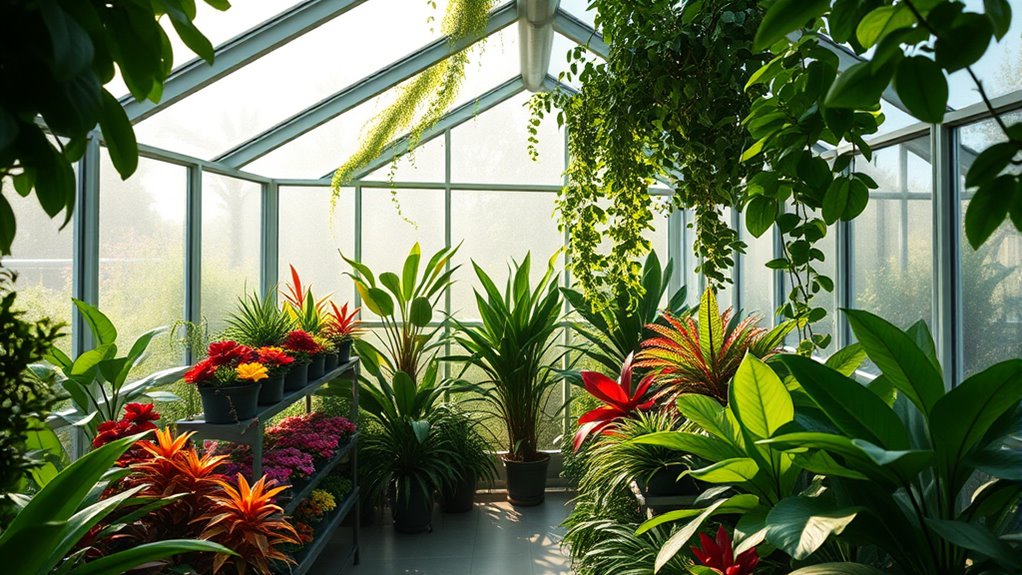

To create a year-round greenhouse, focus on combining solar heating and proper insulation. Position your greenhouse to maximize sunlight exposure, especially with south-facing windows, and incorporate passive solar features like large glass panels. Use insulation materials like foam or bubble wrap on walls and doors to retain heat. Adding thermal mass elements and choosing high-quality glazing will also help stabilize temperatures. If you keep exploring, you’ll discover how these strategies work together for consistent, eco-friendly growth throughout the year.
Key Takeaways
- Maximize sunlight exposure with south-facing windows and passive solar features to harness solar heat effectively.
- Insulate walls, floors, and windows using foam boards, double-glazing, or bubble wrap to retain warmth.
- Incorporate thermal mass elements like water barrels to stabilize indoor temperatures throughout the year.
- Combine passive solar design with insulation for synergistic climate control and energy efficiency.
- Use high-quality glazing and seal gaps to optimize light transmission and minimize heat loss in all seasons.

Have you ever wondered how to grow fresh vegetables and vibrant flowers all year long? Creating a year-round greenhouse isn’t just about having a structure; it’s about designing it for ideal climate control. One of the most effective ways to maintain consistent temperatures is through solar heating. By harnessing the sun’s energy, you can reduce reliance on electricity or fuel-powered heating systems. Position your greenhouse to maximize sunlight exposure, preferably with south-facing windows or walls. Installing solar collection panels or passive solar features such as large, south-facing glazing can trap heat during the day and release it slowly overnight. This natural heating method helps create a stable environment, especially in cooler months, making it easier to grow plants continuously.
Along with solar heating, insulation techniques play a vital role in maintaining a warm, stable climate inside your greenhouse. Proper insulation minimizes heat loss, ensuring that the warmth generated during the day isn’t quickly dissipated at night. You can start by insulating the foundation and walls with materials like foam boards or bubble wrap, which are affordable and effective. Double-glazing or using polycarbonate panels for windows and walls adds an extra layer of insulation, trapping heat inside. Don’t forget about sealing gaps around doors and vents; drafts can greatly reduce your greenhouse’s efficiency. When insulation is properly applied, it reduces the workload on your heating systems, conserves energy, and keeps your plants comfortable year-round.
Proper insulation reduces heat loss, ensuring your greenhouse stays warm and energy-efficient year-round.
In addition, combining solar heating with good insulation techniques creates a synergistic effect. The solar design captures free heat from the sun, while insulation keeps that heat from escaping. This combination means your greenhouse can stay warmer during winter days and retain that warmth overnight, even when the sun isn’t shining. It’s a sustainable approach that lowers energy costs and minimizes environmental impact. You can also incorporate thermal mass elements, like water barrels or stone walls, which absorb heat during the day and radiate it back at night, further stabilizing the temperature. Utilizing high-quality glazing materials that maximize light transmission while reducing heat loss can significantly improve overall climate control.
Ultimately, creating a year-round greenhouse requires thoughtful planning around both passive and active climate control strategies. Investing in solar heating and proper insulation techniques ensures your plants stay healthy and productive regardless of outside weather. With these methods in place, you can enjoy fresh produce and vibrant blooms throughout every season, turning your greenhouse into a reliable, eco-friendly sanctuary for growth.
year-round greenhouse heating kit
As an affiliate, we earn on qualifying purchases.
As an affiliate, we earn on qualifying purchases.
Frequently Asked Questions
What Are the Most Energy-Efficient Heating Options for a Greenhouse?
You should consider solar heating and heat exchange systems to boost energy efficiency in your greenhouse. Solar heating captures sunlight during the day, providing free, renewable warmth, while heat exchange systems recycle warmth from other sources or exhausts, reducing energy loss. Combining these methods maximizes efficiency, cuts costs, and maintains consistent temperatures year-round, helping your greenhouse stay productive without relying heavily on traditional heating options.
How Can I Prevent Pests in a Year-Round Greenhouse?
Think of pest prevention like assembling a Victorian steampunk contraption—every part must work together. You can prevent pests by practicing companion planting, which naturally repels unwanted insects, and using biological controls like beneficial insects to keep pest populations in check. Regularly inspect plants, keep your greenhouse clean, and avoid overwatering. These proactive steps create an environment where pests struggle to thrive, keeping your plants healthy year-round.
What Are the Best Ventilation Strategies for Maintaining Optimal Temperatures?
You should prioritize natural ventilation by opening vents during cooler parts of the day to regulate temperatures. Install exhaust fans to remove excess heat during hot periods and guarantee proper airflow. Combining natural ventilation with exhaust fans creates a balanced environment, preventing overheating and maintaining ideal temperatures. Regularly monitor temperature levels and adjust vents and fan operation accordingly to keep conditions stable for your plants all year round.
How Do I Choose the Right Greenhouse Materials for Different Climates?
To select the appropriate greenhouse materials, consider material durability and climate adaptation. For hot climates, opt for UV-resistant polycarbonate or glass that withstands intense sunlight and heat. In colder regions, insulated materials like double-pane glass or thick polycarbonate help retain warmth. If your climate is humid, choose corrosion-resistant metals for framing. Assess your local weather patterns and prioritize durability to guarantee your greenhouse performs well year-round.
What Are Cost-Effective Ways to Automate Greenhouse Climate Controls?
You can save money by integrating affordable sensors for temperature, humidity, and light into your greenhouse, then linking them with automation software. This setup allows you to automatically control vents, fans, and watering systems based on real-time data. Look for user-friendly software that supports sensor integration, making adjustments simple and efficient. Regularly calibrate sensors to guarantee accuracy and optimize your climate control system for cost-effective, year-round growth.
insulation materials for greenhouse
As an affiliate, we earn on qualifying purchases.
As an affiliate, we earn on qualifying purchases.
Conclusion
Now that you’ve built your year-round greenhouse, you’ve opened the door to a lush, perpetual oasis—your own personal Eden, resilient against the seasons’ whims. With careful planning and dedication, you transform a simple structure into a thriving sanctuary where plants flourish regardless of the weather outside. Think of it as planting seeds of possibility, nurturing them into a vibrant, everlasting garden that blooms with life, beauty, and bounty all year long.
As an affiliate, we earn on qualifying purchases.
thermal mass water barrels for greenhouse
As an affiliate, we earn on qualifying purchases.
As an affiliate, we earn on qualifying purchases.