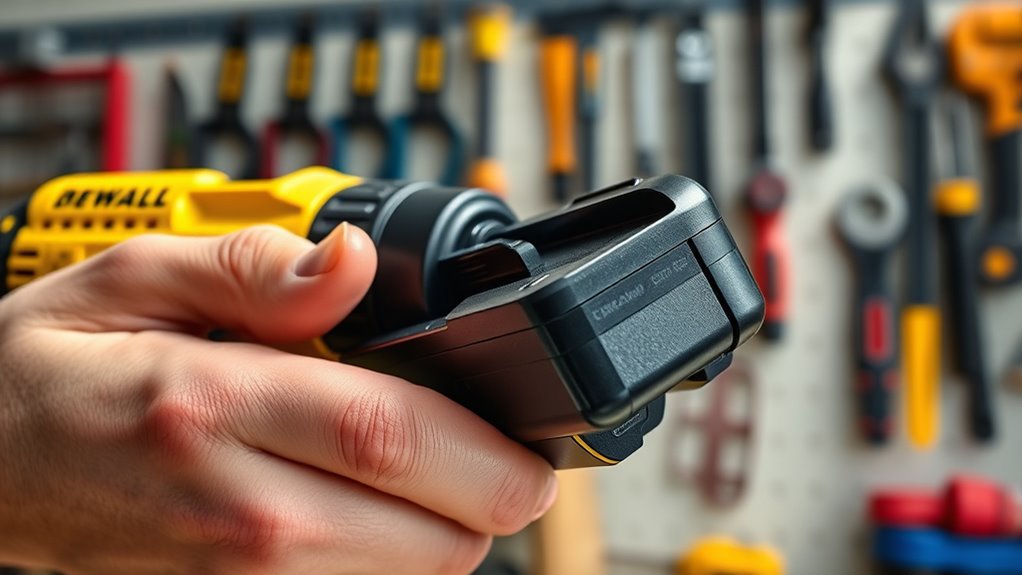

To maintain your power tool batteries for longevity, always follow the manufacturer’s charging recommendations and avoid fully discharging them. Store batteries in a cool, dry place with a partial charge when not in use for extended periods. Regularly inspect batteries for damage or swelling and use proper, slower charging methods when possible. Keeping these habits in mind helps guarantee consistent performance and extends their lifespan. If you’d like more tips, continue exploring the best practices for battery care.
Key Takeaways
- Store batteries in a cool, dry place with a partial charge (40-60%) to prevent capacity loss.
- Use manufacturer-recommended chargers and avoid overcharging or deep discharges.
- Regularly inspect batteries for damage or swelling and replace if necessary.
- Charge batteries at moderate speeds; avoid frequent fast charging to reduce heat buildup.
- Recycle batteries responsibly to prevent environmental harm and recover valuable materials.
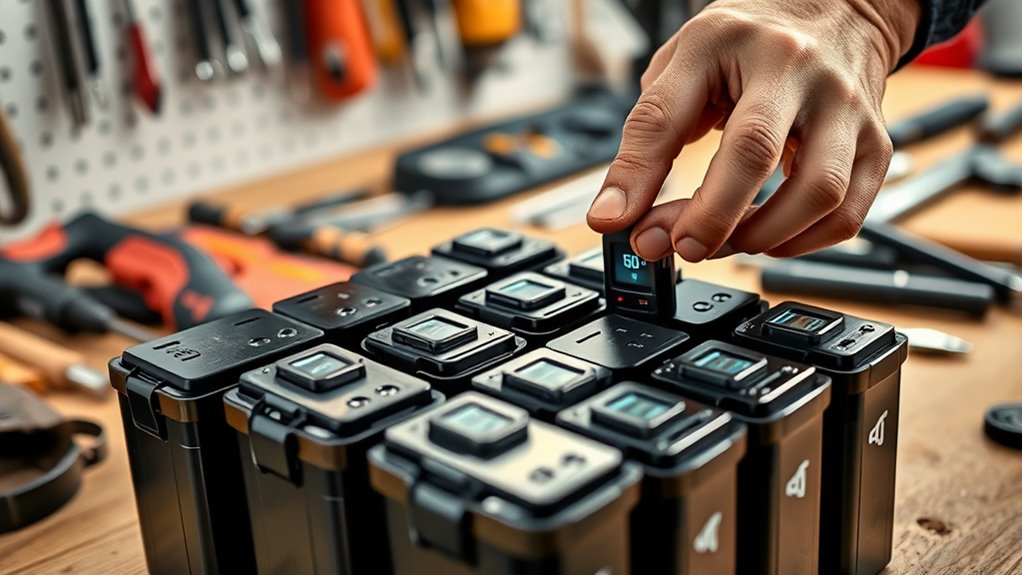
Maintaining your power tool batteries is essential to guarantee they perform at their best and last longer. Proper care not only saves you money in the long run but also ensures your tools are ready whenever you need them. One of the key aspects of battery maintenance is understanding the importance of battery recycling. When a battery reaches the end of its lifespan, recycling it responsibly prevents environmental harm and recovers valuable materials for future use. Many local recycling centers accept power tool batteries, so make it a habit to dispose of old batteries properly. This environmentally friendly practice also encourages manufacturers to develop better, more sustainable batteries, ultimately benefiting your future projects.
In addition to recycling, mastering effective charging techniques plays a fundamental role in prolonging your battery’s lifespan. Overcharging or undercharging can dramatically impact battery health. To avoid this, always use the charger recommended by the manufacturer and follow their suggested charging cycles. Modern lithium-ion batteries, common in power tools, tend to perform best when charged to around 80-90%, rather than full 100% charges. This reduces stress on the battery cells and minimizes capacity loss over time. Also, try to charge your batteries before they completely drain; letting a battery fully discharge can cause deep cycling damage that shortens its overall life. When you’re not using your power tools for extended periods, store the batteries in a cool, dry place and give them a partial charge—around 40-60%. This helps maintain the health of the cells and prevents capacity fade caused by prolonged storage without use. Recognizing the importance of battery maintenance practices can significantly enhance your tool’s performance and lifespan.
Furthermore, avoid frequent fast charging unless necessary, as this can generate excess heat, which accelerates wear and degrades the battery. If your charger has a trickle or slow charge option, opt for that during routine maintenance. Keeping an eye on the temperature during charging is also essential—if the battery heats up excessively, disconnect it and let it cool down before resuming charging. Regularly inspecting your batteries for any signs of damage or swelling also helps prevent potential hazards and ensures safe operation. Proper charging techniques combined with responsible battery recycling create a cycle of sustainable use that benefits both your tools and the environment.
power tool battery charger
As an affiliate, we earn on qualifying purchases.
As an affiliate, we earn on qualifying purchases.
Frequently Asked Questions
Can Overcharging Damage Power Tool Batteries?
Yes, overcharging risks damaging your power tool batteries. When you leave a battery plugged in too long, it can lead to battery degradation over time. This happens because constant charging stresses the cells, causing them to wear out faster and reducing overall lifespan. To prevent this, always unplug your batteries once they’re fully charged and use chargers with automatic shut-off features. This way, you protect your batteries and keep them performing well.
How Does Temperature Affect Battery Lifespan?
Temperature is like a double-edged sword for your batteries—too hot or cold, and it can cut their lifespan short. Thermal effects accelerate aging when exposed to heat, while cold slows down chemistry but risks damage if extreme. To maximize battery longevity, keep them in an environment with ideal storage temperatures, usually between 50-77°F. This way, you protect your batteries from unnecessary wear and tear.
Should I Store Batteries Fully Charged or Empty?
You should store batteries partially charged, around 40-60%, following proper storage guidelines. Fully charging or letting them drain completely can harm their lifespan. Adjust your charging habits accordingly; avoid leaving batteries at full charge for long periods or completely empty. Store them in a cool, dry place, and check on them periodically. This way, you guarantee your power tool batteries stay healthy and ready when you need them.
How Often Should I Calibrate My Battery?
A stitch in time saves nine, so you should calibrate your battery every 3-4 charging cycles. Regular battery calibration ensures accurate power readings and prolongs battery health. Keep an eye on performance drops or inconsistent charge levels, which signal it’s time for recalibration. By staying proactive, you help your power tool batteries stay reliable longer, maximizing their lifespan and avoiding unexpected failures.
Are Third-Party Chargers Safe for My Batteries?
Third-party chargers can be safe for your batteries if they are compatible and designed for your specific power tool model. Always check charger compatibility before use to prevent damage. Using an incompatible charger can compromise battery safety, potentially leading to overheating or reduced lifespan. Stick to reputable brands and verify that the charger meets your battery’s specifications to guarantee safe and effective charging.
lithium-ion battery storage case
As an affiliate, we earn on qualifying purchases.
As an affiliate, we earn on qualifying purchases.
Conclusion
By following these simple maintenance tips, your power tool batteries will last longer and perform better. You might think it’s too much trouble, but taking just a few minutes to care for your batteries saves you money and hassle in the long run. Don’t overlook small habits like proper storage and regular charging—your tools will thank you with reliable power whenever you need it. Keep up with maintenance, and your batteries will serve you well for years to come.
power tool battery inspection tool
As an affiliate, we earn on qualifying purchases.
As an affiliate, we earn on qualifying purchases.
slow charger for power tool batteries
As an affiliate, we earn on qualifying purchases.
As an affiliate, we earn on qualifying purchases.