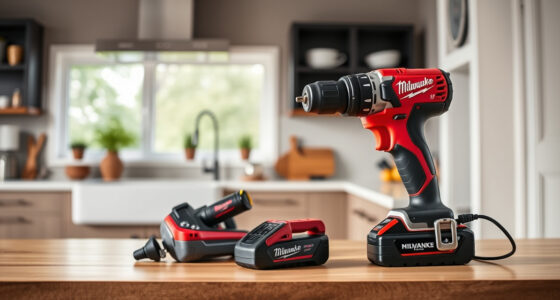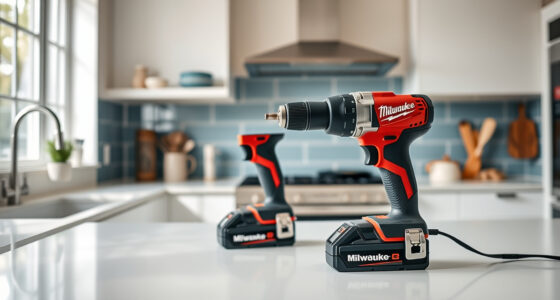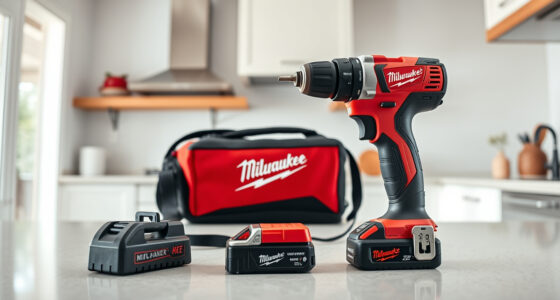
Choosing a cordless drill set is less about picking the biggest battery number and more about matching power, weight, and the kit contents to the work you actually do. An 18V/20V Max set generally offers more headroom for large holes, long screws, and repeated work, while a 12V set is lighter and easier to control in tight spaces. The labels 18V and 20V Max usually refer to the same broad battery class: brands often use a higher, no-load maximum voltage for the 20V Max name and a nominal operating voltage for 18V.

Get business pricing on tools and workshop supplies
- Business-only prices and quantity discounts
- Tax-exempt purchasing
- Multiple users, one account, clear invoices

BLACK+DECKER 20V MAX Brushless Cordless Drill/Driver Kit with 30-Piece Bit Set, 2Ah Battery and Charger
- ✔ Voltage: 20V MAX; 18V nominal
- ✔ Battery: 2Ah lithium-ion
- ✔ Motor: Brushless

Pink Power Drill Tool Kit Set: 20V Cordless Electric Drill with Battery and Toolbox
- ✔ Voltage: 20V
- ✔ Battery capacity: 1.5Ah
- ✔ Charge time: 1.5 hours

AVID POWER 20V Cordless Drill Set with Battery, Charger, and 22 Accessories
- ✔ Voltage: 20V
- ✔ Battery: 1.5Ah lithium-ion
- ✔ Maximum speed: 550 rpm
This comparison is between those two battery-platform classes, not specific brands or models. If the drill will handle renovation, heavier woodworking, or frequent use, 18V/20V Max is the safer long-term buy. For shelves, furniture, pilot holes, and ordinary household repairs, a 12V kit can be more comfortable and less costly. The deciding tradeoff is whether the extra power and platform capacity justify a larger, heavier setup.
At a Glance
| Criteria | 18V/20V Max cordless drill sets | 12V cordless drill sets | Winner |
|---|---|---|---|
| Power for demanding work | More headroom for larger bits, long fasteners, and repeated heavy work | Capable for common drilling and screwdriving, with less reserve for sustained heavy loads | A |
| Weight and compact handling | Usually larger and heavier, though size varies by model and battery | Usually lighter and more compact, helping in overhead and confined work | B |
| Runtime and battery capacity | Often available with higher-capacity batteries; actual runtime depends on load and battery | Smaller batteries can mean more frequent swaps under heavy use; lighter packs aid handling | Depends |
| Kit value and purchase cost | Typically costs more, but kits may include batteries and tools suited to broader projects | Often a lower-cost entry point, though kit contents affect the real value | B |
| Tool-platform growth | Often has a wider range of compatible tools, depending on brand | May have a smaller compatible-tool range, depending on brand | A |
| Everyday household usability | Handles both routine repairs and demanding projects, with extra weight as the tradeoff | Well suited to furniture assembly, household repairs, and occasional projects | Depends |
| Control for light-duty work | Can be more than needed for delicate, light-duty tasks | Often easier to manage for small fasteners and controlled, lighter work | B |
BLACK+DECKER 20V MAX Brushless Cordless Drill/Driver Kit with 30-Piece Bit Set, 2Ah Battery and Charger
For buyers who want the drill itself to handle a wider range of fastening and drilling jobs, BLACK+DECKER is the most capable all-rounder in this comparison. Its brushless motor and stated maximum torque of 486 in-lb give it a stronger performance profile than AVID POWER’s 280 in-lb model, while the 1/2-inch chuck accepts larger-capacity accessories than AVID POWER’s 3/8-inch chuck. Two speed settings, variable trigger control, and 10 clutch positions help us match output to the task instead of relying on full speed for every screw.The kit is more drill-centered than Pink Power’s. It includes a 2Ah battery, charger, belt clip, and 30-piece bit set, rather than a broad collection of household hand tools. That makes it the better choice for someone who already owns a hammer, wrench, and level, or who expects to buy drill accessories around specific projects. The built-in LED and soft-grip handle are useful details when working in a cabinet or other dim, awkward spot; the metal keyless chuck also makes bit changes less of a chore.There are limits to the advantage. The 2Ah battery is still a compact pack, so buyers planning long stretches of drilling should consider whether they need a spare compatible battery. The advertised hole count depends on test conditions and a bit that is not included, so we would not use it as a guaranteed measure of real-world runtime. The extended warranty also requires registration within 30 days. Compared with Pink Power, this kit sacrifices household-tool breadth; compared with AVID POWER, it offers more drill capacity but is less specifically positioned as the lightest option. It earns the top spot because the drill’s power, control, and kit contents make the most versatile case for regular DIY use.
Pros:
- Brushless motor and up to 486 in-lb stated torque provide the strongest drill-focused specifications in this lineup.
- Two speeds, variable trigger, and 10 clutch positions support better control across drilling and screwdriving tasks.
- 1/2-inch metal keyless chuck, LED light, and soft-grip handle add practical convenience.
- Includes a 2Ah battery, charger, belt clip, and 30-piece bit and accessory set.
Cons:
- The kit includes drill accessories rather than the broader hand-tool selection supplied with Pink Power.
- The 2Ah battery may not suit extended work without a compatible spare.
- The extra warranty period requires registration within 30 days, and stated hole counts depend on test conditions.
Best for: DIYers who prioritize drilling and fastening performance, want a 1/2-inch chuck and multiple speed and clutch controls, and already have basic hand tools.
Not ideal for: Buyers seeking a complete household toolbox in one case, those needing long continuous runtime from one battery, or anyone who needs a hammer drill for masonry.
Bottom line: We recommend BLACK+DECKER for buyers who want the strongest, most adjustable drill in this group and do not need a full household hand-tool assortment.
“We recommend BLACK+DECKER for buyers who want the strongest, most adjustable drill in this group and do not need a full household hand-tool assortment.”
Pink Power Drill Tool Kit Set: 20V Cordless Electric Drill with Battery and Toolbox
Pink Power is the pick for a buyer who wants a starter household toolbox as well as a cordless drill. Its case brings together a drill, screwdriver, claw hammer, adjustable wrench, pliers, level, tape measure, saw, bits, and sockets. That range is a meaningful difference from BLACK+DECKER’s 30-piece bit-focused bundle and AVID POWER’s 22 drill accessories: for assembling furniture or handling a small repair, the hand tools may be more useful than a larger selection of drill bits.The drill is listed at 20V with a 1.5Ah battery, Type-C charging, and a stated 1.5-hour charge time. For intermittent home use, a relatively quick recharge and a portable case can make it easier to keep the kit ready for ordinary jobs. The listing describes up to 6 hours of normal-use runtime, but also gives 1–3 hours of continuous use; those figures depend on task and workload, so we would plan around short household sessions rather than assume all-day operation. Its stated maximum no-load speed is 1,350 rpm, below BLACK+DECKER’s 1,900 rpm, and the supplied specifications do not establish an equivalent torque figure. That makes it harder to recommend for demanding drilling.In practical terms, Pink Power is less a performance upgrade over the others than a broader, ready-to-start kit. Compared with AVID POWER, it supplies considerably more general-purpose tools; compared with BLACK+DECKER, it gives up brushless-motor credentials, a stated high torque figure, and the larger chuck specification in exchange for that breadth. Its plastic toolbox also deserves gentler handling than a rugged jobsite case. Choose it when the missing hammer, wrench, and level matter more than maximizing drill power.
Pros:
- Combines a cordless drill with a broad collection of useful household hand tools.
- Portable plastic case keeps the included tools together for basic repair jobs.
- Type-C charging and a stated 1.5-hour charge time suit occasional home use.
- Includes bits and sockets as well as a hammer, wrench, pliers, level, and tape measure.
Cons:
- The 1.5Ah battery and stated runtime are better suited to household sessions than demanding continuous work.
- Maximum listed speed is lower than BLACK+DECKER’s, and no torque figure is provided in the supplied specs.
- Plastic case may be less durable under rough handling than a tougher storage option.
Best for: First-time homeowners, renters, or DIY beginners who need a drill and a broad set of basic hand tools for furniture assembly and routine household repairs.
Not ideal for: Frequent heavy-duty users, buyers who need a drill with clearly stated high torque and a larger chuck, or anyone expecting a rugged case for rough jobsite handling.
Bottom line: We would choose Pink Power when a broad, ready-made home toolbox matters more than getting the most powerful drill in the lineup.
“We would choose Pink Power when a broad, ready-made home toolbox matters more than getting the most powerful drill in the lineup.”
AVID POWER 20V Cordless Drill Set with Battery, Charger, and 22 Accessories
AVID POWER is the simplest fit for buyers whose jobs are mostly assembling furniture, driving screws, and making modest holes in wood or metal. At 2.5 lb with a rubberized grip, it emphasizes manageable handling rather than the stronger drilling profile of BLACK+DECKER. Its 15+1 torque settings give users a practical way to reduce the risk of driving screws too far, while variable speed, reverse rotation, and an LED cover the basic controls we expect for everyday DIY.A battery-level display is a particularly useful inclusion on a small 1.5Ah battery: it can help us notice a low charge before starting a task, though it does not increase how long the pack runs. The kit includes a charger and 22 accessories, so it is more ready to use than a bare tool, but its accessory mix is focused on drilling rather than the hammer, wrench, and other household tools found in Pink Power. With stated torque of 280 in-lb, a maximum speed of 550 rpm, and a 3/8-inch chuck, it is also a narrower choice than BLACK+DECKER for buyers planning tougher or more varied work.Material limits are important here. The supplied information says this drill is not suitable for concrete or masonry, and its listed drilling capacities are 20 mm in wood and 10 mm in metal. We would keep it to those kinds of routine tasks instead of trying to stretch it into a masonry tool. Battery compatibility is another constraint: it works only with AVID POWER batteries, so do not assume other-brand packs will serve as replacements. It earns its place for lighter jobs and comfortable handling, not for maximum power or a comprehensive toolbox.
Pros:
- Listed 2.5 lb weight and rubberized grip favor comfortable handling during ordinary home tasks.
- 15+1 torque settings, variable speed, and reverse rotation provide useful control for screwdriving.
- Battery-level display helps users check charge before beginning a job.
- Includes a charger, LED light, and 22 accessories.
Cons:
- Not suitable for concrete or masonry, limiting material choice.
- Lower stated torque and a 3/8-inch chuck make it less versatile for demanding work than BLACK+DECKER.
- Battery compatibility is limited to AVID POWER batteries.
Best for: DIY beginners and occasional users who want a relatively lightweight drill for controlled screwdriving and modest drilling in wood or metal.
Not ideal for: Anyone drilling concrete or masonry, seeking a more powerful tool for demanding projects, or wanting batteries shared across another brand’s platform.
Bottom line: We recommend AVID POWER for light, routine DIY where low weight and simple control matter more than high torque or broad tool coverage.
“We recommend AVID POWER for light, routine DIY where low weight and simple control matter more than high torque or broad tool coverage.”
As an Amazon Associate we earn from qualifying purchases.
Key Differences
The clearest difference is working headroom. An 18V/20V Max drill is generally better suited to large-diameter drilling, long screws, and sustained use, where a smaller drill may slow down or require more frequent breaks. That extra capacity matters most when the drill is a regular job-site or workshop tool. For occasional household jobs, both classes can do the work; a more powerful drill does not automatically make a simple task faster or easier.
In exchange for power and often a broader tool ecosystem, 18V/20V Max sets tend to be bulkier and cost more to enter. A 12V drill is easier to carry, maneuver overhead, and use in cramped cabinets or corners. For many homeowners, that comfort is a daily benefit rather than a minor spec difference. The right comparison is the complete kit: included battery count and capacity, charger, case, and other tools can change value more than the voltage label.
Think about future purchases as well as the first drill. If you expect to add a saw, impact driver, or outdoor tool, an 18V/20V Max battery platform may offer more options, but availability varies by brand. If the drill is likely to remain your only cordless tool, paying for platform breadth may not return much. Choose based on the hardest work you expect to do regularly, not the most demanding job you might do once.
Detailed Comparison
Power for demanding work (18V/20V Max cordless drill sets wins — major)
Winner: 18V/20V Max, by a major margin for heavy tasks. This class generally has more capacity for driving long fasteners, drilling wider holes, and working repeatedly under load. A 12V drill remains capable for common household jobs, but it has less reserve when the bit or material creates substantial resistance. If heavy drilling is frequent, the larger platform reduces the chance that the drill feels underpowered; if it is rare, the extra capability may sit unused.
Weight and compact handling (12V cordless drill sets wins — moderate)
Winner: 12V, usually by a moderate margin. Smaller drills and batteries are generally easier to hold overhead, fit between cabinet sides, and carry around for quick repairs. This can reduce fatigue across repeated light tasks. Some compact 18V models narrow the difference, so compare the actual tool and battery rather than assuming every 12V drill is smaller than every 18V model.
Runtime and battery capacity (moderate difference)
Winner: Depends on the kit and workload. 18V/20V Max platforms commonly offer larger-capacity batteries and more reserve for demanding work, but capacity, tool efficiency, and load all affect runtime. A 12V pack may be enough for brief household jobs and keeps the drill light; under continuous heavy drilling, it may need a swap sooner. Check the battery’s amp-hour rating, the number of batteries supplied, and whether replacement packs are easy to buy.
Kit value and purchase cost (12V cordless drill sets wins — moderate)
Winner: 12V for a low-cost, single-tool start, by a minor-to-moderate margin. 12V kits often cost less and provide ample capability for light home maintenance. Yet price alone is not a reliable measure: a kit with two useful batteries, a charger, and a case may be a better buy than a cheaper bare-bones set. Choose 18V/20V Max when the additional capacity will see regular use; otherwise, its extra cost can buy capability you rarely need.
Tool-platform growth (18V/20V Max cordless drill sets wins — moderate)
Winner: 18V/20V Max, generally by a moderate margin. Many brands build a wide selection of compatible tools around their higher-voltage platform, which can make later purchases more convenient if batteries and chargers are shared. The specific range depends on the brand, and some manufacturers also offer substantial 12V collections. Before buying, check the tools you actually expect to add; a larger platform is only valuable if it includes them.
Everyday household usability (moderate difference)
Winner: Depends on the work, with 12V ahead for frequent light repairs. A compact 12V drill is easy to grab for furniture assembly, hanging items, and small pilot holes. An 18V/20V Max set covers those tasks too and is the better single-drill answer when household work includes deck repairs, larger bits, or renovation. For a user who needs one drill for varied, demanding jobs, A is the more versatile choice; for mostly small tasks, B is more pleasant to handle.
Control for light-duty work (12V cordless drill sets wins — minor)
Winner: 12V, by a minor margin. Lower weight and a smaller body can make a 12V drill easier to position and steady when installing small screws or working in a confined area. Both classes can offer adjustable clutches and multiple speed settings, and correct settings matter more than voltage for avoiding stripped screws. A compact 18V model can perform just as well, so treat this as a practical handling advantage rather than a rule.
18V/20V Max cordless drill sets: Pros and Cons
Pros:
- More reserve for large holes, long screws, and repeated heavy work
- Can serve as the base for a broad range of compatible tools
- More versatile when a single drill must cover both light and demanding projects
Cons:
- Usually heavier and bulkier to hold or carry
- Often costs more to buy into the platform
- May be unnecessarily powerful and cumbersome for occasional small jobs
12V cordless drill sets: Pros and Cons
Pros:
- Usually lighter and easier to maneuver in tight or overhead spaces
- Often costs less for a useful household-ready kit
- A comfortable fit for furniture assembly, small holes, and routine repairs
Cons:
- Less reserve for sustained heavy drilling and larger fasteners
- Battery capacity may be limiting during demanding, continuous work
- Compatible tool choices can be narrower, depending on the brand
Who Should Choose What
Choose 18V/20V Max cordless drill sets if:
- You regularly drill larger holes or drive long fasteners into dense material.
- You are renovating, building, or using a drill for extended sessions.
- You plan to buy other tools on the same battery platform and have checked that the range suits your needs.
- You want one drill class with room to handle both routine repairs and more demanding projects.
Choose 12V cordless drill sets if:
- Your main jobs are furniture assembly, hanging items, pilot holes, and occasional home repairs.
- Low weight and easy handling matter more to you than maximum power.
- You work in cupboards, overhead, or other confined spaces and want a compact tool.
- You want a lower-cost kit and do not expect to expand into a large cordless tool collection.
Skip both if: If your work involves frequent masonry drilling, choose a suitable hammer drill or rotary hammer rather than a basic drill set. If you only need to tighten or loosen small screws, a compact electric screwdriver may be lighter and cheaper.
Value for Money
Paying more for an 18V/20V Max kit is worthwhile when its extra power will be used regularly or when its battery platform matches tools you plan to buy. In that case, the premium purchases useful headroom and may reduce the need to replace an underpowered drill later. It is poor value if the drill will only assemble furniture or handle a few small repairs each year.
A 12V kit is often the better value for light household use, but compare what is in the box rather than relying on the lowest sticker price. A second battery can be more useful than an included accessory you will not use. Also check replacement battery cost and platform compatibility. For a first cordless tool, buy the battery class that fits the likely projects; for an expanding collection, buy into the brand and platform with the tools you want, not just the cheapest drill set.
Final Verdict
For most people who expect a drill to handle varied projects over several years, choose an 18V/20V Max set. It offers more useful headroom and often makes a stronger base for adding tools. The recommendation changes for users whose work is mostly light and occasional: choose a 12V set for its lower weight, easier handling, and typically lower entry cost.
The biggest deciding factor is the hardest job you will do often. If that means large holes, long fasteners, or extended sessions, pay more for A. If it means shelves, furniture, and routine repairs, B is the smarter buy, not a compromise. Compare the actual drill’s size, battery capacity, kit contents, and brand platform before choosing; voltage class alone cannot identify the best individual set.
Frequently Asked Questions
Is a 20V Max drill more powerful than an 18V drill?
Not necessarily. The two labels often describe the same broad battery class, with brands using different voltage conventions. Compare the specific models’ performance, size, battery, and features rather than treating 20V Max as automatically stronger than 18V.
Is a 12V cordless drill powerful enough for home use?
For many household tasks, yes. A good 12V drill can handle furniture assembly, small holes, and common screwdriving. A higher-voltage set is a better fit for frequent large-hole drilling, long fasteners, or extended work under load.
Should I buy a drill set with one battery or two?
One battery may be enough for short, occasional jobs. A second battery is helpful for longer projects because you can use one while charging the other. Check battery capacity as well as count: two small packs do not always provide the same uninterrupted work as a larger-capacity option.
Does a cordless drill set work for drilling into masonry?
A basic drill set may manage small, occasional holes in some masonry, but it is not the right choice for regular masonry work. Look for a model with a hammer function for light jobs, or choose a rotary hammer for frequent drilling into concrete and other hard masonry.
Fall Picks
fall essentials
As an affiliate, we earn on qualifying purchases.