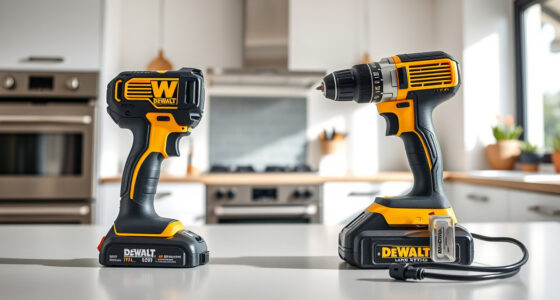
When choosing between corded and cordless tools, consider your project’s needs. Corded tools offer steady power and no recharge delays, ideal for heavy-duty tasks. Cordless tools are lighter, more portable, and let you work in remote or tight spaces easily. However, they depend on battery life, which can interrupt your workflow. Understanding these differences helps you pick the right tool for your tasks—more details ahead can help you make an informed decision.

Get business pricing on tools and workshop supplies
- Business-only prices and quantity discounts
- Tax-exempt purchasing
- Multiple users, one account, clear invoices
Key Takeaways
- Corded tools offer uninterrupted power but limit mobility due to cords, while cordless tools provide greater freedom but depend on battery life.
- Corded tools deliver consistent power ideal for heavy-duty tasks; cordless tools are lightweight and better suited for portability.
- Continuous operation of corded tools can reduce workflow delays, whereas cordless tools may need recharging or battery swaps.
- Cordless tools have advanced batteries with longer runtimes and faster charging, narrowing the gap in performance.
- The choice depends on project needs: steady power versus mobility and convenience.
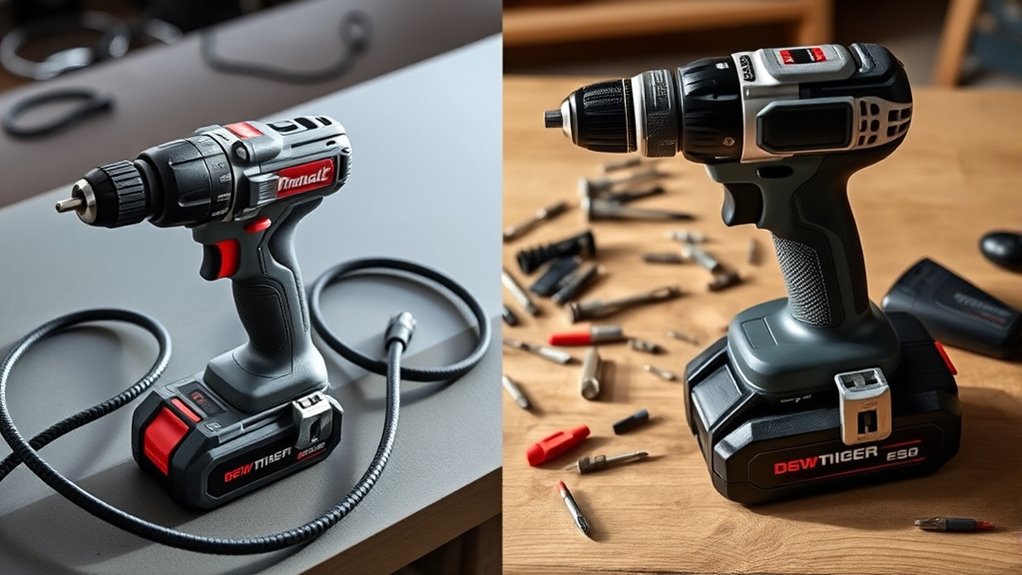
When choosing between corded and cordless tools, understanding their differences can help you make the right decision for your projects. One key factor to consider is battery life, especially with cordless options. Unlike corded tools that draw continuous power from an outlet, cordless tools rely on rechargeable batteries. While modern batteries often provide impressive runtime, they can still run out during vital moments, requiring you to pause and recharge or swap batteries. This can slow down your workflow, particularly on larger jobs. On the other hand, corded tools offer a steady power supply, so there’s no concern about running out of juice mid-task. However, the trade-off is the need for an accessible power outlet and managing the cord, which can limit your mobility and reach.
Corded tools provide steady power but limit mobility; cordless tools offer portability at the cost of battery life.
Weight and ergonomics are also significant considerations. Cordless tools tend to be lighter than their corded counterparts because they eliminate heavy cords and sometimes larger batteries needed to deliver sustained power. This reduction in weight can make a substantial difference when you’re working overhead or for extended periods, decreasing fatigue and increasing control. Plus, cordless tools are usually designed with ergonomics in mind, featuring comfortable grips and balanced weight distribution that help reduce strain. Conversely, corded tools, especially older or more industrial models, can be heavier and bulkier due to the cord and their more robust motors. This extra weight might make prolonged use more tiring, and the cord can interfere with your movements, especially in tight or awkward spaces.
Additionally, battery technology continues to improve, offering longer runtimes and faster charging, which can mitigate some of the limitations of cordless tools. Ultimately, your choice depends on your project needs and working conditions. If portability, ease of handling, and working in remote areas matter most, cordless tools are advantageous despite their limited battery life. If you prioritize consistent power and longer runtimes without interruption, corded tools might be better suited. Carefully weighing battery life, weight, and ergonomics will guide you toward the right tool for your specific tasks.
cordless drill with long battery life
As an affiliate, we earn on qualifying purchases.
As an affiliate, we earn on qualifying purchases.
Frequently Asked Questions
How Does Battery Lifespan Impact Cordless Tool Performance?
Battery lifespan directly impacts your cordless tool’s performance because battery degradation over time reduces its capacity, causing shorter run times. As you go through recharge cycles, the battery becomes less efficient, meaning it won’t hold a charge as well as it used to. This decline can lead to slower work progress and the need for more frequent recharging, so monitoring your battery’s health helps maintain ideal tool performance.
Are Corded Tools More Environmentally Friendly Than Cordless Options?
You’ll find corded tools generally more environmentally friendly because they have lower environmental impact and energy consumption compared to cordless options. They don’t require batteries, which reduces battery waste and pollution. Plus, they often use less energy over time, making them a more sustainable choice for long-term use. So, if you’re focused on reducing your environmental footprint, corded tools tend to be the better option overall.
Can Cordless Tools Handle Heavy-Duty Industrial Tasks Effectively?
Like a trusty steed in a modern knight’s arsenal, cordless tools can handle heavy-duty industrial tasks, but with limits. Their battery capacity and power limitations mean they might struggle with prolonged, demanding jobs. While advancements boost their performance, they generally can’t match the raw power of corded tools for the toughest tasks. You’ll want to weigh these factors before relying solely on cordless options for heavy-duty work.
What Safety Precautions Differ Between Corded and Cordless Tools?
When using corded tools, you need to be extra cautious about electrical shock and power cord safety. Always inspect cords for damage, avoid pulling on the cord, and keep it away from water or sharp objects. With cordless tools, the risk of electrical shock is lower, but you should still handle batteries carefully to prevent leaks or fires. In both cases, wear protective gear and follow manufacturer safety instructions.
How Do Cost and Maintenance Compare Over the Tool’s Lifespan?
Oh, the joy of comparing costs and maintenance! Over its lifespan, a cordless tool might seem pricier upfront, but its lower maintenance requirements and no need for constant cord replacements can save you money. Conversely, corded tools often have a lower initial cost, but they demand more upkeep and repairs. So, your choice hinges on whether you prefer a budget-friendly start or long-term savings on maintenance.
corded power tools for heavy-duty tasks
As an affiliate, we earn on qualifying purchases.
As an affiliate, we earn on qualifying purchases.
Conclusion
In the end, choosing between corded and cordless tools boils down to your needs and preferences. You might find that one size doesn’t fit all, and each has its own set of advantages and drawbacks. Remember, it’s all about working smarter, not harder. So, weigh your options carefully—sometimes, the best tool is the one that fits your project like a glove. Don’t put all your eggs in one basket; pick what works best for you.
ergonomic cordless impact driver
As an affiliate, we earn on qualifying purchases.
As an affiliate, we earn on qualifying purchases.
best rechargeable cordless tool batteries
As an affiliate, we earn on qualifying purchases.
As an affiliate, we earn on qualifying purchases.
Fall yard work Picks
leaf blowers
As an affiliate, we earn on qualifying purchases.