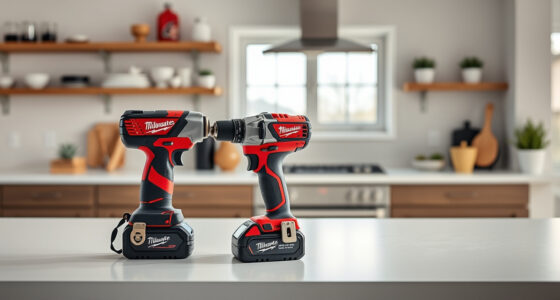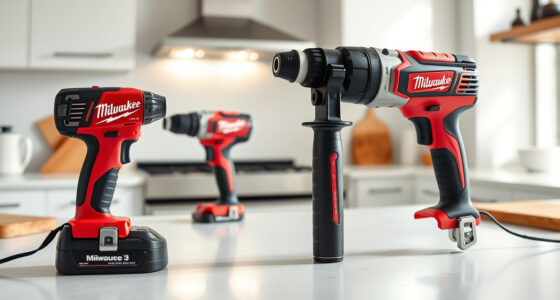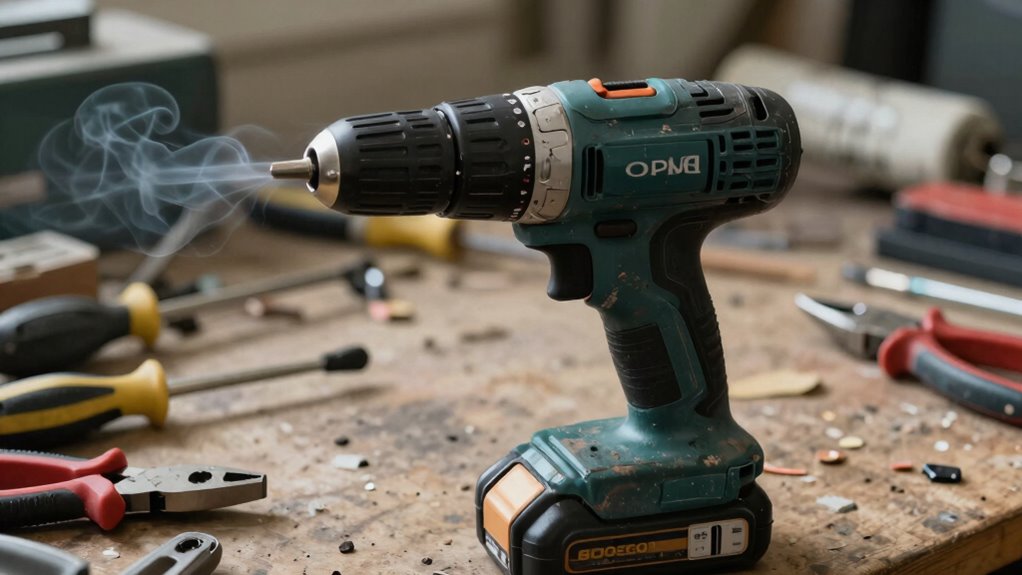

One common mistake that quietly wastes your cordless tool’s battery runtime is neglecting proper charging and storage habits. Failing to fully charge or discharge the battery periodically, or storing it at extreme temperatures, can cause capacity loss over time. Using mismatched chargers or leaving batteries partially charged during storage also speeds up degradation. If you want to keep your power tool running at its best, understanding how to care for the battery is key—there’s more to learn.

Get business pricing on tools and workshop supplies
- Business-only prices and quantity discounts
- Tax-exempt purchasing
- Multiple users, one account, clear invoices
Key Takeaways
- Leaving batteries partially charged or fully drained during storage accelerates capacity loss.
- Using incompatible or generic chargers can cause improper charging and reduce battery lifespan.
- Failing to perform regular maintenance and terminal cleaning diminishes battery efficiency.
- Avoiding full charge cycles and deep discharges helps maintain maximum runtime.
- Ignoring proper storage conditions, like extreme temperatures, harms battery health over time.

Many DIY enthusiasts and professionals make the mistake of assuming all cordless tools are created equal, which can lead to costly errors. One of the most overlooked factors that quietly wastes battery runtime is improper battery upkeep. You might think that as long as the tool works, your batteries are fine. But neglecting battery maintenance—like failing to fully charge and discharge your batteries periodically—can cause them to lose capacity over time. Lithium-ion batteries, common in cordless tools, perform best when kept in a healthy state. If you leave them partially charged for long periods or store them in extreme temperatures, their ability to hold a charge diminishes. Regularly inspecting your batteries, cleaning the terminals, and avoiding deep discharges extend their lifespan and ensure maximum runtime. Understanding battery chemistry helps you make informed decisions about care and storage practices. Proper battery management also involves monitoring usage patterns to prevent overuse or stress on the batteries, which can accelerate capacity loss. Additionally, being aware of thermal effects on batteries can help you avoid damage caused by temperature extremes. Another critical mistake is ignoring charger compatibility. Not all chargers are created equal, and using the wrong charger for your specific battery can do more harm than good. Many users assume that any charger will do, but mismatched chargers can lead to incomplete charging cycles or overcharging. Over time, this stress on the battery reduces its capacity, causing your tools to run shorter and requiring more frequent recharges. A good rule of thumb is to choose chargers with smart technology that monitor and optimize the charging process, helping preserve battery health. Proper battery storage practices are equally important for maintaining optimal battery life. Always check the manufacturer’s recommendations for your batteries and chargers. Investing in the correct charger ensures proper voltage and current, which preserves battery health and maintains ideal runtime. Some modern chargers even feature smart technology that monitors battery temperature and charge status—using these benefits can greatly extend your batteries’ life and performance. You might also overlook the importance of proper storage. Batteries should be stored in a cool, dry place, ideally at around 40-60% charge, especially if you don’t plan to use your tools for a while. Leaving batteries fully charged or completely drained during storage accelerates capacity loss, wasting your battery’s potential. Additionally, keep your charger and batteries clean and free of dust or debris, which can interfere with charging efficiency. In the end, the key to avoiding this silent battery drain lies in paying attention to how you care for your batteries and chargers. Regularly practicing good battery maintenance, using compatible chargers, and storing your tools properly can preserve your batteries’ capacity and ensure your cordless tools perform at their best. These small, often overlooked habits make a notable difference in extending battery life, saving you money, and keeping your projects running smoothly.
Frequently Asked Questions
Can Using Incompatible Batteries Damage the Tool’s Battery Life?
Using incompatible batteries can definitely damage your tool’s battery life. If the batteries aren’t compatible, there’s a risk of a power source mismatch, which can cause electrical issues or overheating. Always check battery compatibility before use, as mismatched power sources may shorten battery lifespan or even damage the tool’s internal components. To keep your tool running smoothly, stick with the recommended batteries designed for your model.
How Does Temperature Affect Cordless Battery Performance?
Imagine your cordless battery as a delicate plant; extreme temperature fluctuations can cause it to wither faster. When you expose your battery to heat or cold, it accelerates battery degradation, reducing runtime and lifespan. Cold temperatures slow chemical reactions, decreasing power output, while heat speeds up wear. Keep your tools in moderate environments to preserve battery health, ensuring longer-lasting performance and avoiding premature replacements.
Are There Specific Charging Habits That Extend Battery Lifespan?
To extend your cordless battery’s lifespan, avoid overcharging and follow proper charging habits. Limit charging cycles by unplugging once fully charged, and perform regular battery calibration by fully discharging and then recharging the battery. This helps the battery maintain accurate capacity readings. Keep your charger in good condition, and don’t leave batteries in extreme temperatures, as these habits preserve battery health and maximize runtime over time.
Does Leaving the Battery in the Charger Harm Its Capacity?
Leaving the battery in the charger can harm its capacity over time. It disrupts proper charging cycle management and prevents effective battery recalibration, which maintains ideal performance. Constantly keeping it plugged in may cause overcharging, leading to reduced runtime and battery health decline. To extend battery life, unplug it once fully charged, and occasionally perform a charging cycle to recalibrate, ensuring your cordless tools work at their best.
What Are the Signs of a Failing Cordless Tool Battery?
Did you know that over 50% of cordless tool users notice reduced battery performance within two years? Signs of a failing battery include decreased runtime, slow charging, or difficulty holding a charge. To avoid this, perform regular battery calibration and monitor charging cycles. If your tool’s battery no longer powers your projects efficiently, it might be time to replace it to restore peak performance and prevent damage.
Conclusion
If you’re not mindful of how you use your cordless tool, you could be silently wasting its battery life. Avoid common mistakes like overcharging or ignoring maintenance, which can cut your runtime dramatically. Did you know that improper use can reduce battery efficiency by up to 50% over time? Staying aware and following best practices guarantees you get the most out of your tool, saving you time and money while keeping your projects running smoothly.
Halloween Picks
halloween
As an affiliate, we earn on qualifying purchases.